Piscataway Roofing has spent more than 20 years on roofing in Aberdeen and the towns around it, and most of the calls we take here start the same way: a storm went through, something came off the house, and the owner wants to know whether the roof is still doing its job. We answer that question before we talk about anything else. If a repair will hold, we say so plainly, and replacement only comes up when the roof itself gives us a reason.
Every leak or storm call gets two looks, one from the roof surface and one from inside the attic. Water rarely shows up on a ceiling directly under the spot where it got in, so we trace it back along the decking and rafters until we find the real entry point. Only then do we write a price, and the price lists each item on its own line.
This page covers what wind does to an Aberdeen roof, using the one dated tornado the federal record holds for the township as the example. It also walks through how we inspect after a severe storm and how we decide whether wind-lifted shingles can be fixed or need more.
The May 20, 2022 tornado that started in Strathmore
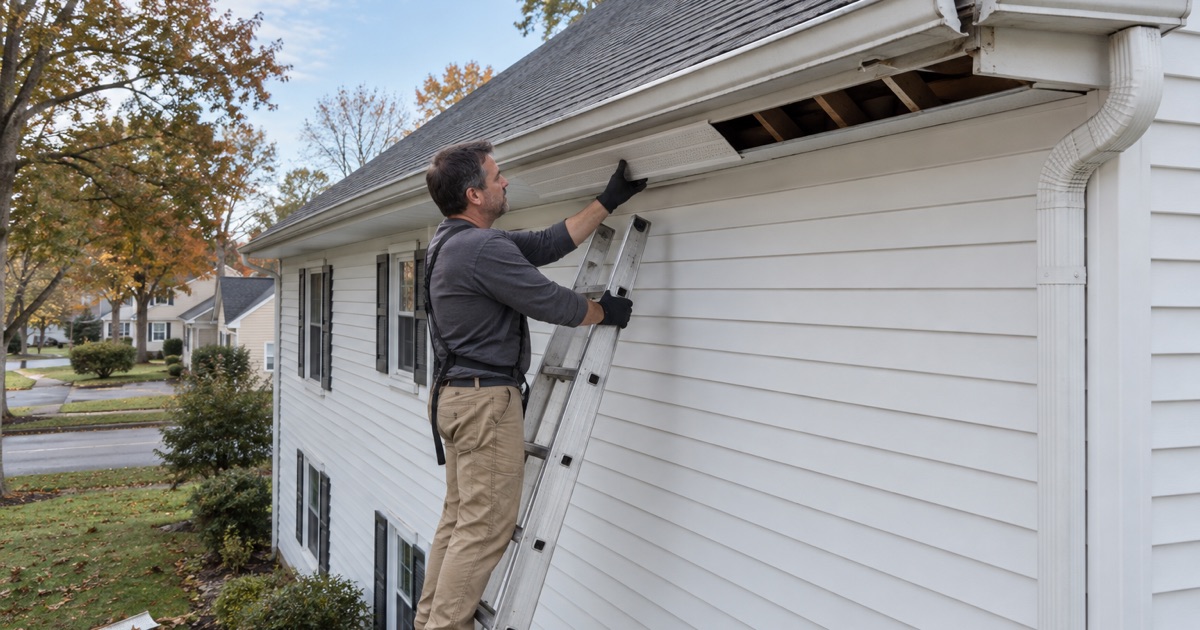
On the evening of May 20, 2022, a brief tornado touched down along Line Road on the border between Strathmore and Hazlet. The Storm Prediction Center’s storm reports for that day list it under Aberdeen in Monmouth County, and a National Weather Service survey from the Mount Holly office confirmed it the next day. The survey rated it EF-0, with an estimated peak wind of 85 mph.
A one-minute path into Hazlet
The tornado was on the ground from 5:09 to 5:10 that evening. It ran about 0.8 miles east into Hazlet Township, with a maximum width of 225 yards, and crossed the Garden State Parkway just south of exit 117. Nobody was hurt. No tornado warning had been issued, though a tornado watch was in effect for the area.
Where the survey found damage
At the starting point on Line Road, the survey crew found large limbs down and softwood trunks snapped. The worst of the damage came farther along the path, in a residential neighborhood between Sophia Drive and Carlow Way, where at least a dozen homes had vinyl siding, soffits, gutters or roof shingles blown off. The survey did not sort those homes by township, and the path spent most of its length in Hazlet, so the useful lesson for Aberdeen owners is less about counting houses and more about what that wind did to them.
Trees, limbs and the one structural roof
Most of what the survey described was cosmetic, but one home took structural roof damage from a fallen tree. That split is typical of wind events at this strength. Wind alone tends to strip the outer layers of a house, while a falling trunk or heavy limb can crack rafters, punch through decking and leave a roof open to the next rain. When a tree is on a roof, we wait for the tree crew to lift it off, then we check the framing before we put any new material over it.
Looking for roofing closer to Madison? See Roofing in Madison.
What an EF-0 at 85 mph does to shingles, soffits and gutters
An 85 mph gust is well below what it takes to lift a roof off a house, but it is plenty to find the weak edges of one. The parts that fail first are the parts where wind can get underneath something: the eaves, the rakes, the ridge and any shingle whose seal strip has already let go.
Shingles
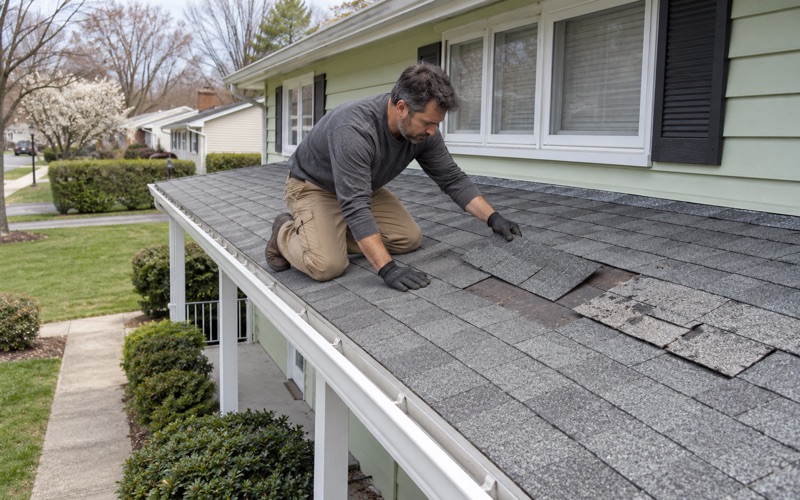
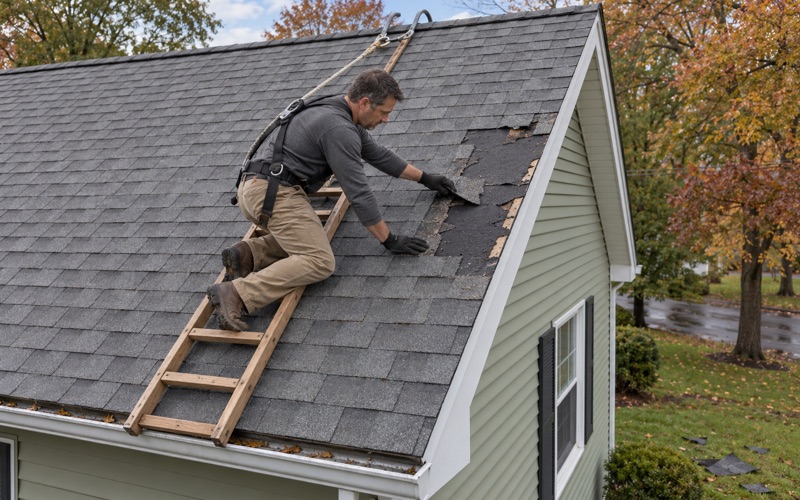
Asphalt shingles hold down through nails and a factory adhesive strip that bonds each course to the one below. Older shingles, or shingles that were installed in cold weather and never fully sealed, can lift at the tab even when the nails are fine. Once a tab lifts, the wind gets a lever, and the shingle either creases, tears at the nail line or comes off whole. Architectural shingles rated to ASTM D3161 Class F or ASTM D7158 Class H are tested to resist higher wind than older three-tab products, which is one reason we bring up wind rating whenever a roof is being replaced.
Soffits and fascia
Vinyl and aluminum soffit panels sit in channels and are only lightly fastened, so a strong gust under the eave can pop them out in a row. That leaves the rafter tails and attic open to rain, birds and insects. It also takes away the intake side of the attic ventilation, since soffit vents are where most attics draw in fresh air. We reset or replace the panels and check that the vents behind them are still open.
Gutters
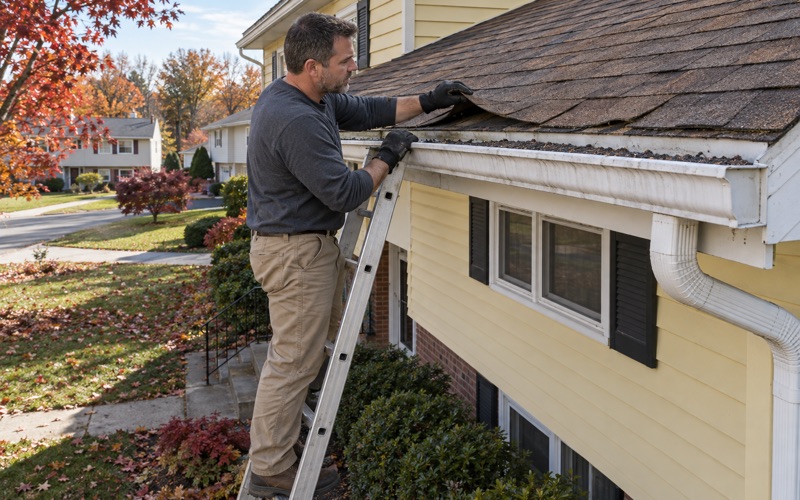
Gutters catch wind along their full length and are hung on brackets that can pull out of rotted fascia boards. After a storm we look for gutters that sag, have pulled away at the corners or have twisted at the leaders. A gutter that is still on the house but no longer pitched toward its outlet will hold water against the fascia, so we reset the pitch rather than simply reattaching what is there.
Checking a roof after a severe thunderstorm warning in Aberdeen
Aberdeen sits in National Weather Service forecast zone NJZ013, Western Monmouth, served by the Mount Holly office. When that office puts out a severe thunderstorm warning for the zone, the useful thing an owner can do afterward is a careful look from the ground, followed by a professional inspection if anything seems off. A single dated tornado does not make a pattern, but a strong summer storm can do the same kind of edge damage.
What to look for from the ground
Walk the house with binoculars or a phone camera on zoom. Look for shingles that are missing, creased or sitting at a different angle from their neighbors, bare strips along the ridge and gaps in the soffit line. Check the yard and driveway for shingle pieces and granules, and look at where the gutters meet the fascia at each corner. Stay off the roof yourself, especially when it is wet.
What we check in the attic
On a storm call we go into the attic with a light and look at the underside of the decking along the eaves, around chimneys and at every pipe and vent. Fresh water stains, damp insulation or daylight through the boards tell us more than the shingle surface does. We also note whether the attic ventilation is working, because a roof that has been venting poorly will have shingles that age faster and lift sooner.
Photographs for your own records
We photograph what we find on the roof and in the attic and write it up in plain language, so the owner has a record to bring to their own insurer if they choose to file. If the owner asks, our crew will meet the insurance adjuster at the house and walk the roof with them. We do not handle or negotiate claims, and what any policy covers is between the owner and their insurer.
Wind-lifted shingles: when a repair holds and when it does not
Not every storm visit ends in a new roof, and we would rather tell an owner that early. The decision usually comes down to how many shingles moved, how old the roof is and what happened to the layers underneath.
When a repair holds
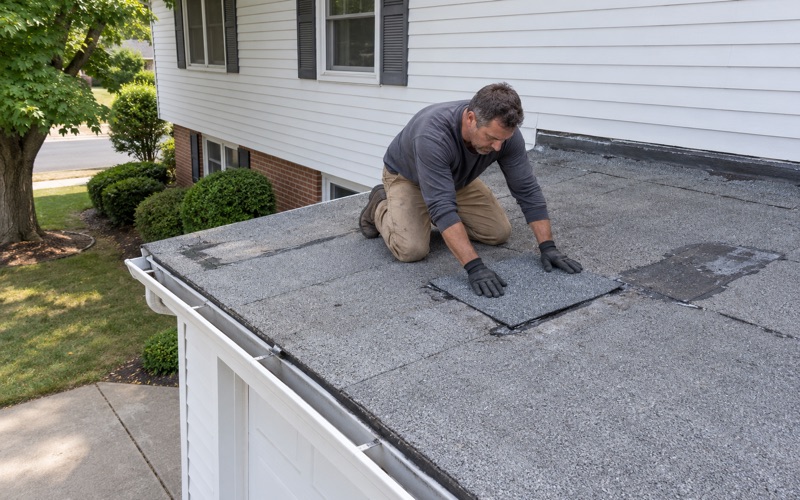
A few missing or lifted shingles on a roof that is otherwise sound can be repaired well. We pull the damaged pieces, slide in new shingles matched as closely as the current product line allows, nail them correctly and hand-seal the tabs so they do not wait for warm weather to bond. If the underlayment below is intact and the decking is dry, that repair should last as long as the shingles around it.
When it does not
A repair stops making sense when the lifting is spread across a whole slope, when the surrounding shingles are brittle enough to crack as we work them, or when water has already reached the decking. At that point every patch disturbs more of the old roof than it fixes. In New Jersey, replacing the roof covering on a detached one- or two-family house is treated as ordinary maintenance, which keeps the process simple for most Aberdeen homeowners.
Layer count matters too. If a house already carries two layers of shingles, the state’s rehabilitation subcode calls for tearing the old roofing off rather than adding a third, so a storm repair on a doubled roof can turn into a full tear-off sooner than an owner expects. We check the layer count at the first visit so that conversation happens before any price is written.
What a replacement scope looks like
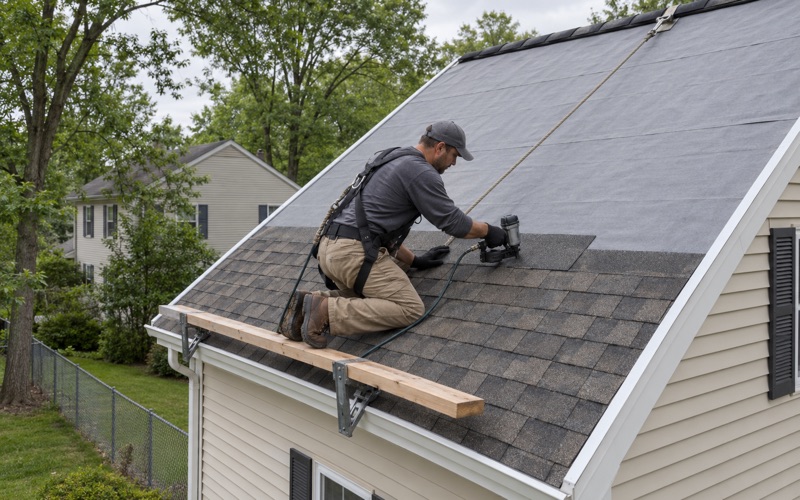
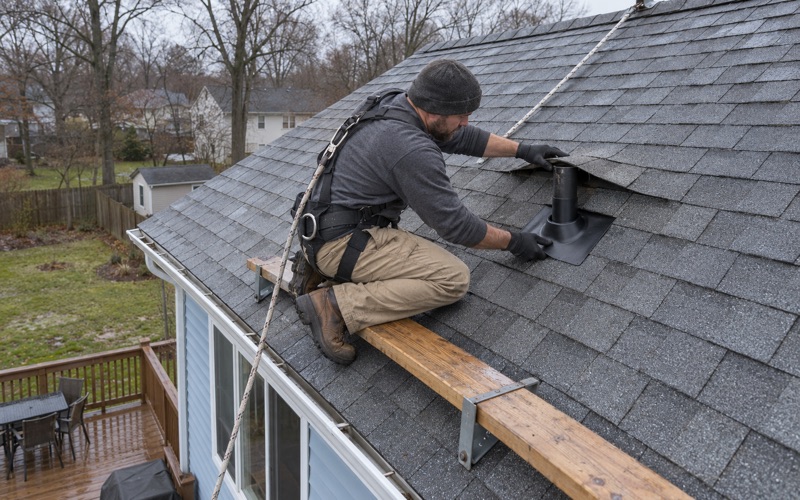
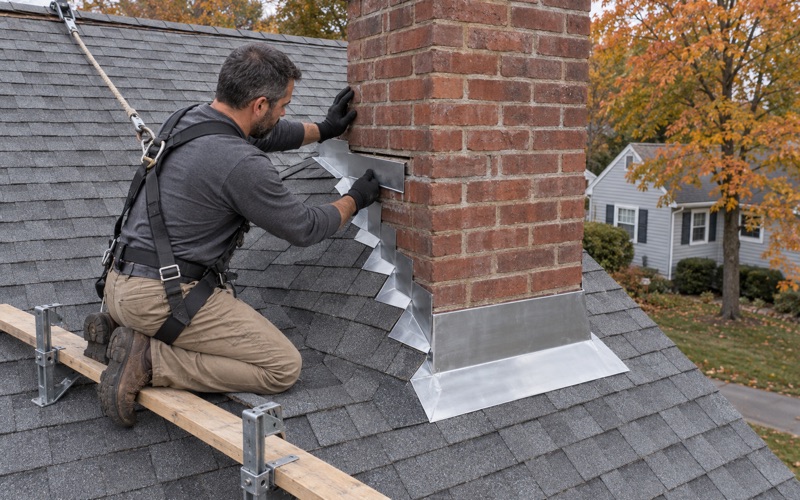
When we do recommend replacement, the written scope lists tear-off, decking, underlayment, flashing, ventilation and gutters as separate lines, so an owner can lay it beside another estimate and compare item by item. If damaged decking turns up once the old shingles are off, we photograph it and show the owner before we replace it, at the per-sheet price written into the contract. Step, counter and chimney flashing is replaced with the roof instead of reused, and the attic ventilation is checked so the new shingles are not cooked from below.
Cleaning up after the work
Storm repairs often happen while the yard is already full of branches, so we keep our own mess separate from the storm’s. At the end of each work day the crew clears the driveway, yard and gutters and runs a magnet sweep for roofing nails. The contract is written to New Jersey’s home improvement rules, including the three-day cancellation notice, before any work starts.
- 20+ Years Roofing
- Itemized Written Estimates
- Attic-to-Ridge Leak Tracing