Piscataway Roofing has spent more than 20 years on roofing in Branchburg and across central New Jersey, and a growing share of the calls we take involve a roof that has solar panels on it or soon will. The question behind most of them is simple: how much life does this roof have left compared with the array sitting on top of it? We answer that before anyone talks about price, and we say plainly whether a repair will carry the roof or whether replacement is the honest call.
When a roof under panels does need to come off, we put the panel removal and reinstall into the schedule from the first estimate rather than discovering it on the morning the crew arrives. Our written scopes break out tear-off, decking, underlayment, flashing, ventilation and gutters as separate lines, with the solar coordination listed on its own. That lets a homeowner set our number beside anyone else’s and compare the two item by item, which matters on a solar roof because the coordination is where estimates quietly differ.
Branchburg’s 2006 Solar Roof on Tannery Road
Branchburg has had a roof given over almost entirely to solar since 2006. The 31 Tannery Project on Tannery Road is a 42,000-square-foot office building whose standing-seam metal roof holds 1,276 photovoltaic panels. It was described as the first net zero electric commercial building in the United States, and it remains one of the clearest local examples of a roof designed around an array from the start.
What a commercial building teaches a homeowner
We mention 31 Tannery as an example, not as a job of ours, because it shows the order of decisions that matters on any solar roof. Its builders chose a long-lived metal roof and then covered it with panels, so the roof was never the weak link waiting under the array. Most houses get solar the other way around, added onto whatever shingles happen to be up there at the time.
The township’s own interest in solar
In 2010 the township proposed a 280 kW solar array at its municipal complex on Route 202, according to a Department of Energy review dated December 7 of that year. That document does not say whether the array was planned for a roof or for the ground, so we do not claim either. What it does show is that solar has been part of the conversation in Branchburg, on public and private buildings, since at least 2006.
Where homes fit in
No count of home solar systems in Branchburg turned up in the research behind this page, so we will not guess at how many roofs here carry panels. The practical point is narrower and applies to any single house: the array and the roof need to be planned as one project, not two that happen to share a surface. A building like 31 Tannery is a local picture of what that planning looks like when it is done on purpose.
Looking for roofing closer to Dover? See Roofing Services in Dover.
Panels and the Roof Under Them Age on Different Schedules
A solar array and the roof it is fastened to are two systems with two separate clocks. Panels are generally built to produce power for decades, while a shingle roof installed years before the panels may already be well into the second half of its life. When the roof runs out first, the owner pays to have the array taken down and put back, a cost that would never have existed if the roof had been replaced before the installation.
That timing question is real in Branchburg because of when the houses went up. Census estimates put about half of the township’s homes in the 1980 to 1999 build years, so many of them are on their first or second roof now. A solar quote landing on one of those houses deserves a roof check before anyone signs.
Re-roofing before the panels go up
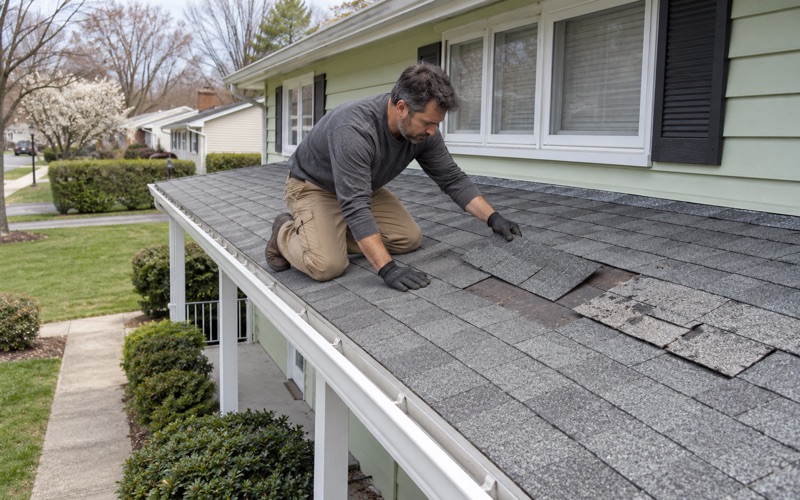
The cheapest time to replace a roof under solar is before the panels are installed. If a solar company has quoted a system and the roof is past its midpoint, we would rather tell you now than after the racking is bolted down. We look at the shingles, the decking from the attic side, the flashing at every penetration and the ventilation, and then we give a straight answer on whether the roof will outlast the array.
If the answer is yes, we say so and you go ahead with the solar installer. If the answer is no, replacing first means the panels land on new underlayment, new flashing and a sound deck, and both clocks start at roughly the same time. Either way you make the decision with the roof’s condition in hand rather than guessing at it.
Checking a roof that already carries an array
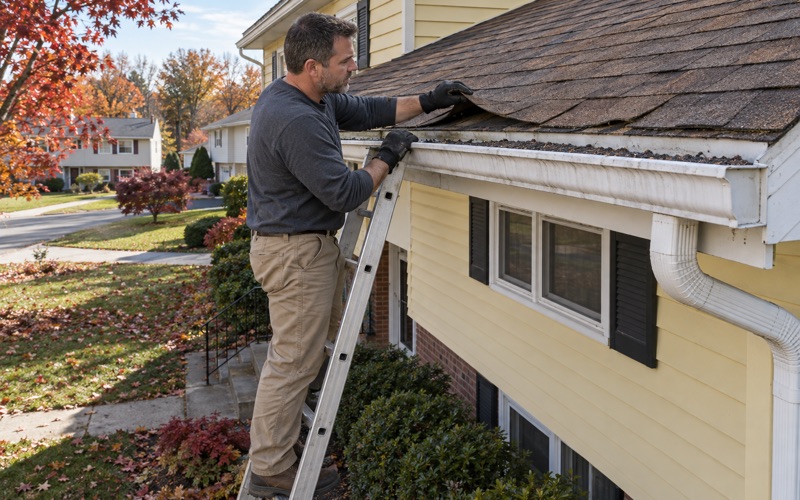
On a roof that already has panels, the condition check works around them. We go into the attic to look for staining or soft decking near the mounting points, inspect the exposed field and edges, and watch how water moves past the array toward the gutters. Damage hidden directly under the panels can only be confirmed once they are off, which is one more reason the removal belongs in the plan rather than in the surprise column.
If the house is going on the market, we can write up the roof’s condition, panels and all, in a report the seller can hand to the buyer’s inspector. That gives both sides the same picture of what sits under the array before anyone negotiates over it.
Taking Panels Off and Putting Them Back for a Roof Replacement
Solar panel removal and reinstall is a coordinated job, not something a roofing crew improvises on the day. The array has to be shut down, disconnected, taken off and stored safely before tear-off starts, usually by the solar installer or an electrician who knows the system. We set the sequence with whoever handles the panels so the roof sits open for as short a time as possible.
The solar side of the job usually carries its own price, set by whoever handles the panels, and it belongs in the comparison when you weigh repair against replacement. A roof that could be patched for a few more years may still be the wrong roof to leave under an array if the removal cost ends up landing twice. We lay both paths out in writing so the decision is yours and the numbers are visible.
Sequencing the work
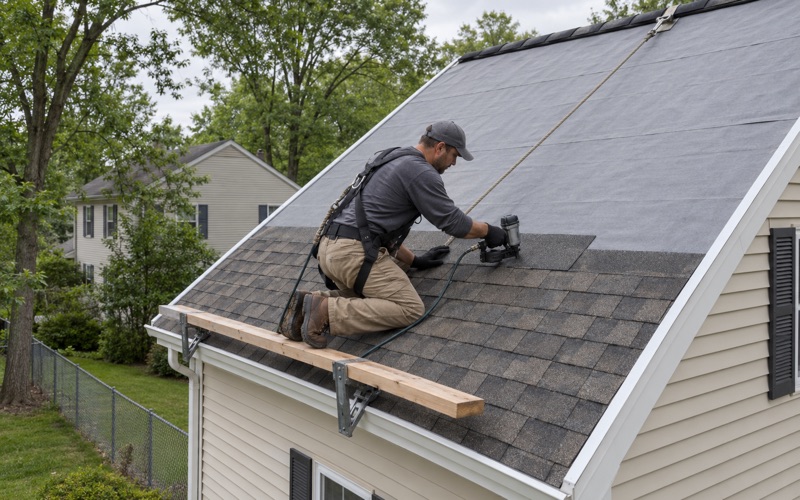
Our schedule for a solar re-roof follows the order the work actually happens. Panels come down, the old roof comes off, the decking is inspected, and new underlayment and flashing go on before the mounts are flashed into the new covering and the panels go back up. Building that order into the contract means nobody is waiting on someone else’s crew with the house exposed.
Decking and flashing while the roof is open
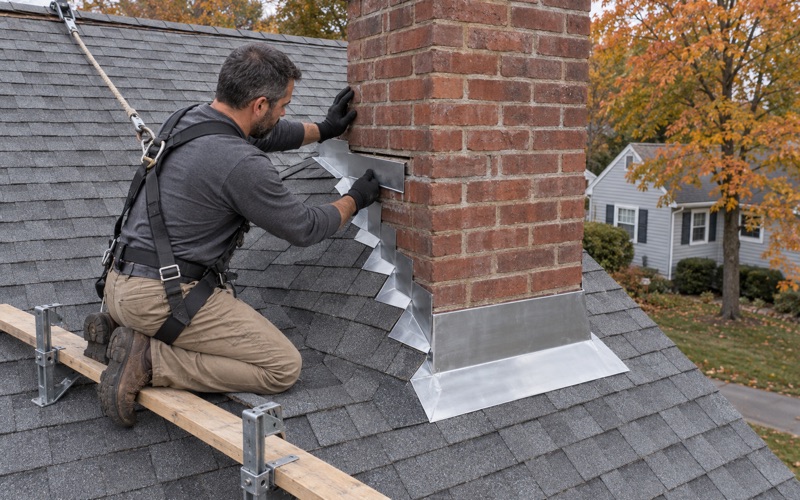
Any damaged decking found once the old layers are off is photographed and shown to you before it is replaced, at the per-sheet price written into the contract. Step, counter and chimney flashing are replaced with the roof instead of being reused under new material. On a solar roof that matters even more, because the next easy chance to reach those details may not come until the array is due for its own replacement.
Mounts, contracts and cleanup
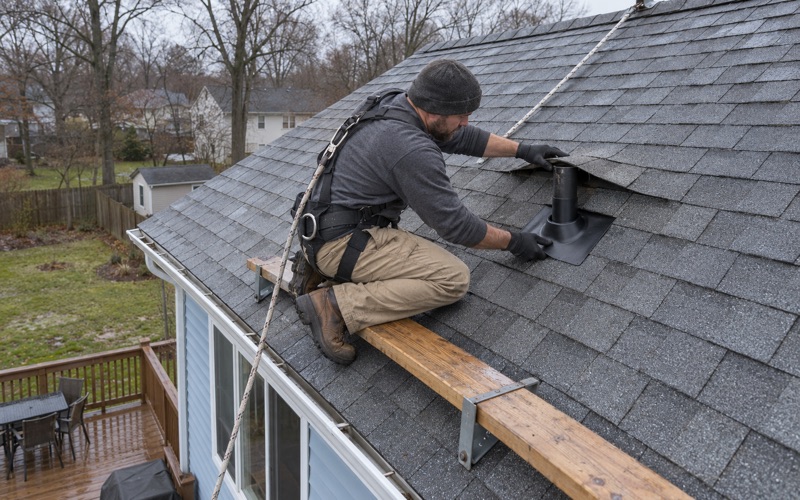
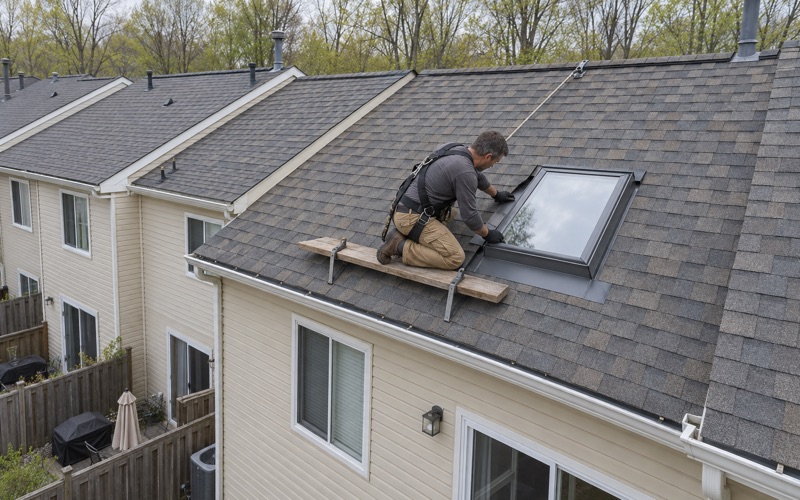
Every solar mount is a penetration, and each one needs to be sealed and flashed into the new covering rather than set on a patch carried over from the old roof. Our contracts are written to New Jersey’s home improvement rules, including the three-day cancellation notice, and the panel coordination appears as its own line. At the end of each work day the driveway, yard and gutters are cleaned, with a magnet sweep for roofing nails, which also keeps the ground clear around any panels stored on site.
Standing-Seam Metal, Shingles and What an Array Is Attached To
What sits under the panels decides how often this whole process repeats. Some roofs are good partners for an array over its full life, and some will need to come out from under it at least once. We walk through the options with the house, the budget and the solar plan in front of us rather than steering everyone toward one answer.
Standing-seam metal under solar
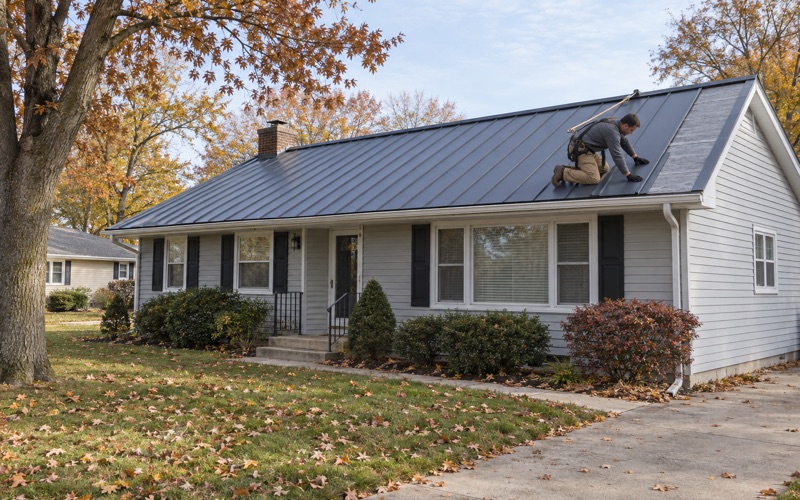
A standing-seam metal roof is one of the coverings most often chosen when an owner wants the roof to last as long as the array, which is part of why one sits under the panels at 31 Tannery. On a house it costs more upfront than shingles, but it can change the remove and reinstall math because the roof may never have to come out from under the panels. Whether that tradeoff pays off depends on how long you plan to stay and how much of the roof the array covers.
Architectural shingles under solar
Most houses that add panels sit on architectural shingles, such as GAF Timberline HDZ, Owens Corning Duration or CertainTeed Landmark, and that pairing works well when the shingles are new. We install them over synthetic underlayment and use self-adhering membrane around penetrations, even though Somerset County is outside the area where New Jersey requires an ice barrier, which the state limits to Sussex County. A wind-rated shingle on a fresh deck gives the mounts something solid to hold.
Ventilation, gutters and permits
Attic ventilation is checked on every replacement, because a roof that cannot breathe ages from underneath and panels do nothing to fix that. We size and pitch gutters and leaders with the new roof as well, since panels gather rain and release it onto the lower courses and the gutter line. On permits, New Jersey treats replacing the roof covering on a detached one- or two-family house as ordinary maintenance under its Uniform Construction Code, and the township’s Building and Code Enforcement page lists roofing replacement as permit work with an exception for single-family dwellings, so owners of attached homes should confirm with that office before work begins.
- 20+ Years Roofing
- Itemized Written Estimates
- Attic-to-Ridge Leak Tracing