Piscataway Roofing has spent more than 20 years on roofing in Clinton Township and across central New Jersey, and the jobs here ask for planning that starts on the ground before anyone climbs a ladder. Most of the homes we are called to are large detached houses on wide lots, often with a private well, a septic system and a long drive back from the road. Where the truck parks and where the debris lands matter almost as much as which shingle goes on.
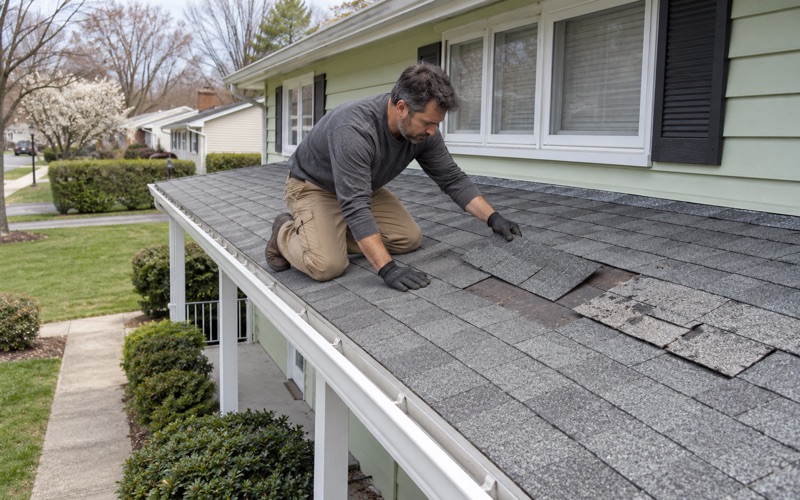
Every leak visit begins in the attic as well as on the roof surface, because a stain on a bedroom ceiling rarely sits right under the opening that let the water in. Once we know the source, we tell you plainly whether the roof can be repaired. Replacement only comes up when a repair would not hold.
When a new roof is the right call, you get a written scope that breaks out tear-off, decking, underlayment, flashing, ventilation and gutters line by line. That lets you set our number beside any other estimate and compare the same work item for item. The contract follows New Jersey’s home improvement rules, including the three-day cancellation notice.
Roofing Homes Around Round Valley and Spruce Run
Clinton Township is reservoir country, and that shapes a lot of what we see on the drive in. Round Valley Reservoir sits inside the township, holding about 55 billion gallons across roughly 2,350 acres and reaching 180 feet at its deepest. The State moved the farm community out of Round Valley in 1959, completed the reservoir in 1965 and opened the recreation area in 1977.
Spruce Run, the older of the two, holds up to 11 billion gallons and went into operation in 1963, and its recreation area is shared between Union Township and Clinton Township. Both reservoirs are operated by the New Jersey Water Supply Authority, and the pumping station that fills Round Valley is in the township’s Hamden section. Taken together, water covers 4.00 of the township’s 33.87 square miles.
The neighborhoods around the reservoirs, and around Annandale, Cokesbury and Potterstown, are mostly detached houses rather than rows of attached units. Of 4,989 homes counted in the latest Census survey, 3,673 are detached, and owners occupy 88.4 percent of the occupied ones. That means most roof decisions here are made by the person who lives under the roof and pays for it.
Annandale, the township’s best-known village, grew up around the railroad: the Central Railroad of New Jersey’s 1852 station created Clinton Station, which was later renamed Annandale. The township and the Town of Clinton are separate municipalities, and Lebanon Borough is its own municipality entirely surrounded by the township. When a question about local rules comes up, we make sure it is answered for Clinton Township itself and not borrowed from a neighbor.
Looking for roofing closer to West Caldwell? See Roofing in West Caldwell.
Planning a Roof Job on a Rural Clinton Township Lot
Some 21,064 of the township’s 21,707 acres fall in the Highlands Planning Area, and the landscape looks it, with wooded lots, open fields and houses set well back from the road. On a property like that, the land itself changes how we set up. Before a tear-off, we walk the lot with you and agree where the container, the material delivery and the crew’s ladders will go.
Keeping the Container Off the Septic Field
Many rural homes here rely on a private well and a septic system, and a loaded roll-off container or a delivery truck is heavy enough to damage leach lines if it is parked in the wrong place. We ask where the tank and field are before we schedule the drop, and when you are not sure, we plan the container on the driveway or another hard surface well clear of them. It is ordinary trade practice, but it is the step that keeps a roof job from turning into a septic repair.
Long Driveways and Delivery Access
A long gravel or paved drive is common on these lots, and it has to carry the supply truck, the container hauler and the crew’s vehicles. We check the width, the turns and any soft shoulders ahead of time so a delivery does not rut the lawn or get stuck halfway to the house. If the drive cannot take a full load, we arrange smaller drops or a staging spot closer to the road.
We also think about where the material sits once it arrives. Bundles of shingles and rolls of underlayment are best kept on a hard surface or loaded straight onto the roof, not stacked on soft ground over a buried line. A few minutes spent on that layout on the first morning saves a lot of lawn repair later.
Nail Sweeps Around Wells and Lawns
Tear-off sends old nails into the grass, the flower beds and the gravel, and on a big lot that debris can travel a long way from the house. At the end of every work day we clean the driveway, yard and gutters and run a magnet sweep, with extra passes around the well head, play areas and anywhere a mower will run. Tarps go down over plantings and along the foundation before the first shingle comes off.
Big Roofs on Larger Hunterdon Houses
The median home in the township has 7.8 rooms, and many of those houses sit under wide roofs with several gables, dormers, valleys and one or more chimneys. A big, cut-up roof carries more flashing and more places for water to find a way in than a simple ranch. That is where careful detailing earns its keep, and where a quick estimate tends to miss things.
Not every house here is newer construction, either. The Census survey counts 460 homes in the township built in 1939 or earlier, and on any house built before 1978, disturbing painted fascia or trim falls under the EPA lead-safe renovation rule. We plan containment and cleanup for that work rather than treating old paint as ordinary debris.
Decking Found Under the Old Roof
Once the old shingles and underlayment are off, the plywood or plank decking underneath is finally visible. If sheets are soft, delaminated or rotted, we photograph them and show you before anything is replaced. The per-sheet price is already set in the contract, so a bad patch of decking does not become an open-ended charge.
Flashing, Chimneys and Ventilation
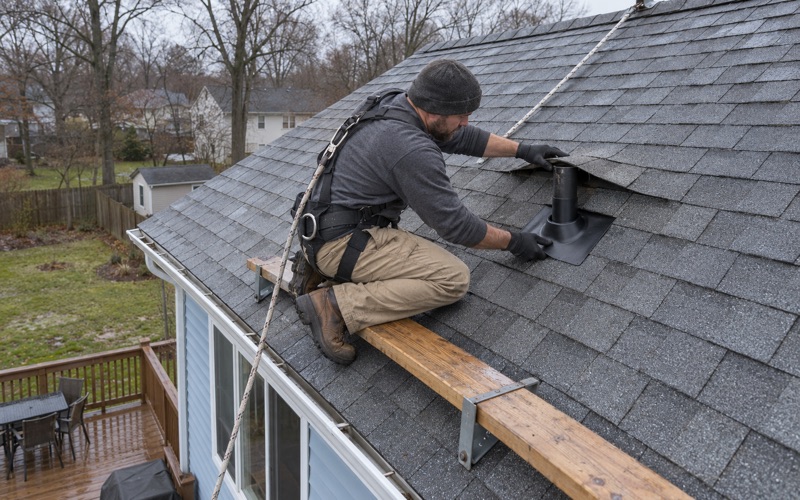
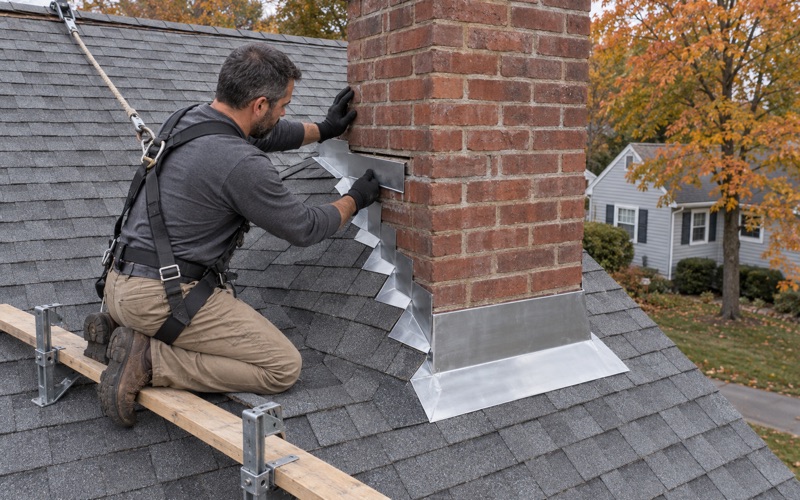
Step flashing along sidewalls, counter flashing at chimneys and the chimney flashing itself are replaced with the new roof rather than reused under it. On a wide chimney, a cricket behind it sheds water that would otherwise pond against the masonry, and the residential code calls for one behind chimneys wider than 30 inches. Pipe boots, apron flashing and kick-out flashing at roof-to-wall corners get the same treatment.
Attic ventilation is checked on every replacement too, because a large attic that cannot breathe ages the shingles from underneath and holds moisture through the winter. We look at soffit intake and ridge exhaust together, so the net free area actually moves air through the space. A new roof over a stuffy attic is a roof that wears out early.
Gutters Sized for Big Roof Planes
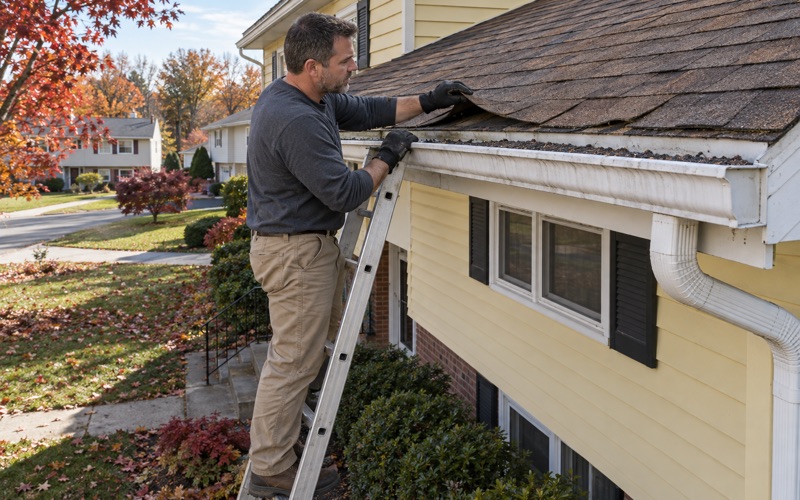
Long roof planes collect a lot of water in a hard rain, and it needs to leave the house rather than soak in along the foundation. We size and pitch seamless aluminum gutters and leaders along with the roof, and we talk through where each downspout should discharge on your property. On a sloped rural lot, that conversation often matters as much as the gutter size.
Wind, Trees and Open Water Near the Reservoirs
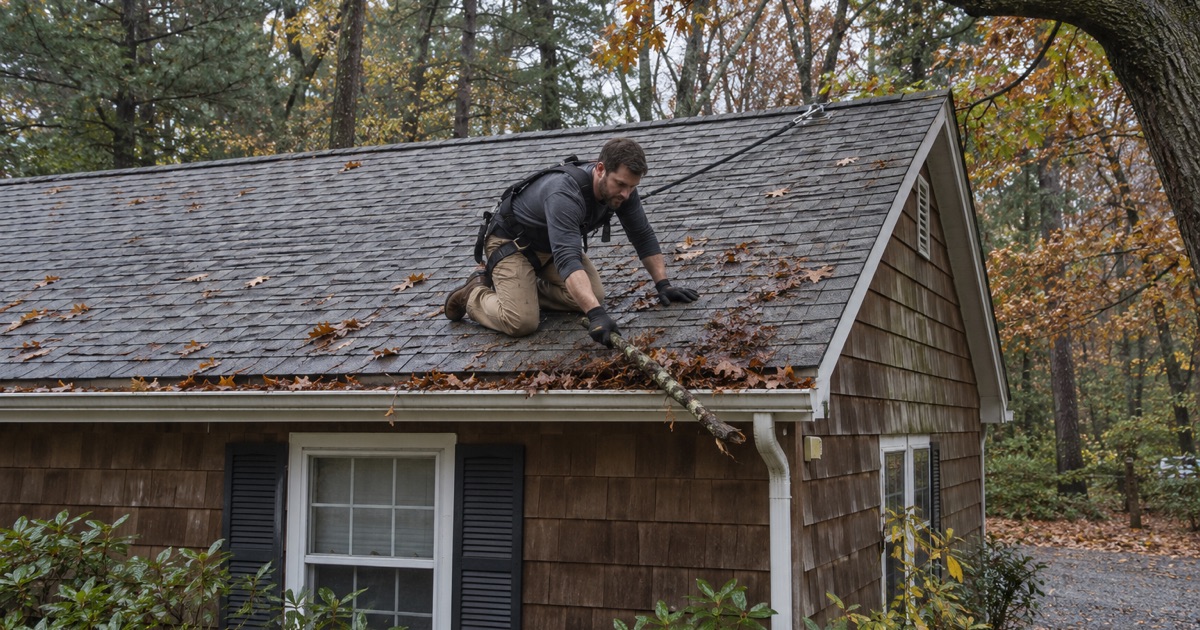
Clinton Township sits in National Weather Service forecast zone NJZ009, covered by the Mount Holly office, and we watch its warnings before opening up any roof. Houses facing open fields or water can take more wind than a home tucked into a street of neighbors, and big trees on wooded lots drop limbs in strong storms. We only strip as much roof as we can dry in again the same day.
Choosing Shingles and Underlayment for Exposed Sites
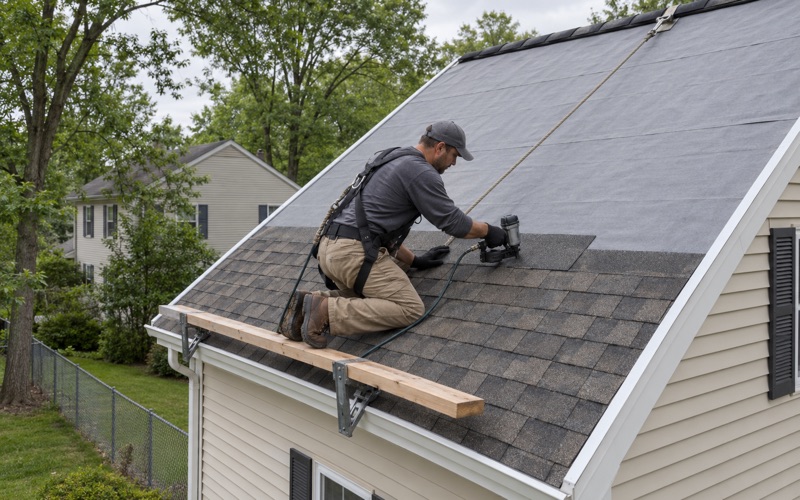
For an exposed roof, we talk through architectural shingles carrying wind ratings such as ASTM D3161 Class F or ASTM D7158 Class H, with lines like GAF Timberline HDZ, Owens Corning Duration and CertainTeed Landmark. Hunterdon is not in New Jersey’s designated ice-barrier area, which a state code bulletin limits to Sussex County, but we still discuss self-adhering ice and water barrier at eaves, valleys and penetrations where it earns its place. Synthetic underlayment covers the rest of the deck, with drip edge at the eaves and rakes.
If your roof carries solar panels, the removal and reinstall go into the schedule from the start. Nobody should discover on the morning of the tear-off that the array has to come down first. Planning it early keeps the house dried in and the system back online sooner.
After a Storm
When a limb comes down or wind lifts shingles, we photograph the damage and write it up so you have a clear record for your own insurance claim. If you ask, someone from our crew will meet the adjuster at the house and walk the roof with them. We also tell you honestly when the damage calls for a repair rather than a full replacement.
Attached Homes and the Paperwork
Re-roofing a detached one- or two-family house in New Jersey is treated as ordinary maintenance and needs no construction permit. The township’s 745 attached units fall outside that rule, and in townhouse or condominium communities we also check the association’s documents to confirm who holds the roof before any estimate is written. Owners getting ready to sell can ask for a written roof condition report to hand to the buyer’s inspector.
The township also has 564 renter-occupied homes, and landlords renting to families get repairs scheduled around their tenants rather than around our convenience. After each visit we send photos of what was found and what was done. That way an owner who lives elsewhere still sees the roof as clearly as the people living under it.
- 20+ Years Roofing
- Itemized Written Estimates
- Attic-to-Ridge Leak Tracing