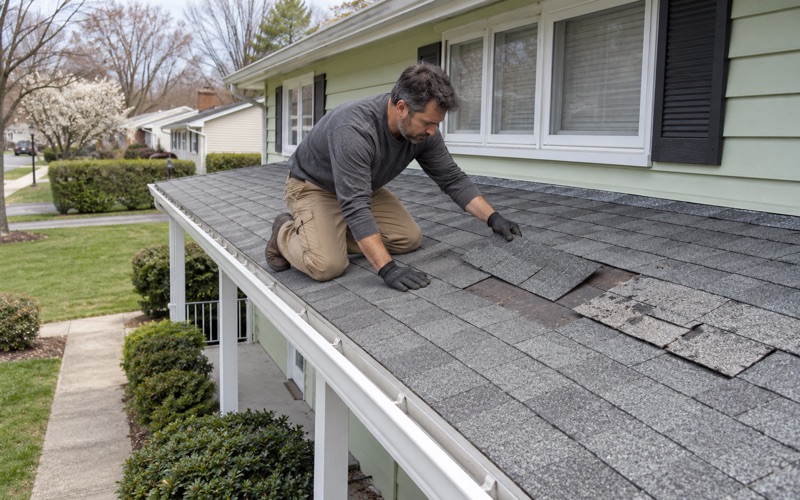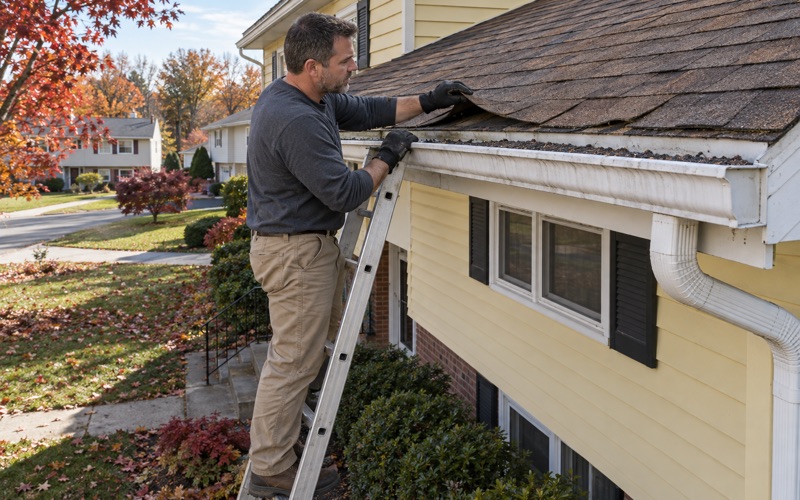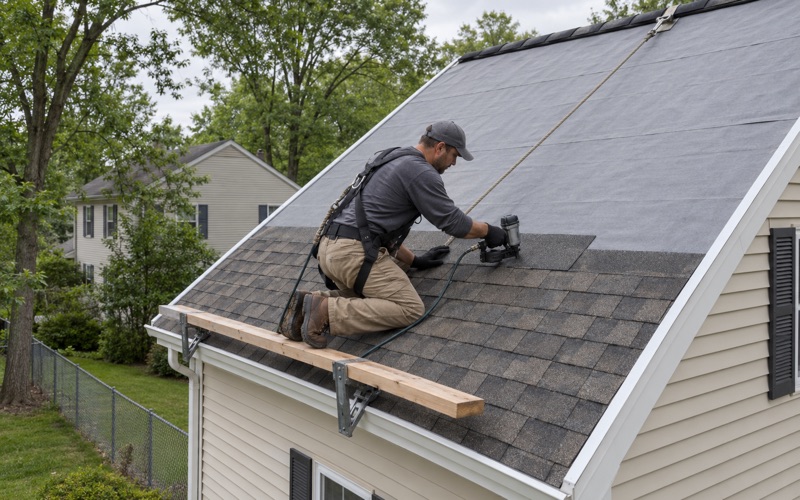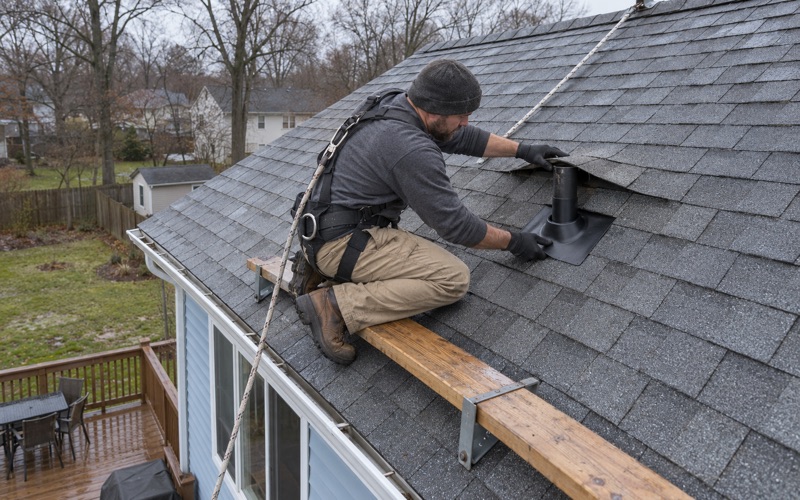
Piscataway Roofing has spent more than 20 years on residential roofs, and roofing in Denville asks a particular thing of that experience: patience with houses that have been enlarged, closed in and re-covered more than once. We start every job by working out what the existing roof is sitting on, because a new covering is only as good as the framing and decking beneath it. That means a trip into the attic on every call, not a walk around the yard with binoculars.
When the call is about a leak, we trace the water from the ceiling stain back to the spot where it actually gets in before anything is priced. When the question is whether a roof is finished, you hear a straight answer on repair first, and replacement comes up only if a repair would be money spent on a roof that cannot be saved. Either way, the estimate breaks tear-off, decking, underlayment, flashing, ventilation and gutters into separate lines.
That format lets you set our number beside anyone else’s and compare item by item. It also keeps surprises out of the middle of the job, because the price of whatever turns up under the old shingles is agreed in writing before the first bundle comes off the truck.
Roofing Denville’s Lake Communities, From Cedar Lake to Indian Lake
Denville Township has four major residential lake communities, Cedar Lake, Indian Lake, Rock Ridge and Lake Arrowhead, and all of them grew up about a century ago as summer colonies. Many of the houses on those shores started life as seasonal cottages and bungalows. That origin is the single most useful fact we can know before quoting a lake roof here.
Cedar Lake’s cabins, lodges and camps
Cedar Lake Park, Inc. bought Cedar Lake in 1906, marketed it as a summer resort and built cabins, lodges and camps around the 99-acre lake. When the company went bankrupt in 1924, the Cedar Lake Property Owners took over the lake, the roads and certain lots, and the group has maintained 320 acres since June 2, 1925, for a community of over 300 families. A building that began as a lodge or a camp was put up for a season of use, and decades of winters ask more of it than its builders planned for.
Rock Ridge and Indian Lake
Rock Ridge Lake was part of a 500-acre tract sold in 1907 and subdivided into lots for summer bungalows that came with use of the lake. Indian Lake followed a few years later: after 1922 the property was cut into smaller lots for a summer community, and non-lakefront lots sold for $300 to $400. The postwar housing shortage then pushed Indian Lake toward year-round living, and the Indian Lake Community Club now counts about 500 households.
When a summer cottage became a year-round house
Turning a cottage into a full-time home usually brought insulation, a furnace and often a new room or a raised roofline, and each of those changes the weight and moisture a roof has to handle. An attic that was meant to be closed up every fall was never planned around warm, humid air rising from a heated house all winter. Estling Lake, a private summer community of about 60 houses, is a reminder that the seasonal pattern has not vanished entirely. On any lake house, we treat the building’s original purpose as the first question rather than a footnote.
Looking for roofing closer to Clark? See Clark Roofing.
What We Check Under an Old Lake Cottage Roof
No published source describes how any particular Denville cottage was framed, so we do not assume; we look. The checks below come before we recommend a covering, and they are why a written quote may follow the visit by a day instead of arriving on the spot.
Rafters and roof pitch
In the attic we look at rafter size, spacing and span, any sag along the ridge or between supports, and the sistering or collar ties earlier remodels may have added. A shallow pitch that suited a summer cabin can limit the choice of material, since architectural shingles need enough slope to shed water and a low section may call for EPDM or modified bitumen instead. If the framing looks light for a heavier covering, we say so before you pick one and explain what reinforcement would involve. Standing seam metal roofing joins that conversation when it suits the house and the budget.
Decking that has outlasted several roofs
Older cottages often carry board sheathing rather than plywood, and gaps, rot or brittle boards tend to appear once the old layers come off. Damaged decking is photographed and shown to you before a single sheet is replaced, at the per-sheet price already written into the contract. Where a house has two or more existing layers, New Jersey’s rehabilitation subcode calls for a tear-off rather than another layer on top, which also gives us a clean look at the boards. New underlayment, such as a synthetic sheet meeting ASTM D8257, goes down over sound wood only.
Attic ventilation on a converted cottage
A summer building rarely needed much attic airflow, but a heated house does, because moist air that cannot escape condenses on the underside of the deck and ages the roof from underneath. We check ventilation on every replacement, balancing soffit intake against a ridge vent by net free area. We also note where an earlier owner insulated over the soffits or closed off gable vents. Where a knee wall or finished half-story leaves little attic space, we lay out the options instead of hiding the problem under new shingles.
Working on Small Lots and Private Lake Roads
Lake lots here were laid out for summer cottages and sold for a few hundred dollars, so many are small, close to their neighbors and reached by narrow roads. That shapes a re-roof as much as the roof itself does, and we plan it before a crew is booked.
Containers and deliveries on association roads
Around Cedar Lake, the Cedar Lake Property Owners took over the roads in 1925, so where a roll-off container or a shingle delivery truck can sit is a question for the lake community as well as for you and the township. We have not seen a written association rule on containers or contractor access, and we do not assume one either way. Before the schedule is set, we ask you to check with your association, and we size and place the container around what you learn.
Tight access and close neighbors
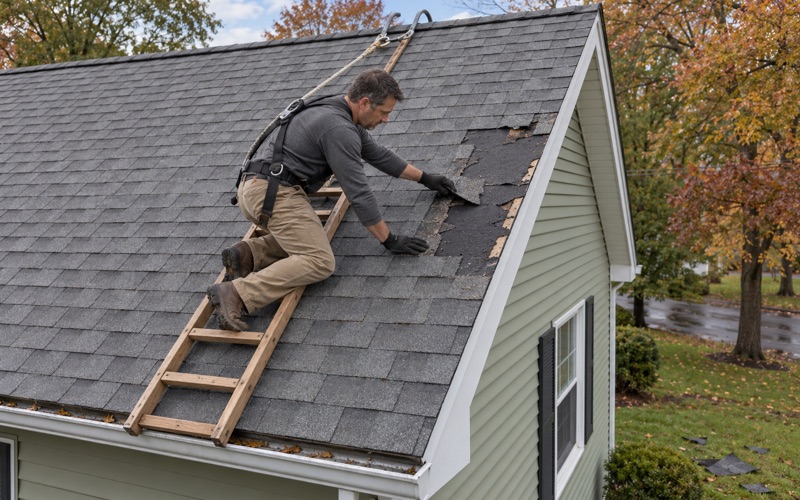
On a small lakeside lot there may be room for only a compact container, a tarp line along one side and a ladder setup that keeps clear of the house next door. Materials sometimes have to be carried in by hand or delivered in smaller loads rather than dropped all at once. The crew works under fall protection, which OSHA requires at six feet for residential roofing, and that matters on a steep cottage roof above ground that falls away toward the water.
Cleanup on a lot that runs to the shore
At the end of each work day we clean the driveway, the yard and the gutters, and we run a magnet sweep for roofing nails. On a lake lot that sweep reaches the paths and lawn edges toward the water, where stray nails and shingle grit are easy to miss. You should be able to walk the yard barefoot the evening the job wraps up.
Permits and who to call
Replacing the roof covering on a detached one- or two-family house is ordinary maintenance in New Jersey and needs no permit. Denville’s Construction Department at Town Hall, 1 St. Mary’s Place, says permits cover work not considered a repair, maintenance or cosmetic improvement, and asks owners to call when in doubt. If reinforcing rafters or raising a roofline turns a re-roof into something larger, that call is the right first step.
Leaks, Ice and Trees Around Denville’s Lakes
Leaks on houses like these tend to start where the building was changed, not in the middle of an open roof plane. Here is where we look first and how we handle what we find.
Where additions meet the original roof
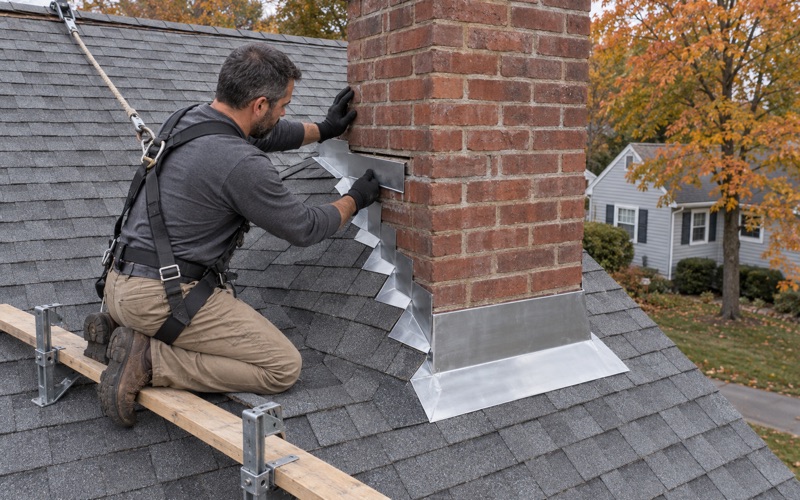
A cottage enlarged over the decades may have three or four roof planes tied together, each with its own valley, wall joint and run of step flashing. Those transitions are where water usually gets in, and they are also where old metal most often gets reused. We replace step, counter and chimney flashing with the roof rather than tucking new shingles under worn pieces, and we add kick-out flashing where a roof edge dies into a sidewall.
Ice at the eaves
Morris County is not in New Jersey’s ice-barrier area, which covers Sussex County only, but ice dams still form wherever heat leaks into a cold roof edge. A converted cottage with thin insulation and weak ventilation is a likely candidate, so we treat the attic as part of the fix. We often recommend a self-adhering ASTM D1970 ice and water barrier along the eaves anyway, because it costs little next to a stained ceiling.
Trees, storms and water off the roof
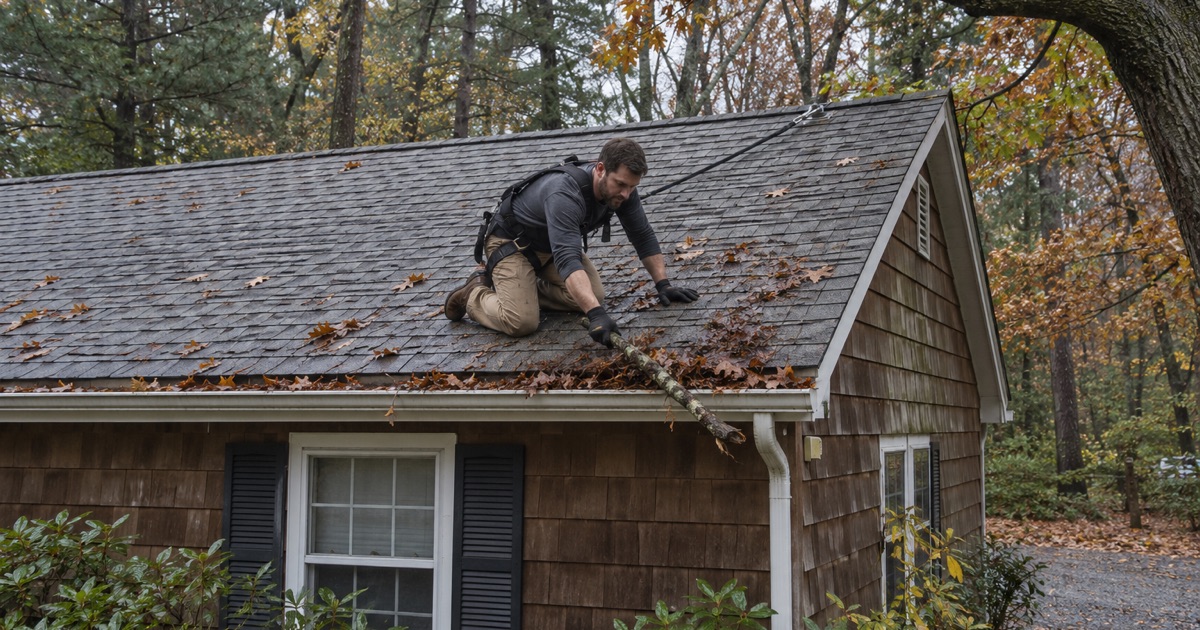
Lakeside lots are often shaded by mature trees that drop limbs in storms and keep roof planes damp long after the rain stops. After a storm we photograph the damage and write it up for your own claim, and the crew will meet your adjuster on site if you ask. We also size and pitch gutters and leaders with the roof so water leaves the house rather than soaking the foundation on a lot that slopes toward the lake.
Selling or signing
If the lake house is going on the market, we can prepare a written roof condition report for you to hand to the buyer’s inspector. Every contract we write follows New Jersey’s home improvement rules, including the three-day cancellation notice, so you have time to read it at your own table before anything starts.
- 20+ Years Roofing
- Itemized Written Estimates
- Attic-to-Ridge Leak Tracing