Piscataway Roofing has spent more than 20 years on roofing in East Hanover and across this part of New Jersey, and most of the calls we take start the same way: water showed up somewhere it should not be. Our first job is to find out where that water came from. Every leak visit includes time in the attic as well as on the shingles, so the path is traced to the point where it actually enters before a single line gets priced.
Once the source is known, you get a plain answer on whether the roof can be repaired. Replacement only comes up after that question is settled, and only if the deck, the flashing or the age of the covering make a repair a poor use of your money. Many leaks on a sound roof come down to one failed pipe boot, a lifted shingle tab or a short run of loose step flashing.
When a full roof does make sense, our written scope breaks the job into separate lines for tear-off, decking, underlayment, flashing, ventilation and gutters. That lets you set our estimate next to anyone else’s and compare them item by item. It also means nothing gets quietly folded into a lump sum that is hard to question later.
Roof Repair in East Hanover, Between the Passaic and the Whippany
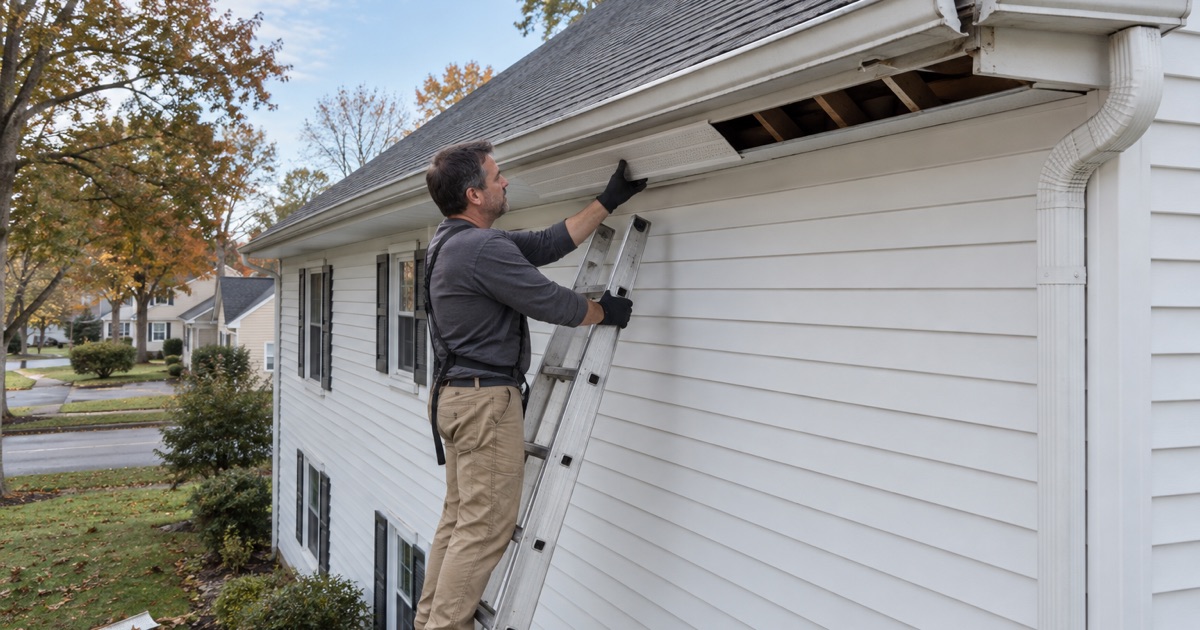
East Hanover sits where the Whippany River meets the Passaic River, and those two rivers draw much of the township’s boundary on the west, north and east. That geography shapes the kind of roofing work we do here more than any single storm does. Water can reach a house from the sky and from the river, and the two arrive on very different schedules.
What a Repair Visit Covers
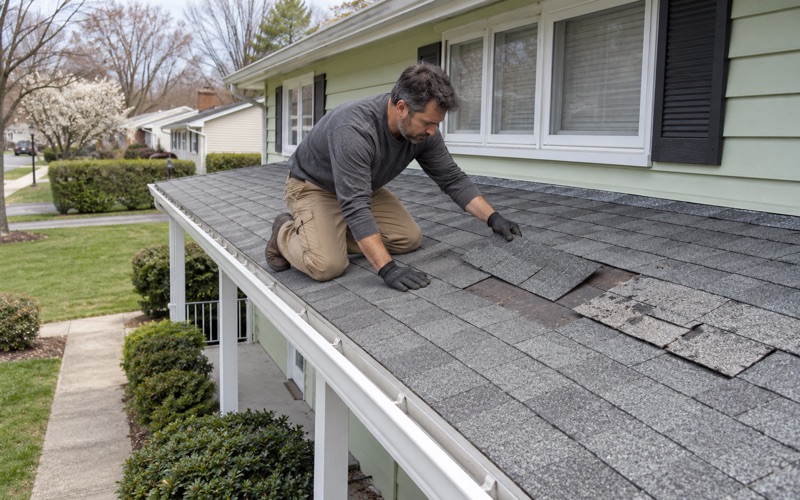
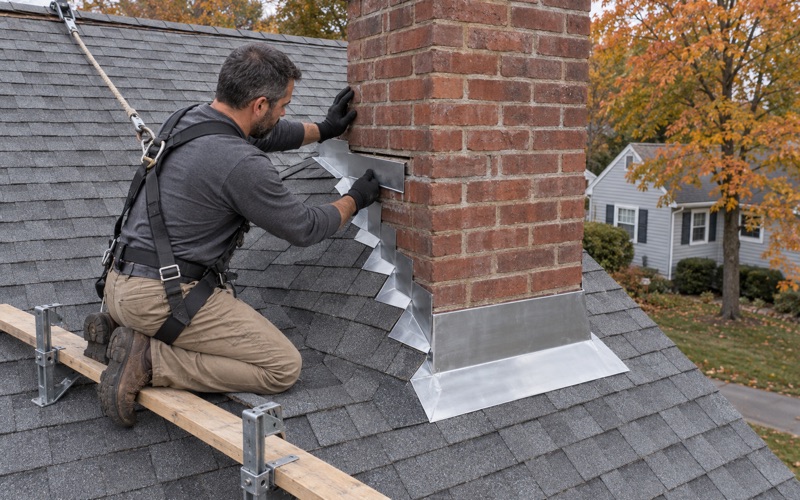
A repair visit starts outside with the field of the roof, the valleys, the ridge and every penetration. We look closely at pipe boots, the step flashing along sidewalls, the counter flashing on chimneys and the apron and kick-out flashing where a roof edge meets a wall. Kick-out flashing matters more than its size suggests, because without it the runoff from a lower roof edge gets driven straight into the siding and the wall cavity behind it.
Inside, we follow stains, damp insulation and rusted nail tips back toward the decking. A ceiling stain often sits several feet downslope from the real entry point, since water runs along rafters and the underside of the deck before it drips. Tracing it in the attic is what keeps a repair from patching the wrong spot.
Small Fixes That Hold
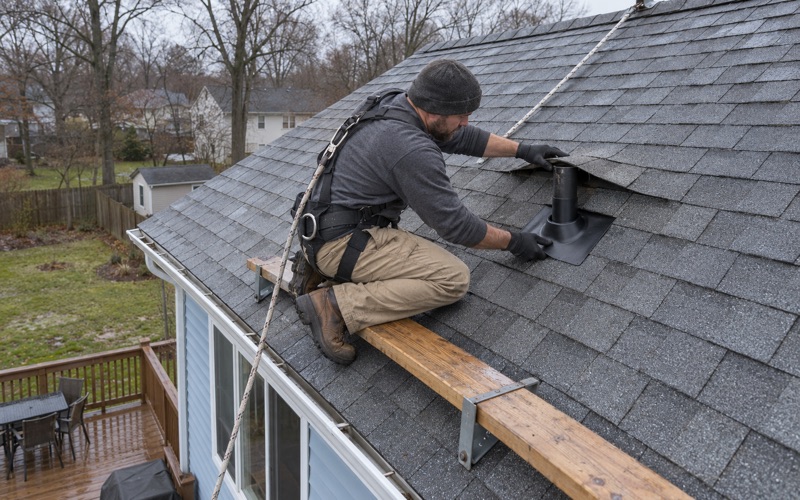
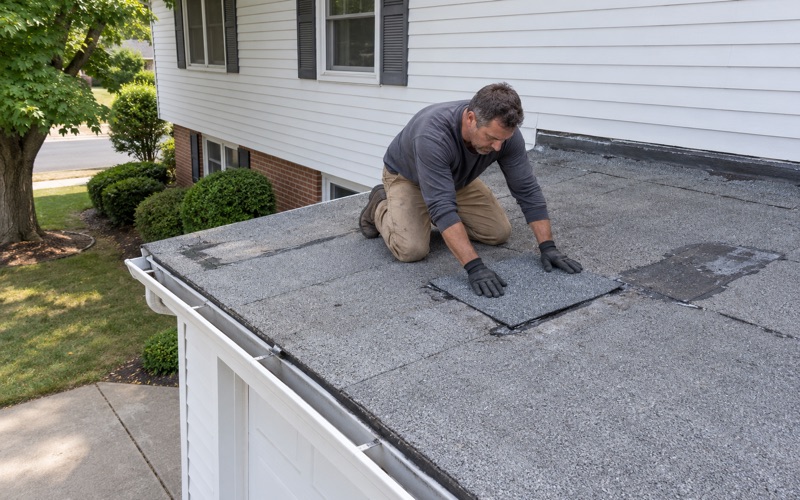
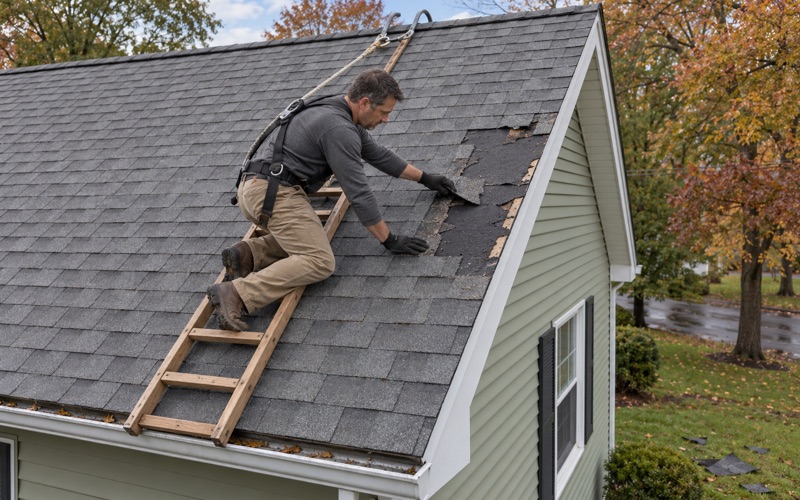
Most repairs here are modest. A cracked boot gets replaced, a few blown shingles get matched and sealed, a chimney gets new counter flashing set into a reglet or a fresh crown and cap. Where repairs touch painted trim or fascia on a home built before 1978, we follow the lead-safe work practices that federal rules require for that kind of disturbance.
We will also tell you when a repair is only buying time. If the shingles are curling across the whole field or the granules are washing into the gutters by the handful, a patch will hold, but the next one will be needed soon. Hearing that early gives you room to plan instead of reacting after the next heavy rain.
Looking for roofing closer to North Arlington? See Roofing Services in North Arlington.
Rain Through the Roof Versus River Water in the Basement
After a big storm in this township, homeowners sometimes find water in two places at once: a stain on an upstairs ceiling and standing water in the basement or crawlspace. It is tempting to treat both as one event. They are not, and sorting them out early matters for repairs and for any claim you decide to file.
Two Different Events
Federal flood rules define flooding as a general and temporary inundation of normally dry land, and the first cause they list is the overflow of inland or tidal waters. Rain that gets past a damaged shingle, a torn boot or a failed flashing joint is not that. It is water entering through the building envelope from above, and it leaves a trail you can follow from the roof deck down.
River water behaves differently. It rises from the ground, enters at the lowest openings and leaves a level line on walls and stored belongings. When both show up in one house after one storm, they still have separate causes and are usually answered by separate policies, so read your own policies and talk to your agent before assuming which one applies.
Documenting the Roof Side
When storm damage is part of the picture, we photograph it and write it up so you have a record for your own claim. If you ask, our crew will meet the insurance adjuster on site and walk the roof with them. We do not handle claims for you or tell you what a policy will pay, but we can show clearly what happened to the roof and when.
East Hanover is a participating community in the National Flood Insurance Program, and its current effective flood map is dated August 19, 2025. If you want to know how the map treats your own lot, that question belongs with the map itself or the township, not with a roofer guessing from the street.
When River Road and Eagle Rock Avenue Close
River flooding here tends to arrive after the rain has stopped, not during it. On September 2, 2021, the township announced that the Passaic and Whippany were beginning to overflow and closed several roads, including Eagle Rock Avenue heading toward Roseland, where water had come over the top of the pavement. The same notice closed River Road from Eagle Rock to Overlook Road and Troy Road at both bridges.
The Crest Comes Later
That notice also said the rivers had not crested yet and were expected to crest over the next 36 hours. Residents in low-lying areas were told to move their cars to higher ground. For roofing, that delay matters, because the dry day after a storm is often when a homeowner first climbs into the attic, while the river is still rising a mile away.
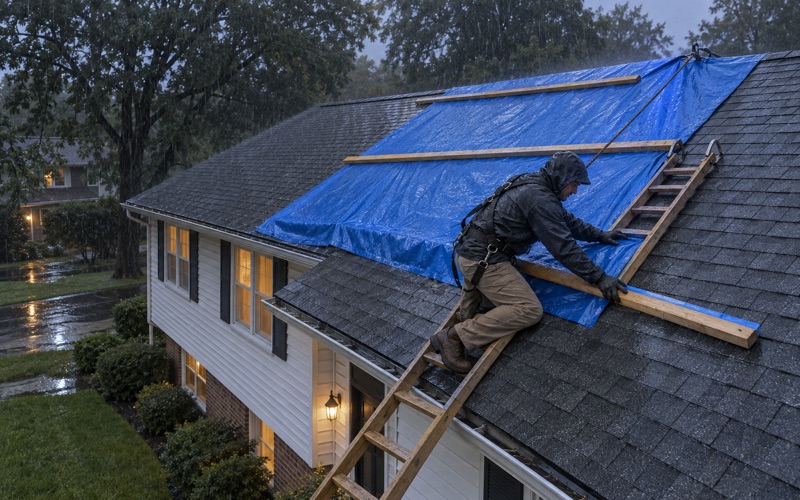
We plan around it. If River Road or Eagle Rock Avenue is under water, we reschedule rather than send a truck through a closed route, and we will tell you plainly if a visit has to wait. A tarp over a known roof opening can often go on before the crest, which keeps rain damage from piling on top of whatever the river brings.
The Floodway and the Buyouts
The flood risk here is old enough to be written into federal law. A 1986 water resources act authorized buying out and removing homes from the state-defined Passaic River floodway in nine named municipalities, and East Hanover is one of them. A 2019 Army Corps of Engineers report on that program lists the township alongside Fairfield, Wayne, Lincoln Park and others.
More recently, in May 2025, the state’s Blue Acres program announced a $3.2 million federal-state buyout of five properties in East Hanover and South Plainfield after river flooding between December 18, 2023 and January 10, 2024. The structures are to be removed and the land replanted to hold floodwater. For a homeowner nearby, that is a reminder that the river side of the risk is real and separate from anything a roof can stop.
Inspecting and Replacing a Roof After a Passaic Basin Storm
A post-storm inspection here has two jobs. The first is to find anything the wind and rain did to the roof itself. The second is to say clearly which water came from above and which did not, so you are not paying for roof work to fix a basement problem or the reverse.
What We Check After a Storm
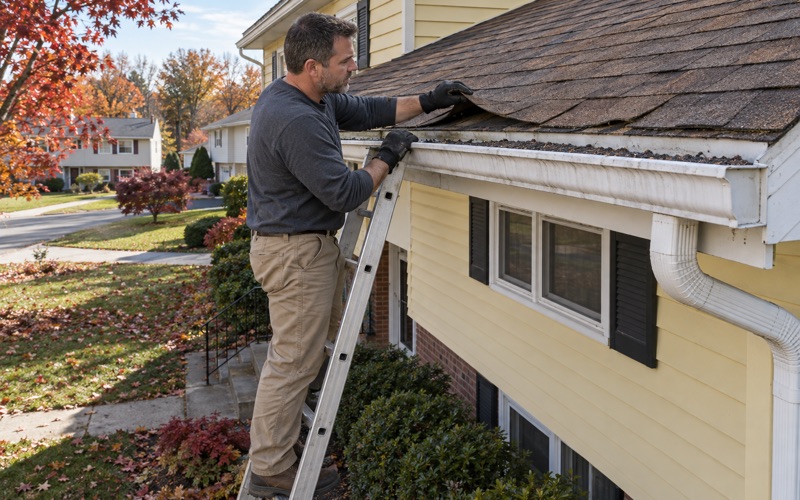
We walk the roof for lifted or missing shingles, creased tabs, exposed nail heads and damage around the ridge vent. We check the drip edge at the eaves and rakes, the gutters and leaders for separation, and every flashing joint for gaps. Then we go into the attic and look for fresh wetting on the deck, the rafters and the insulation, which tells us whether the roof actually let water in.
Gutters get extra attention in a river town. Leaders that dump water at the foundation add to whatever groundwater is already rising, so when we size and pitch gutters with a roof, we aim to carry the water well away from the house.
Replacement on Detached Houses
Most homes in East Hanover are detached and owner-occupied, with 3,066 of the township’s 3,955 occupied units counted as owner-occupied detached houses in recent Census estimates. A large share went up in the 1990s, and many of those original roofs are now 25 years old or more. When one of them is due, we plan the full system rather than just the shingles.
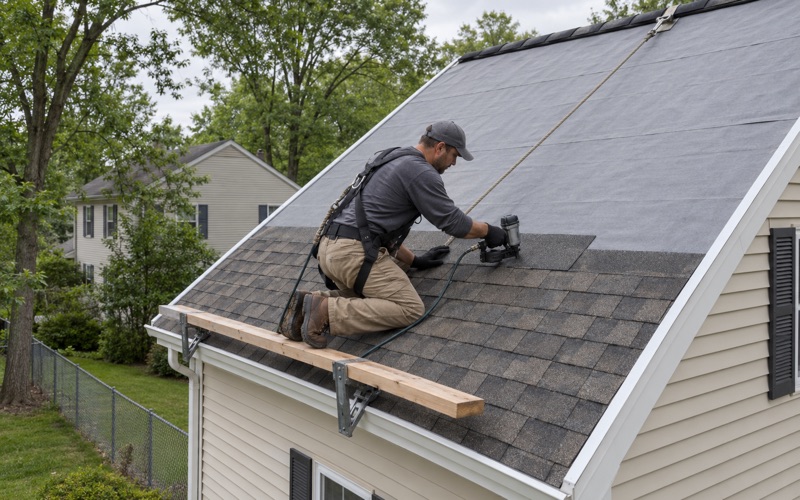
That means architectural shingles from lines like GAF Timberline HDZ, Owens Corning Duration or CertainTeed Landmark, laid over a synthetic underlayment with self-adhering ice and water barrier at the eaves and in the valleys. Step, counter and chimney flashing are replaced with the roof instead of reused under new material. Attic ventilation is checked on every replacement, usually with a ridge vent balanced against soffit intake, because a roof that cannot breathe ages from underneath.
What Happens on the Job
Once the old roof is off, any damaged decking is photographed and shown to you before it is replaced, at a per-sheet price already set in the contract. The contract itself follows New Jersey’s home improvement rules, including your three-day right to cancel. Replacing the roof covering on a detached one- or two-family house is treated as ordinary maintenance under the state construction code, though a tear-off over two or more existing layers follows its own rehabilitation rules.
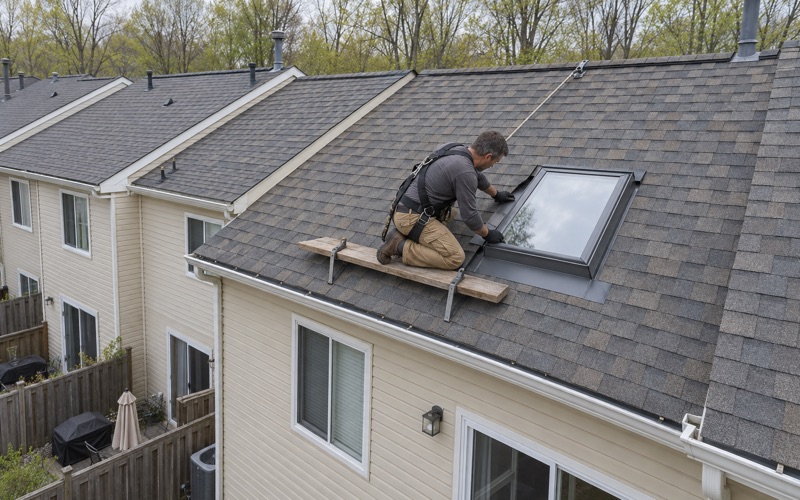
Our crews work with fall protection and clean the driveway, yard and gutters at the end of each day, including a magnet sweep for roofing nails. If you have solar panels, their removal and reinstall go into the schedule from the start. And if you are selling, we can write up a roof condition report you can hand to the buyer’s inspector.
- 20+ Years Roofing
- Itemized Written Estimates
- Attic-to-Ridge Leak Tracing