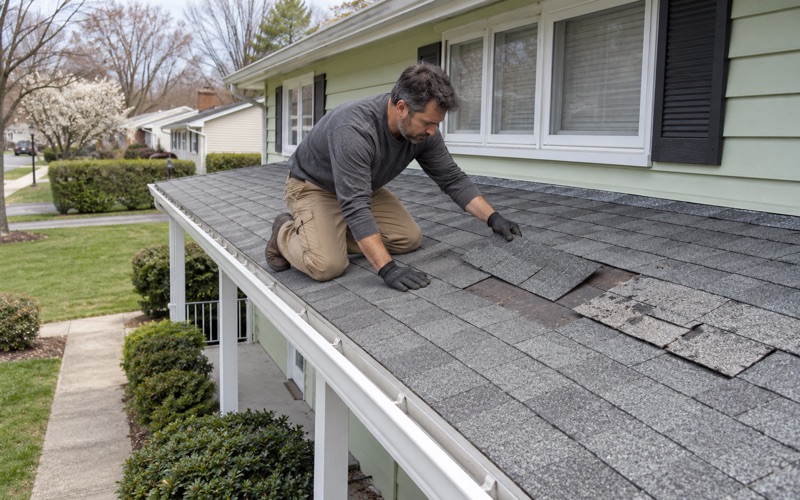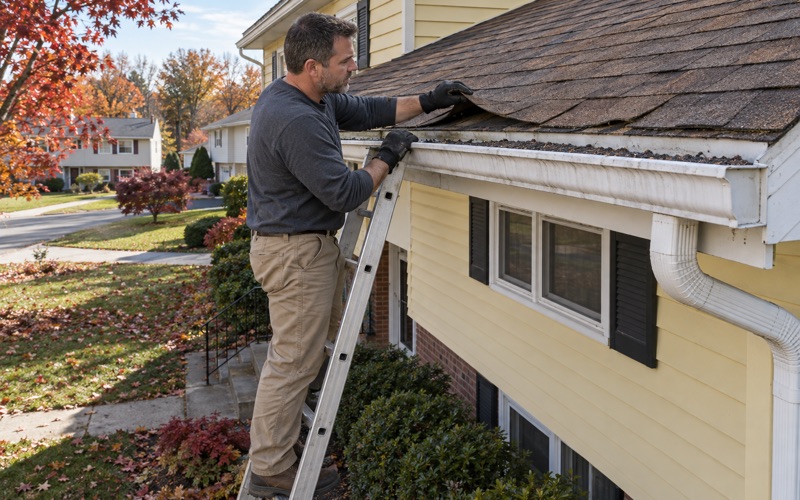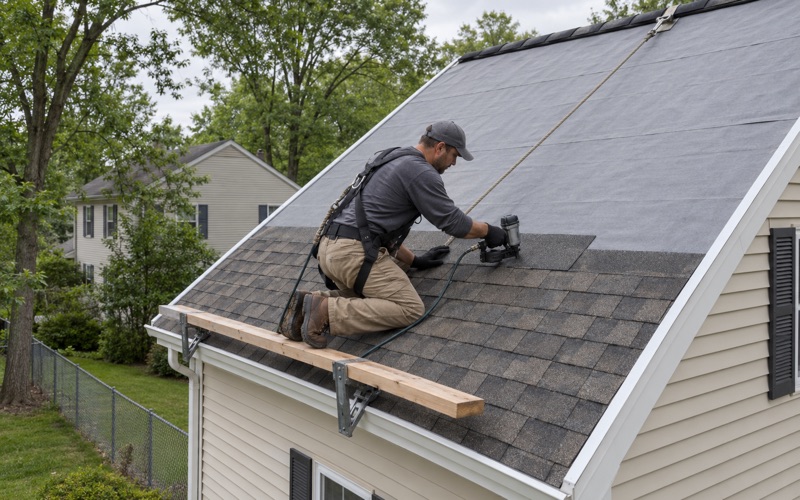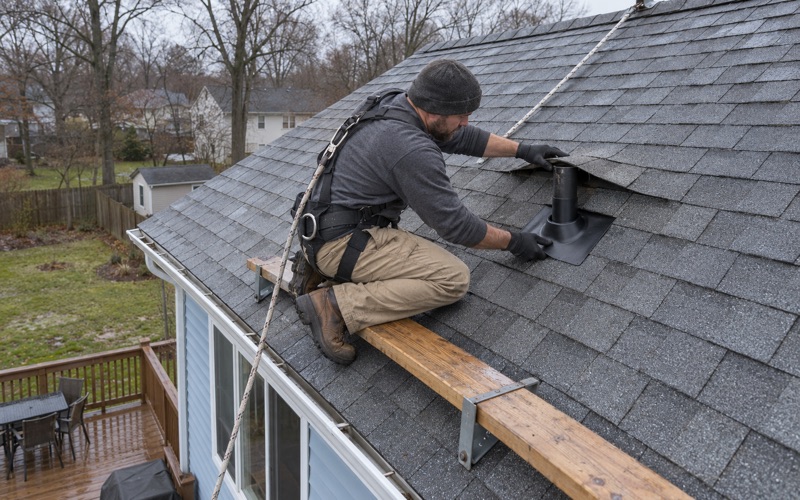
Piscataway Roofing brings more than 20 years in the trade to roofing in Highland Park, and we start every job the same way: by finding out whether the roof in front of us needs fixing or needs replacing. On a leak call we check the attic as well as the shingles, so the water is traced to the spot where it actually enters before a single item is priced.
A lot of the roofs we are asked about here sit over tenants rather than over the person paying for the work. That changes what a good quote has to do. It still has to say what the job costs and what gets replaced, but it also has to make sense to people who were never on the ladder, and it has to plan the work around households living underneath.
If a repair will carry the roof another stretch of years, we say so plainly and stop there. When replacement is the honest answer, the written scope we hand over is built to be read, compared and filed, which matters more in this borough than in most.
Rent Control That Reaches Highland Park’s Smaller Rentals
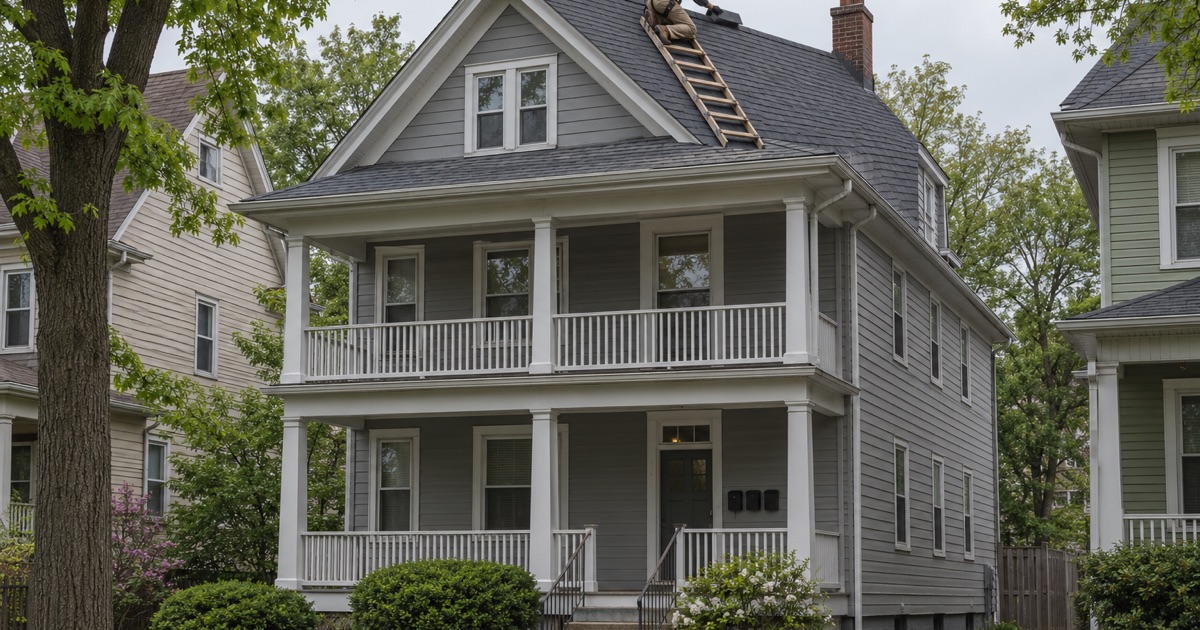
Highland Park is a renters’ borough. Census survey figures put 59.7 percent of occupied homes in renter hands, and 1,310 units sit in three- and four-unit buildings, almost every one of them rented. Detached single-family houses make up only about a third of the housing. In practice, the person deciding on a new roof here is very often a landlord with a small building and a handful of tenants.
Who the ordinance covers
Rent control in Highland Park was rewritten by Ordinance 22-2066, adopted December 20, 2022, which replaced the old Chapter 321. The borough says the regulations apply to all rental dwellings, including single-, two-, three- and four-family units. That reach is unusual. Plenty of owners of a rented two-family or a converted four-unit house assume local rent rules are aimed at large apartment complexes, and here they are not.
The yearly ceiling next to a roof bill
The allowable annual increase is tied to the consumer price index and capped at 5 percent. The borough lists 3.55 percent for 2025 and 3.25 percent for 2026. A landlord weighing a full tear-off is looking at a single large expense set against rent that moves a few percent a year, and the ordinance does not leave that gap to guesswork. Its route for a planned major capital improvement is a surcharge application to the Rent Control Board, a body made up of tenants, landlords and homeowners.
Whether a particular roof replacement counts as a major capital improvement is not something we decide, and we do not tell owners it does or does not. That call belongs to the Board under the ordinance. What we can do is make sure the roofing side of the paperwork is accurate, complete and easy to follow.
Why the quote matters before the hearing
A landlord who decides to apply is going to describe the job to the Board, and the most detailed description of that job usually exists in one place: the roofer’s written quote. A vague number on a one-page proposal leaves the owner explaining things from memory. A scope that names every component, the material going on and what happens if hidden damage turns up gives the owner something concrete to put in front of the Board and the tenants alike.
Looking for roofing closer to Bound Brook? See Bound Brook Roofing.
What the Capital Improvement Surcharge Application Asks For
The capital improvement surcharge provision in Chapter 321 lets a landlord apply for a surcharge to cover the cost of a planned major capital improvement to a multiple dwelling as the ordinance defines it in its first section. Owners should check that definition against their own building with the borough before planning around it. The application form is posted on the borough website and available in hard copy at Borough Hall.
The code asks for three things. Each one touches the roof quote differently, and only one of them is really ours to supply.
Total cost of the improvement
This is where our written scope does its work. We list tear-off, decking, underlayment, flashing, ventilation and gutters as separate lines rather than one lump figure, so anyone reviewing the number can see what it buys. Decking is the line owners most often worry about, because nobody knows its condition until the old roof is off. Our contract sets a per-sheet price in advance, and any damaged sheet is photographed and shown to the owner before it is replaced.
Useful life, as the landlord claims it
The ordinance asks for the number of years of useful life the landlord claims for depreciation on income taxes. That is a tax figure, and it comes from the owner and whoever prepares the owner’s returns, not from a roofer. Our part is to name exactly what is going on the building, such as an architectural laminated shingle like GAF Timberline HDZ, Owens Corning Duration or CertainTeed Landmark, along with the underlayment and flashing, so the person setting the depreciation schedule knows what was installed.
The surcharge amount sought
The third item is the amount the landlord is asking tenants to pay. We do not suggest a figure, we do not advise on rent, and we do not prepare or file the application. A landlord who wants help with that side should talk to the borough or their own advisers.
Thirty Days’ Notice and the Benefit-to-Tenants Test
The borough requires a landlord to tell tenants about a surcharge application at least 30 days before the Rent Control Board hearing. That window means tenants will often see the roofing paperwork, or at least hear about it, before the crew arrives. A scope written in plain terms is easier on everyone during those weeks than a quote full of trade shorthand.
Planning the work around the people inside
A re-roof on an occupied three- or four-unit building is a different job from one on an empty house. Tenants need to know which days the crew will be overhead, when the noise starts, and where they can and cannot park while the dumpster is in the driveway. We set those dates with the landlord in advance and keep to them, and we send the owner photos after each visit so nobody has to stand in the yard to know where the job stands. Telling tenants anything about rent is the landlord’s business, never ours.
The question the Board asks
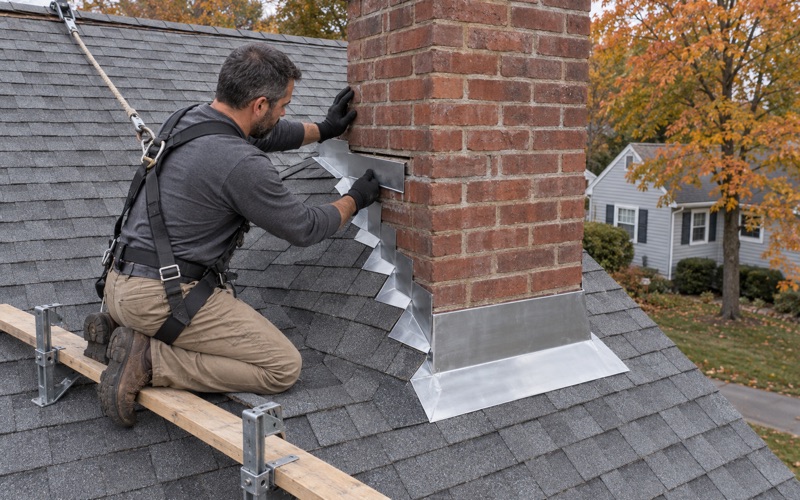
The code says the Board may grant a surcharge only if it finds that the major capital improvement benefits the tenant. How the Board weighs that on any given building is its decision, and no roofer can promise an outcome. What a quote can do is describe what the work changes for the people living under it: a leak traced from inside the attic and stopped at its source, step, counter and chimney flashing replaced with the roof instead of being reused under new shingles, and attic ventilation checked so the new roof is not aging from underneath.
Approval first, surcharge after the work is paid
The ordinance also separates approval from collection. The Board may approve the planned improvement, but the landlord may not put a surcharge in place until verification of completion of work and payment has been submitted. For an owner, that means the paper trail has to run from the quote that was filed through to a final invoice and proof the contractor was paid. We keep our final invoice line-for-line with the original scope, and we photograph the finished work, so the before and after match without anyone having to reconstruct what happened.
A Written Roof Quote a Rent Control Board Can Read
A roof quote that is going to be reviewed by people outside the transaction needs to be specific, consistent and dated. Ours is written as a scope first and a price second, and it is the same document whether the owner is filing anything or simply comparing two contractors.
Separate lines for every part of the job
When tear-off, decking, underlayment, drip edge, flashing, ridge vent and gutters each carry their own line, two estimates can be compared item by item, and a reviewer can see which parts of a price are fixed and which depend on what turns up under the old shingles. In Highland Park, where 27.4 percent of homes were built in 1939 or earlier, that unknown can be real, and we say so in writing rather than burying it in an allowance.
Gutters, leaders and the water that leaves the roof
On small multifamily buildings, the gutters and leaders often matter as much to tenants as the shingles do, because a short or poorly pitched run sends water toward entrances and foundations. We size and pitch seamless aluminum gutters and leaders as part of the roof scope, so the water goes where it should and the quote shows it as its own item.
A contract built to New Jersey rules, and a site kept clean
Our contracts follow New Jersey’s home improvement rules, including the three-day cancellation notice, which gives an owner time to reread a large commitment before work is booked. The contract carries the same line items as the quote, so the document a landlord signs, the one that may go to the Board and the final invoice all describe the same job in the same order. At the end of every work day the driveway, yard and gutters are cleaned, with a magnet sweep for roofing nails, which matters in a building where several households share the same walkway and parking.
If you own a rental in Highland Park and are weighing a roof, call us for an inspection that starts in the attic, a straight answer on repair versus replacement, and a written quote you can hand to anyone who needs to read it.
- 20+ Years Roofing
- Itemized Written Estimates
- Attic-to-Ridge Leak Tracing