Piscataway Roofing has spent more than 20 years on roofing in Holmdel and the rest of Central Jersey, and much of the work here comes down to one question: is this the house’s first replacement roof? When it is, several decisions that were made for the owner at construction get made again, this time on purpose. We treat that visit as a planning job, not just a shingle order.
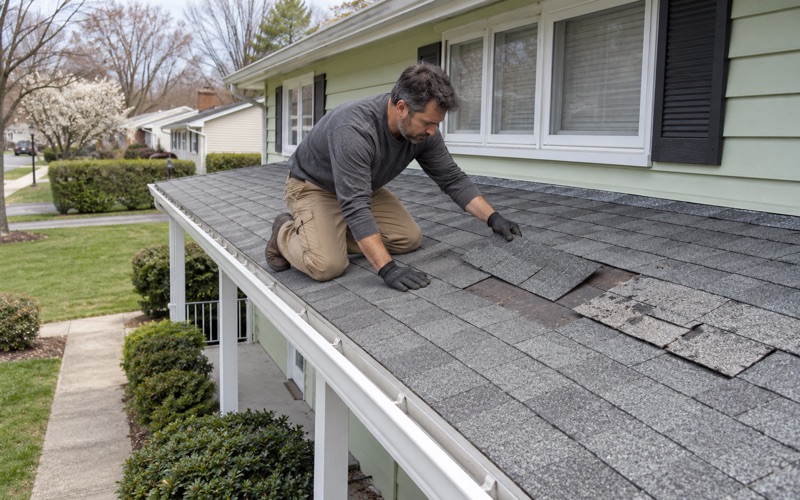
Every estimate starts with whether the existing roof can be repaired, and we give that answer plainly before replacement comes up at all. If a leak brought us out, we go into the attic as well as onto the roof, because the stain on a bedroom ceiling is rarely directly below the spot where water gets in. Only after the source is found do we put a number on anything.
When replacement is the right call, the written scope breaks out tear-off, decking, underlayment, flashing, ventilation and gutters line by line. That lets an owner set our estimate beside anyone else’s and compare the same items. It also makes the first-replacement choices visible instead of buried in a single total.
Holmdel’s Building Wave, From Holmdel Mews to Fox Chase
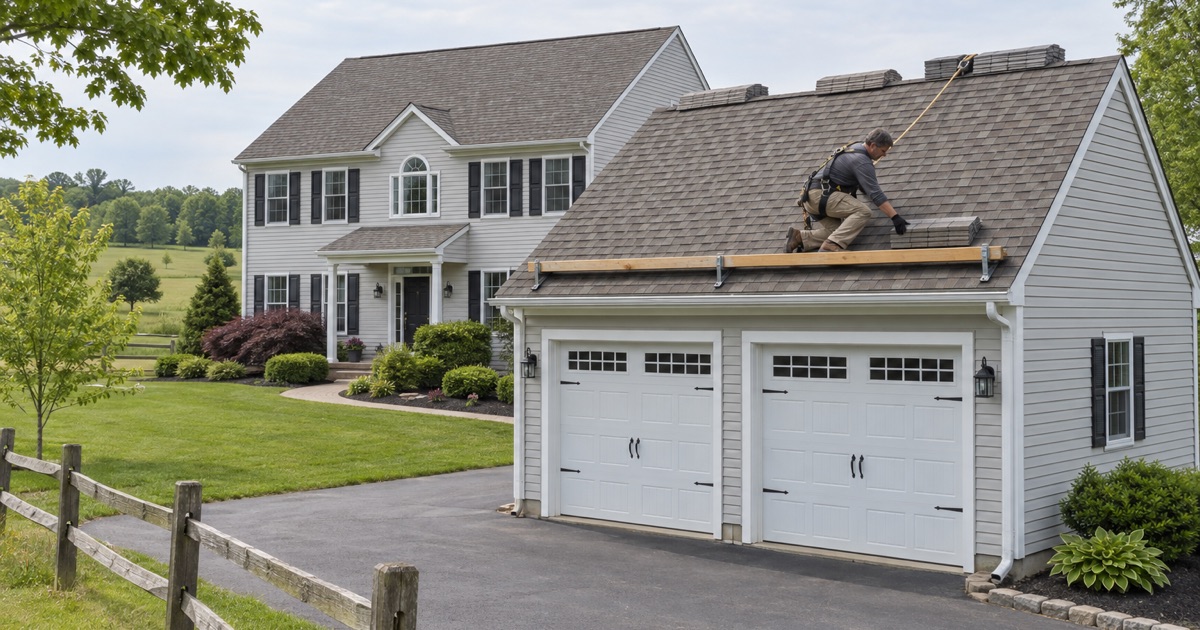
Most of the township’s housing went up in one stretch. Census Reporter’s 2024 five-year estimates count 3,522 of Holmdel’s 6,528 homes, or 54.0 percent, built from 1980 through 2009: 943 in the 1980s, 1,781 in the 1990s and 798 in the 2000s. Over roughly the same years the census population went from 8,447 in 1980 to 11,532 in 1990 and 15,781 in 2000, close to double in two decades.
What the 1990s added
A New York Times column on living in Holmdel, published December 10, 2000, described the 1990s as the decade that saw 900 town houses and hundreds of new homes, and it priced fifteen-year-old four-bedroom colonials. That figure comes from the newspaper, not a census table, but it matches the shape of the census count. The 1990s are the single largest building decade in the township, at 1,781 units.
For roofing, the result is a large share of homes that reached the same age at roughly the same time. A house finished in the early 1990s got its first roof more than thirty years ago, and the houses on either side of it often did too. When one owner on a street starts asking about replacement, neighbors are often weighing the same decision.
The named neighborhoods
Listing records place several neighborhoods squarely in that wave. Holmdel Mews includes houses on Northampton Drive listed as built in 1984, the Fox Chase townhomes on Agostina Drive and Weller Place are listed at 1990, and Grace Wood Glen is listed at 1995. Fox Chase and Beau Ridge also carry single-family Colonial Revival and New Traditional houses on lots from half an acre to more than an acre, according to listing and realty data we have not verified house by house.
None of those records say what the original roof was, who built it to what specification, or whether it has already been replaced. Many of these homes will have been re-roofed at least once by now, and some owners will have bought a house with a newer roof than its year built suggests. That is why we start every Holmdel visit by establishing the roof’s own history rather than assuming it from the deed.
Looking for roofing closer to East Hanover? See Roofing in East Hanover.
Is This the House’s First Replacement Roof?
The year a house was built tells us when its first roof went on, and nothing more. A house from 1990 might be on its original covering, its second, or a partial replacement after a storm or a sale. Before we write a scope, we work out which of those we are looking at.
How we tell
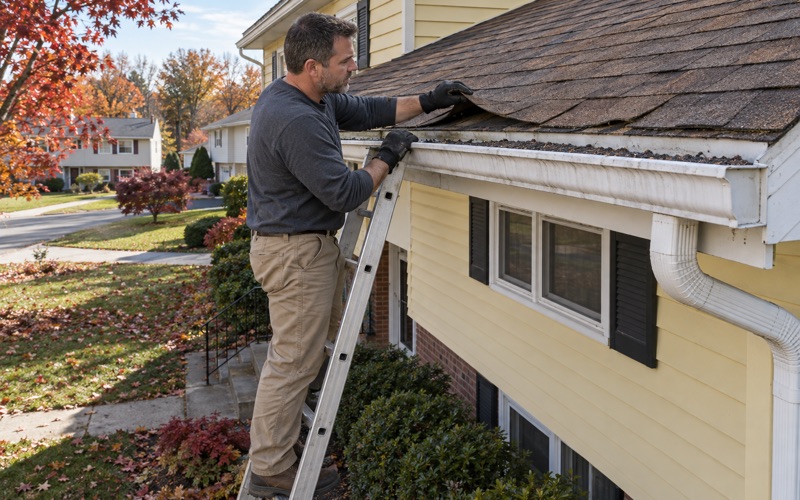
In the attic we look at the underside of the decking, the nails coming through it, the condition of the sheathing around vents and the chimney, and any staining from old leaks. On the roof we check how many layers are present at the eaves and rakes, whether the drip edge and flashing match the shingles, and whether the ridge has been reworked. Paperwork from a past sale or an earlier contractor helps, and we ask for it, but the roof itself usually tells the story.
We photograph what we find in both places and walk the owner through the pictures before talking about price. If the evidence points to an original roof, we say so and explain what that means for the scope. If it points to an earlier replacement, we note how that job was done, because its shortcuts become part of what we are now taking off.
Why the answer matters
On a first replacement, nobody has yet made the big choices with this house in mind. The builder picked a shingle, an underlayment and a vent layout for a whole subdivision at once, often decades ago. A first re-roof is the owner’s chance to decide those things for the house they actually live in.
On a later replacement the earlier contractor’s choices are already in place, good or bad. We still review them, but the conversation is different: we may be correcting a vent mistake or stripping two layers, not setting the pattern for the first time. Knowing which situation applies keeps the estimate honest.
Tear-Off or a Second Layer on a First-Generation Roof
When a house still carries one layer, an owner will sometimes ask whether new shingles can simply go over the old ones. New Jersey’s rehabilitation subcode allows a re-cover over a single layer in some cases and requires a full tear-off once two or more layers are present. So a second layer may be allowed on a first-generation roof, but that is the start of the question, not the end.
What a tear-off shows
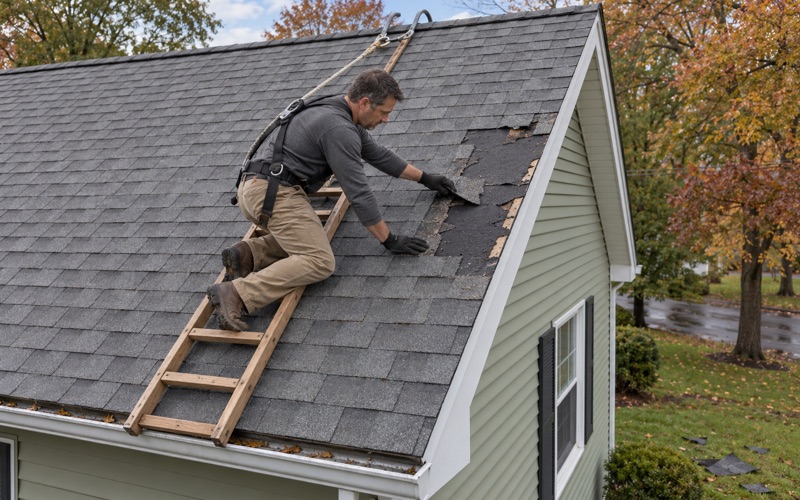
Stripping to the decking is the only way to see the sheathing a roof has sat on for thirty or more years. Soft spots, delaminated plywood and old leak damage around penetrations are invisible from above. When we find damaged decking, we photograph it and show the owner before any sheet is replaced, and the per-sheet price is already written into the contract.
Why we usually recommend it
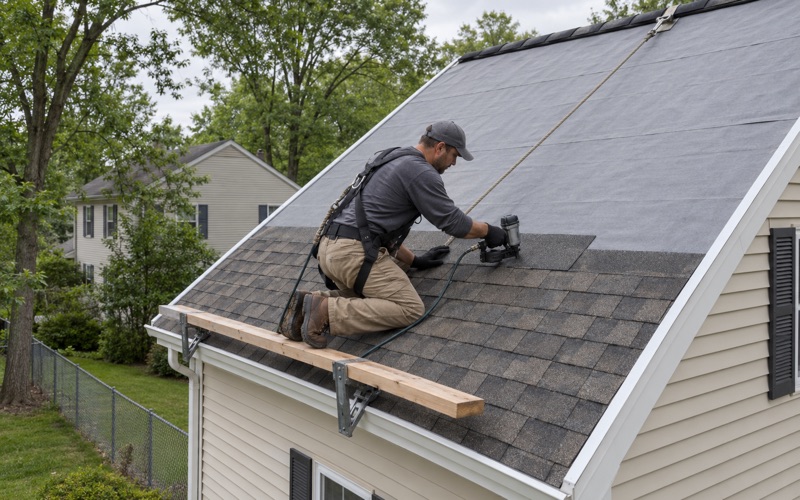
A tear-off lets new ice and water barrier go down at the eaves and in the valleys, and it lets synthetic underlayment cover the rest of the deck. It also means every piece of flashing gets replaced. We do not reuse step, counter or chimney flashing under a new roof, and that is impossible to do properly with an old layer left in place.
An overlay also sets up the next owner, or the same owner twenty years on, for a two-layer tear-off that costs more and hides more. There are houses where a second layer is a reasonable short-term answer, and we will say so when it is. On most first replacements in Holmdel, though, a full tear-off is the decision we would make on our own house.
Detached homes versus townhomes
Replacing the roof covering on a detached one- or two-family house is treated as ordinary maintenance under the state’s construction code, and it does not need a permit. Attached townhomes, like the Fox Chase townhome rows, fall outside that rule, so the paperwork is handled differently. In any townhouse community we also check the association’s documents for who holds the roof before we write an estimate, because that answer varies from one declaration to the next.
Upgrading Shingles and Attic Ventilation at the First Re-Roof
A first replacement is the natural moment to move to a better shingle line and a ventilation system designed for the house. Both choices are cheaper to make now than to retrofit later. Both also last as long as the roof does, so they are worth deciding carefully.
Choosing the shingle line
Most owners we work with choose architectural laminated shingles, such as GAF Timberline HDZ, Owens Corning Duration or CertainTeed Landmark. We walk through wind ratings under ASTM D3161 Class F or ASTM D7158 Class H, the Class A fire rating, and how each line looks on a large colonial roof with long ridges and broad planes. Color and profile matter on a house that is seen from the street across a deep front lawn.
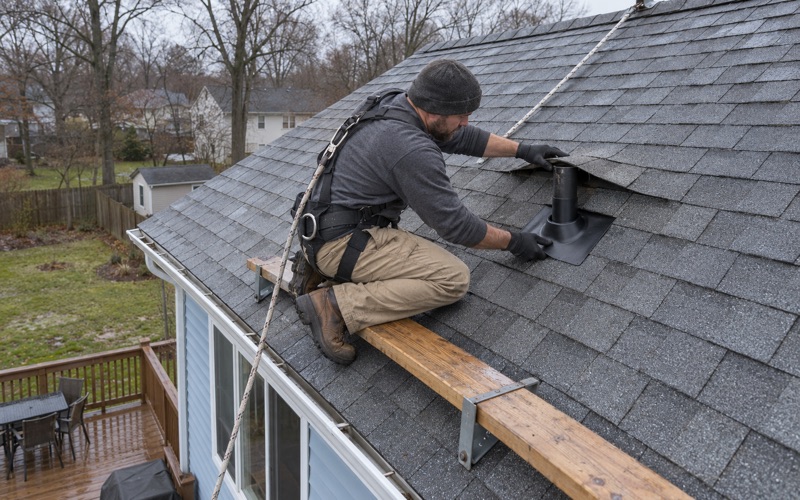
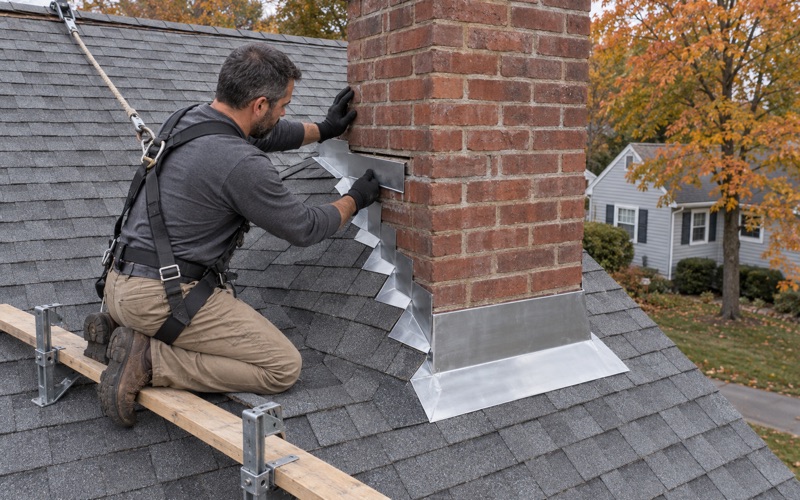
We also look at the details around the shingles. New drip edge at the eaves and rakes, new pipe boots, kick-out flashing where a roof meets a wall, and a chimney cricket where the chimney is wide enough to need one are part of a complete first replacement. Those small parts are where many older roofs actually leak.
Ventilation on 1990s colonials
We check attic ventilation on every replacement, because a roof that cannot breathe ages from underneath. On the two-story colonials common in the 1990s neighborhoods, we often find intake at the soffits that is blocked by insulation or painted over, paired with a mix of exhaust vents that work against each other. Heat and moisture trapped in the attic shorten shingle life and can wet the decking from the inside.
The fix is a balanced system: clear soffit intake matched to a ridge vent, sized by net free area for the attic it serves. We confirm the numbers before the job starts and list the ventilation work as its own line in the scope. If the bathroom fans vent into the attic rather than outdoors, we point that out too.
Gutters and the finished job
Gutters and leaders are sized and pitched as part of the same plan, so the water a new roof sheds goes away from the house instead of toward the foundation. Seamless aluminum gutters are the usual choice. At the end of each work day the crew cleans the driveway, yard and gutters and runs a magnet sweep for nails.
Our contracts follow New Jersey’s home improvement rules, including the three-day cancellation notice, so the owner has time to review the scope after signing. If the house is going on the market, we can also provide a written roof condition report for the seller to hand to the buyer’s inspector. For a Holmdel house facing its first replacement, that report records exactly what was decided and why.
- 20+ Years Roofing
- Itemized Written Estimates
- Attic-to-Ridge Leak Tracing