Piscataway Roofing brings more than 20 years in the trade to roofing in Middlesex, and the part of a replacement owners most often forget to ask about is what happens to the old roof once it is on the ground. Our crews carry it away. Every tear-off quote we write names the hauling as its own line, so nobody finds out on day two that the pile is theirs to deal with.
That matters more here than in many towns, because the borough is not going to collect it. A replacement leaves behind a heavy load of torn shingles, nails, old underlayment and sometimes broken sheathing, and none of it belongs at the curb next to the weekly trash.
Before we price anything, we also tell you plainly whether the roof needs replacing at all. When a repair will do the job, the debris question mostly goes away, and we would rather say so up front than sell a tear-off you did not need.
What Middlesex Public Works Will and Will Not Collect
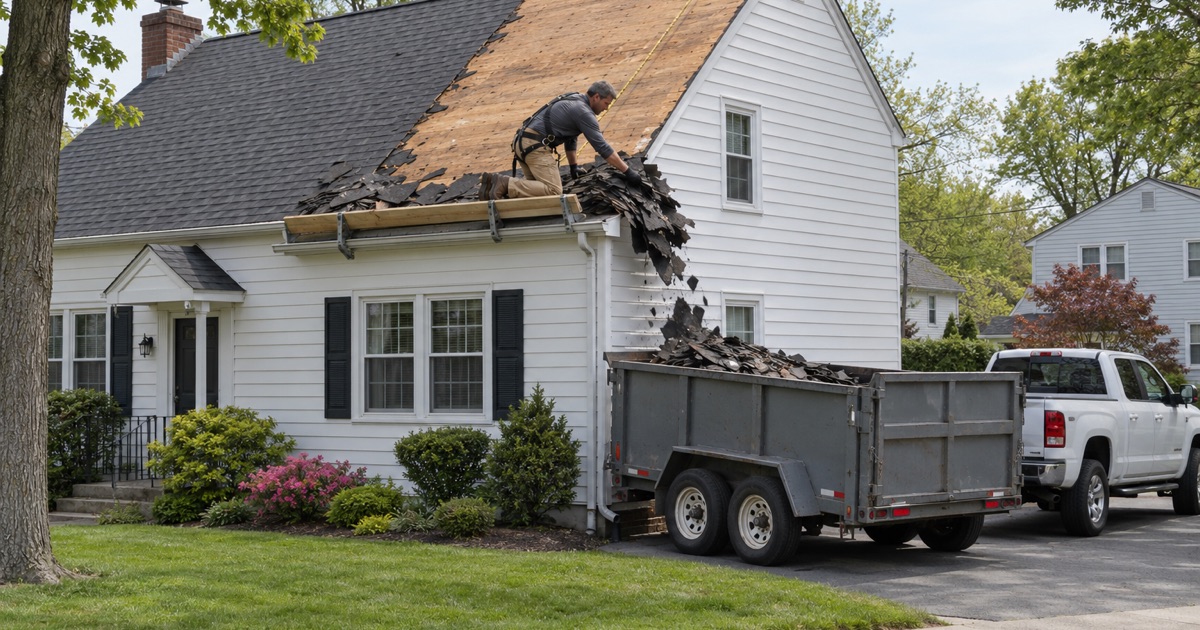
The borough’s Department of Public Works runs curbside bulk collection on a short leash. Its May 2024 newsletter says bulk pickup is limited to one per year, arranged by appointment only, and adds that the rules are strictly enforced. Residents are asked not to put anything at the curb without a scheduled appointment.
One bulk pickup a year, by appointment
The borough code and a 2021 newsletter describe that single collection as free, capped at five cubic yards, held on Wednesdays and not offered from November 1 through January 31. That is one appointment for the whole household for the whole year. Even before you look at what the list excludes, it was never sized for a project the scale of a roof.
Construction debris is on the excluded list
The same newsletter lists what bulk pickup will not accept, and construction debris heads it, followed by items such as cement, lumber, pallets, fencing and hazardous materials. Shingles are not named by word. We read a roof’s torn shingles and underlayment as construction debris, which is what they are on any job site, and lumber is excluded by name.
The practical result is simple. If a crew stacks bundles of old roofing at the end of a Middlesex driveway and drives off, the homeowner is left holding a pile that falls in a category the borough says it will not collect. That is the situation we write our contracts to prevent.
The borough’s Recycling Center at 1200 Mountain Avenue keeps its own schedule, open Tuesday through Saturday on varying hours. We have seen nothing from the borough saying it takes a residential roof’s tear-off, so we never build a job around a trip there and never suggest an owner try it.
Small repairs, too
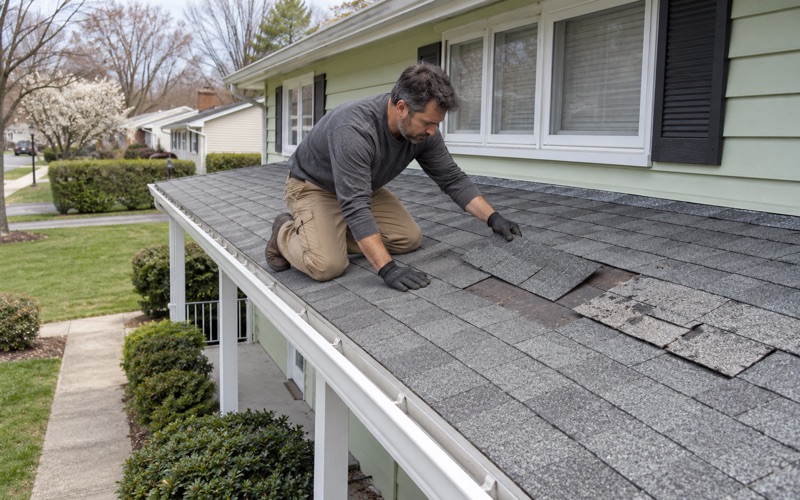
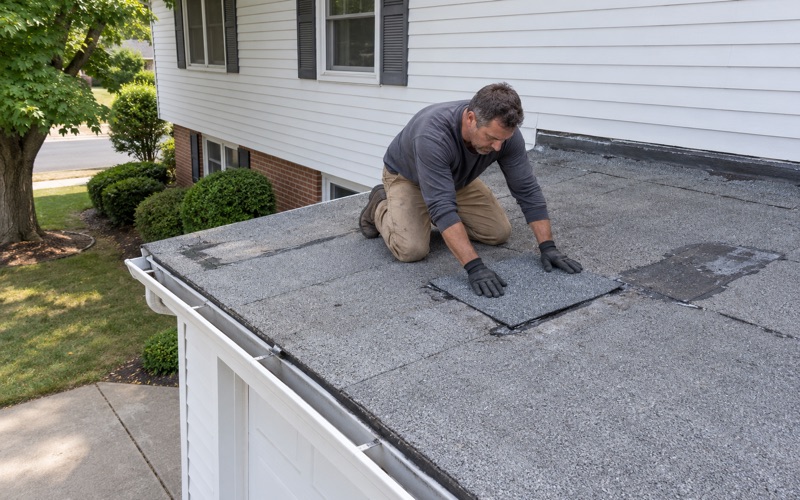
Even a small repair produces a bag or two of shingle scraps, old nails and sealant tubes. Our leak calls start with a look in the attic as well as on the roof, so we find where the water actually enters, and when the repair is done the crew takes the scraps away too. A minor fix never leaves anything for the curb.
Looking for roofing closer to Highland Park? See Roofing Services in Highland Park.
Where a Tear-Off’s Shingles and Sheathing Go
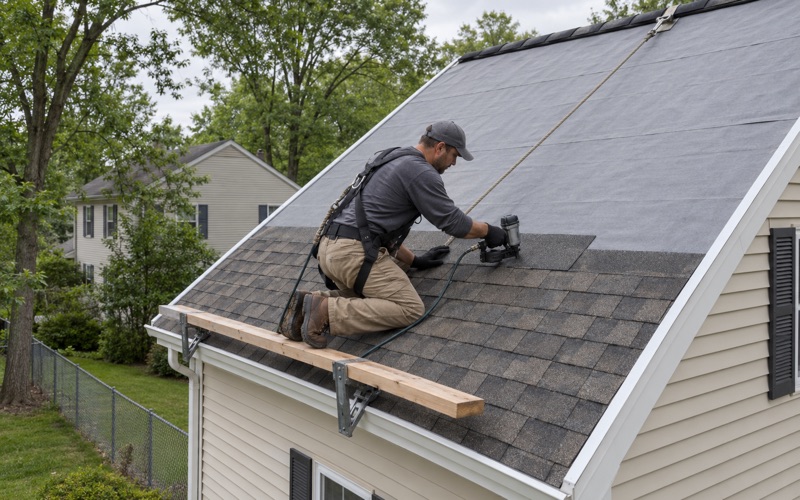
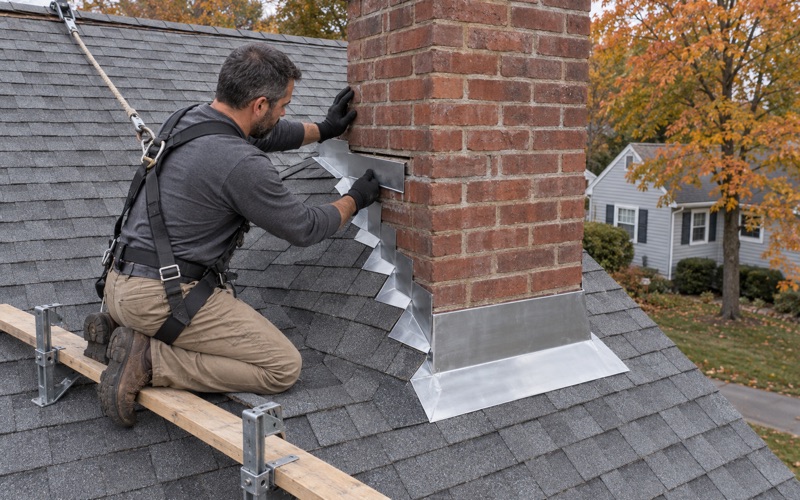
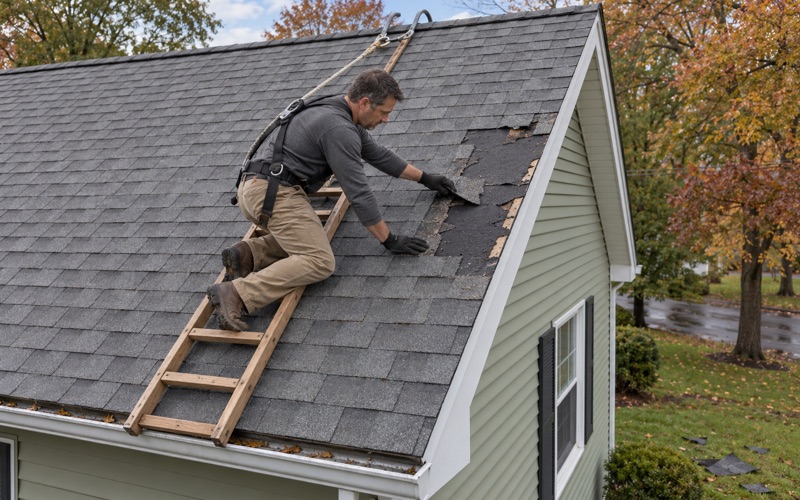
On a full replacement, everything above the rafters can come off: the shingles, the underlayment beneath them, the drip edge, the old flashing, the pipe boots and any decking that has gone soft. We plan where every piece lands before the first shingle is pulled, because a tear-off with no destination ends up in your flower beds. We only strip as much roof as we can dry in with new underlayment the same day, which also keeps each afternoon’s debris to a load the crew can clear before dark.
Shingles, underlayment and nails
Old shingles come off in sheets and chunks, still carrying their nails. The crew drops them straight into a container or our truck rather than onto the lawn wherever the roof’s layout allows, and tarps catch what does not fall clean. Felt or synthetic underlayment goes with them, and so do the bent drip edge and the step flashing, which we replace with the new roof instead of nailing the old metal back under it.
Decking that has to be replaced
Sheathing is the piece people do not budget for. When the old roof is off and a section of plywood or board decking is rotted or delaminated, we photograph it and show you before anything is cut out. The replacement is billed at the per-sheet price already written into your contract, and the removed decking leaves with the rest of the load rather than going into a stack beside the garage.
Vents and the ridge
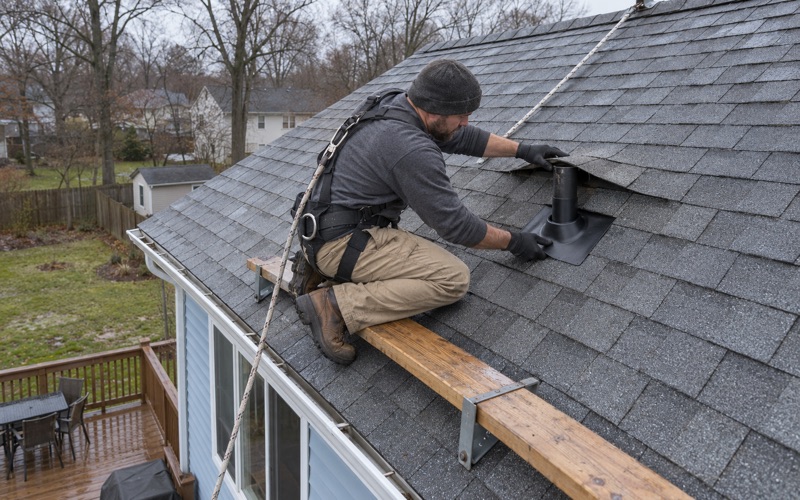
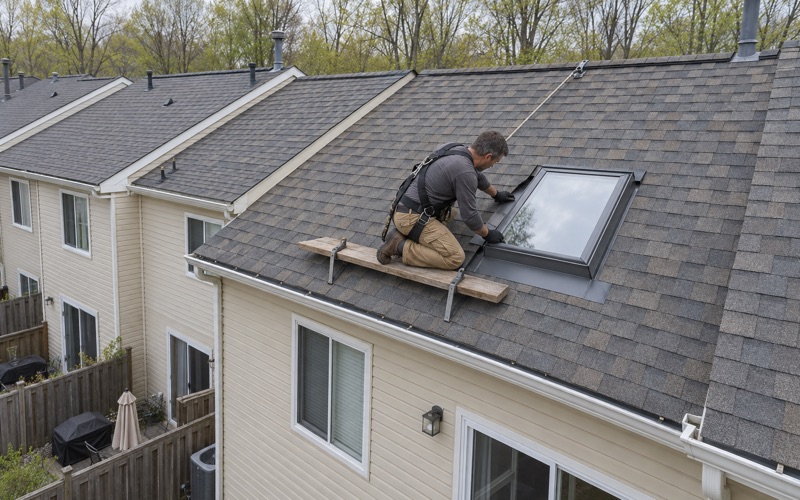
Old roof vents and any worn ridge vent come off with everything else. Because we check attic ventilation on every replacement, some of those openings change size or position on the new roof, and the parts we pull out leave in the same load rather than in your garage.
Why every owner here faces it
Middlesex is mostly owner-occupied detached houses, 3,740 of them by the Census Bureau’s American Community Survey count. For nearly every one of those owners, a roof replacement means a full house’s worth of tear-off with no curbside route for it, so the haul plan is not a detail to settle on the morning the crew arrives.
Putting Debris Removal in the Roofing Quote
A roofing estimate that says ‘remove and replace roof’ in one line tells you almost nothing about the haul. Ours break the job into separate lines for tear-off, decking, underlayment, flashing, ventilation and gutters, and the tear-off line states that disposal of all removed material is included. That lets you lay two quotes side by side and see which one quietly leaves the debris to you.
Disposal costs a roofer real money in fees, fuel and labor, and a number that looks low is sometimes low because the haul is missing. Seeing it on its own line is the only way to know.
What to look for in the wording
When you read any contractor’s quote for a Middlesex roof, look for three things in writing. First, that removal of the old roofing is included, not just the labor of stripping it. Second, who supplies the container or truck and who pays for it. Third, that the price covers hauling and disposal fees, so a second invoice does not arrive after the job.
If a quote is silent on any of those, ask before you sign. A contractor who shrugs at the question is telling you something about how the rest of the job will go.
Contract terms that protect you
Our contracts are written to New Jersey’s home improvement rules, including the notice of your right to cancel within three business days of signing. The disposal language sits in the same document as the price, the materials and the schedule, so it carries the same weight as everything else you agreed to. Nothing about the cleanup is left to a handshake on the driveway.
Dumpsters, Driveways and Protecting the Yard
Most tear-offs leave in one of two ways: loaded into a hauling truck as the crew works, or dropped into a rented roll-off container set on the property. Which one fits depends on the size of the roof, how many layers are coming off and how much room the lot gives us. We tell you which we plan to use when we quote, not when the truck shows up.
Where the container sits
A container belongs on the driveway or another hard surface whenever possible, and we lay boards or plywood under its rails so the steel does not gouge the asphalt or concrete. If the only workable spot is the street, we contact the borough before the delivery date. We have not seen a Middlesex rule on street containers, so we ask rather than assume.
Protecting the yard during tear-off
Before the first shingle comes up, we cover foundation plantings, air conditioning units and window wells with tarps and plywood, and we keep a clear path from the roof edge to the container. Ladders and staging are set where they will not crush a bed or a lawn sprinkler head. The ground crew picks up loose pieces through the day instead of letting them pile up below the eaves.
Solar panels are not debris
If your roof carries solar panels, their removal and reinstall are written into the schedule from the start, so the panel work, the tear-off and the haul are sequenced rather than discovered on the day. Nothing that is going back on the roof gets staged near the container.
End-of-day cleanup and the nail sweep
Every evening, not just on the last day, the driveway, yard and gutters are cleaned before the crew leaves. That includes a rolling magnet sweep across the lawn, the driveway and the walk for roofing nails, because a tear-off scatters them farther than anyone expects and the first thing to find one is often a bare foot, a paw or a tire.
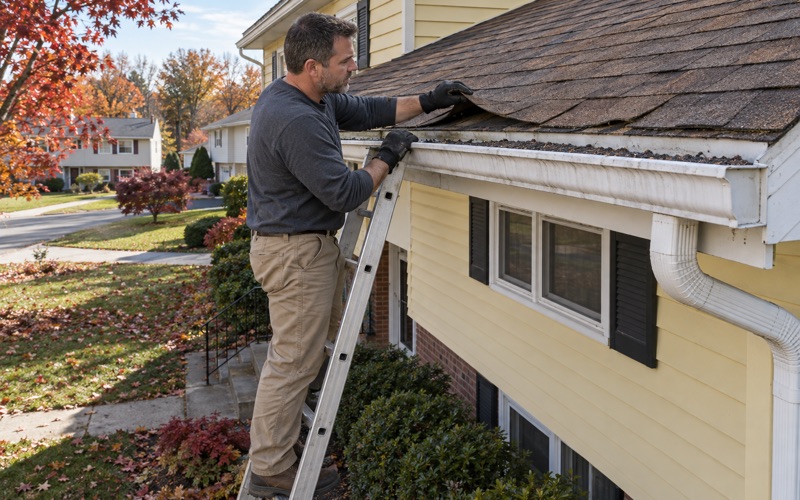
Gutters get special attention. Shingle granules and nail heads collect in them during a tear-off, and leaving that grit behind means the new roof starts life draining into clogged leaders. If the gutters are coming off as part of the job, the old gutters and leaders leave on the same load as the shingles.
On the final day, the container is scheduled out or the last truckload leaves with us, and we walk the property with you before we call the job finished. What you should see is a new roof and a yard that looks the way it did before we arrived, with nothing at the curb for public works to refuse.
- 20+ Years Roofing
- Itemized Written Estimates
- Attic-to-Ridge Leak Tracing