Piscataway Roofing has spent more than 20 years on roofing in New Providence and the towns around our home base, and a good share of that work starts with a phone call about water. Sometimes the caller owns the house. Just as often the caller owns or manages a building where other people live, and the leak is in someone else’s ceiling.
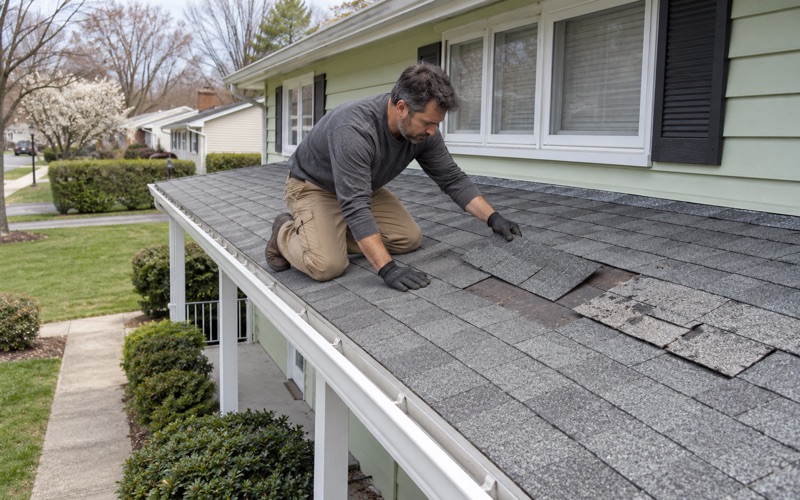
We handle both kinds of call the same way at the start. We look at the roof, then we go into the attic or the top-floor space beneath it, so the water is traced to where it actually gets in before anyone talks price. After that you get a plain answer on whether a repair will hold, and only if it will not do we write up a replacement.
This page is written mostly for the owners, managers and tenants of apartment buildings, because that is where renting in this borough happens. Homeowners will find the repair and replacement basics here too, along with how we price and document the work.
Garden Apartments and Rental Buildings in New Providence
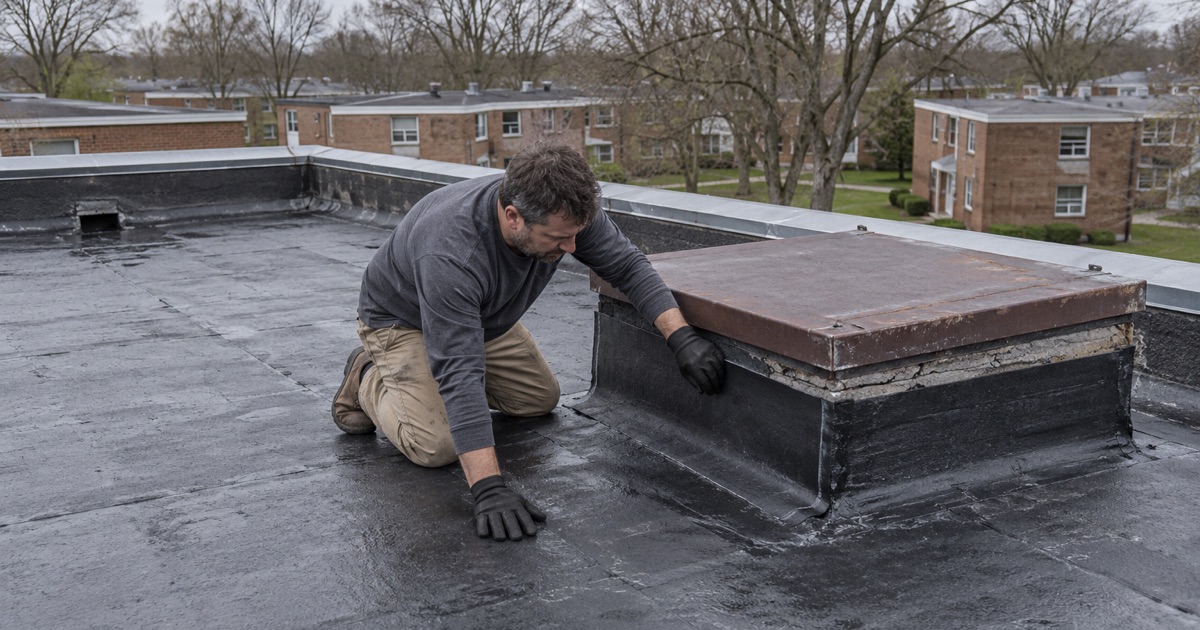
Renting in New Providence mostly means renting in an apartment building rather than in a house. Census figures from the 2024 five-year American Community Survey count 5,351 occupied homes in the borough, and 1,297 of them are rented. Of those rented homes, 1,030 sit in buildings of three or more units, compared with just 29 rented detached houses and 187 rented units in two-unit buildings.
A Borough of Garden Apartments
The best-documented example is New Providence Gardens on Gales Drive, a garden-style apartment complex of 232 units built in 1951. It holds 164 one-bedroom and 68 two-bedroom apartments, and it sold in June 2019 for about $58.5 million to an out-of-state institutional buyer. We have not inspected that property, and nothing on this page describes its roofs, but its size shows how much of the local rental market lives under a shared roof.
The borough’s zoning plans for this kind of housing on purpose. Garden apartments and townhouses are a named use of the R4 Multifamily District, which sets a minimum lot of 2 acres for them. Newer construction exists as well, but the garden apartment remains the familiar rental form here.
What a Shared Roof Changes
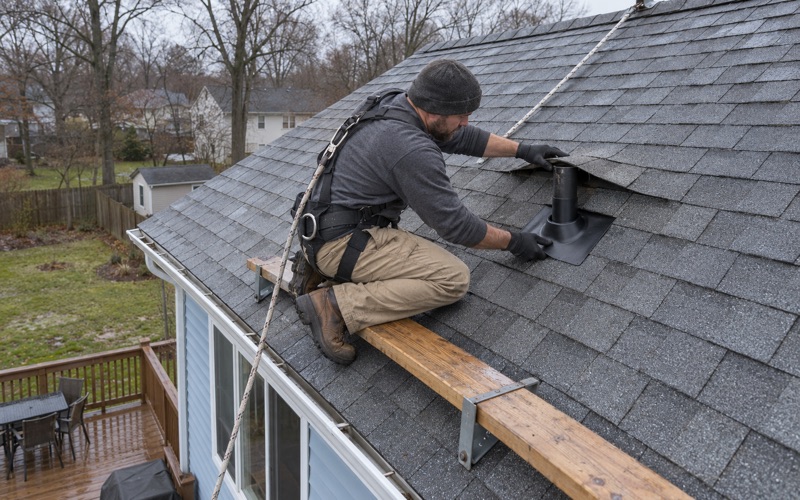
A garden apartment building usually means one long roof over many households, so a single failure can reach several units at once. A slipped flashing at a wall or a worn pipe boot does not stay one family’s problem. It becomes a maintenance ticket, a damaged ceiling below and sometimes a hallway that needs drying out.
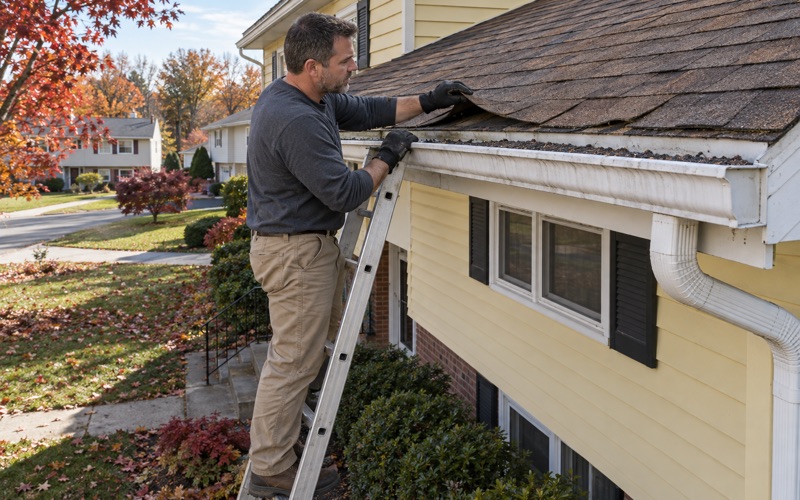
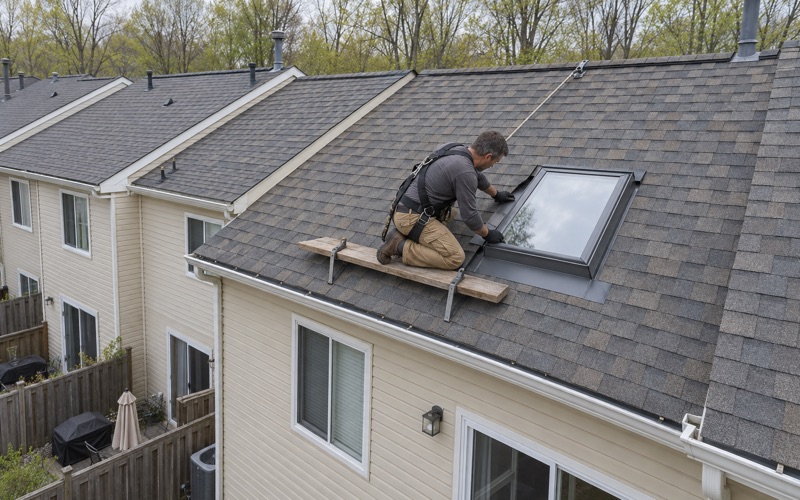
That is why we treat apartment roofs as a building system rather than a patch list. We look at drainage, flashing at every wall and penetration, the condition of the gutters and leaders, and how the attic or roof cavity is vented. A roof that cannot breathe ages from underneath, and on a long building that damage spreads quietly before it shows inside.
Looking for roofing closer to Chatham Township? See Roofing in Chatham Township.
Three Units, a Multiple Dwelling and a Roof That Keeps Water Out
In New Jersey, the line between a house and an apartment building is drawn at three units. Once a building holds three or more homes, state law treats it as a multiple dwelling, and the rules that apply to its roof change. Owners of these buildings register them with the Bureau of Housing Inspection inside the state Department of Community Affairs.
Registration and the Five-Year Cycle
The Bureau of Housing Inspection is responsible for hotels and for multiple-family buildings of three or more dwelling units. The state Hotel and Multiple Dwelling Law requires the Bureau to run a five-year cyclical inspection, and owners register their buildings so that cycle can happen. These are statewide rules, so they reach every multiple dwelling in Union County, including those in New Providence.
We have not reviewed which agency carries out the inspections for buildings in this particular borough. If you own a building here, your registration paperwork and any past inspection notices are the place to confirm that. What we can help with is the condition of the roof an inspector will look at.
What the Maintenance Code Says About Roofs
The state maintenance code for multiple dwellings is direct about roofs. Section 5:10-7.4 of the state administrative code requires roofs to be kept so as to exclude water, and it says damaged or badly worn material shall be repaired or replaced. For an owner, that turns a leak from a nuisance into an obligation.
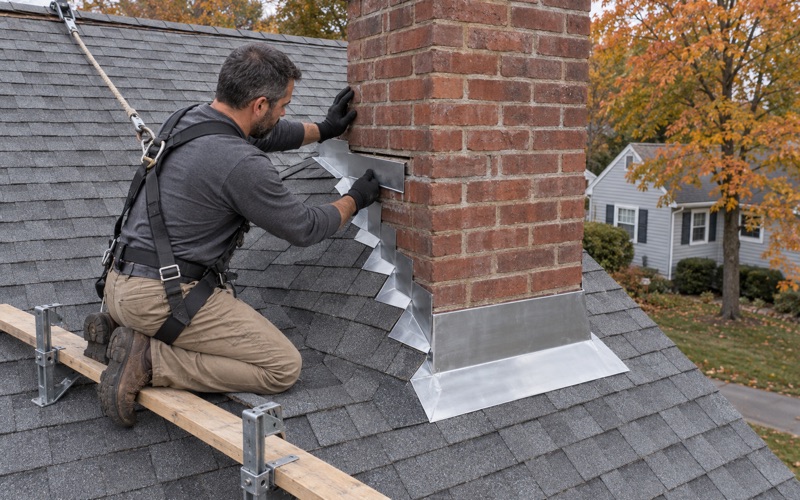
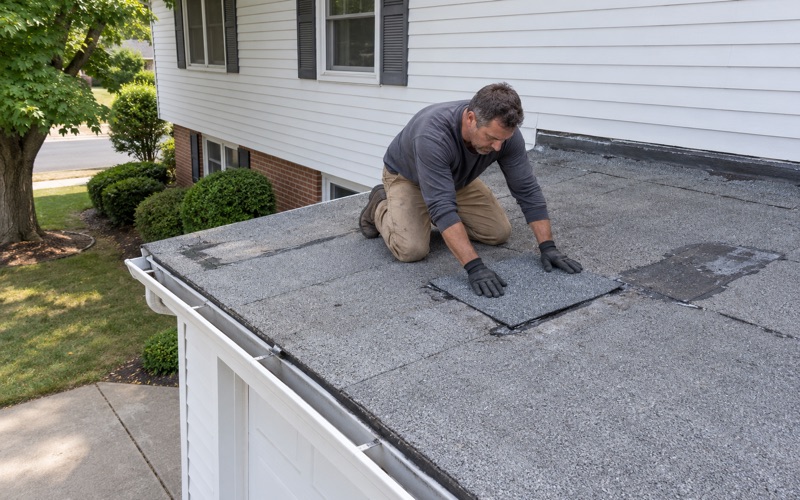
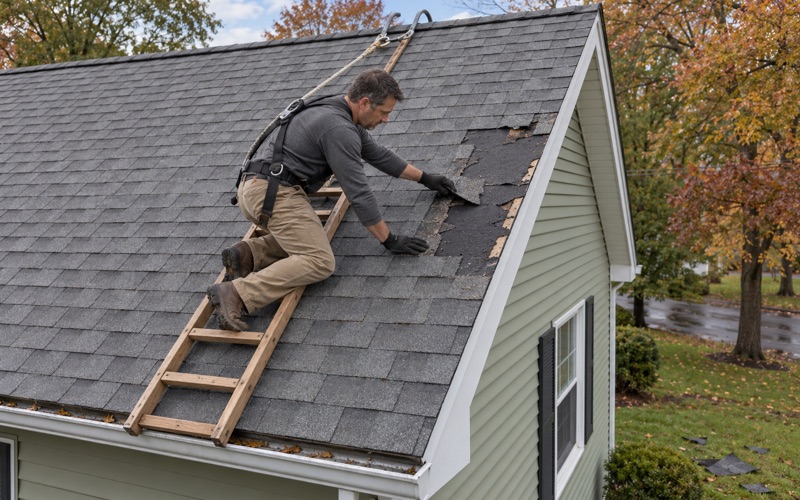
In practice, we read that rule as a reason not to wait. A worn field of shingles, a split seam on a low-slope section or a failing chimney flashing is cheaper to fix as a repair than as a ceiling, an insulation tear-out and a vacant unit. When we inspect a multiple dwelling roof, we write down what is sound, what needs repair now and what is nearing the end of its life, so the owner can plan rather than react.
Tenants, Landlords and Who Calls About a Leak
For a tenant in a New Providence apartment, the roof belongs to the landlord or the owner of the complex. That means the first call about a stain or a drip goes to the property manager, the superintendent or the landlord, not to a roofer. Repairs on a rented building are arranged and approved by the owner.
When the Tenant Notices First
Tenants are often the first to see a problem, because they live under the roof every day. A brown ring on a top-floor ceiling, water at a window head after a storm or a damp closet wall are all worth reporting promptly, in writing, with a photo if possible. A clear report with the date and the weather helps the owner and the roofer find the cause faster.
When a manager calls us about a tenant report, we ask for that information before the visit. We also ask for access to the attic or roof hatch, and to the unit itself if the stain is inside. Tracing water from the attic side is how we avoid fixing the spot above a stain when the real entry point is several feet uphill.
Working Around the People Who Live There
Landlords who rent to families and students get repairs scheduled around their tenants. We agree on arrival times, keep ladders and materials clear of entrances and walkways, and avoid blocking parking where we can. After each visit we send the owner photos of what we found and what we did, so the person paying for the work sees it without climbing a ladder.
At the end of every work day, we clean the walks, the grounds and the gutters, including a magnet sweep for roofing nails. On an apartment property that matters more than on a single house, because many more people walk past the work area. If the building is part of a condominium or townhouse association rather than a rental, we check the association documents first to confirm who is responsible for the roof before any estimate is written.
Re-Roofing an Apartment Building as Permit Work
New Jersey treats roof replacement on a small house and on an apartment building differently. Replacing the roof covering on a detached one- or two-family house is ordinary maintenance under the state construction code, needing no permit, inspection or notice. A building of three or more units is not on that list, so replacing its roof is permit work rather than routine upkeep.
Planning the Permit and the Schedule
For an apartment re-roof, the construction permit is filed with the local enforcing agency, which in this borough is the Building Department at 360 Elkwood Avenue. Its Construction Official is Keith Lynch, and inspections are scheduled through the department’s online portal. The borough also states that all improvements need zoning and engineering review before work begins, even when a project is exempt from construction permits, so we confirm what that office expects for the specific building.
We build the permit and inspection steps into the schedule from the start. Tenants get notice before tear-off begins, and the work is sequenced so that no section of the building is left open overnight. If solar panels sit on the roof, their removal and reinstall go into the schedule rather than being discovered on the day.
What the Written Scope Covers
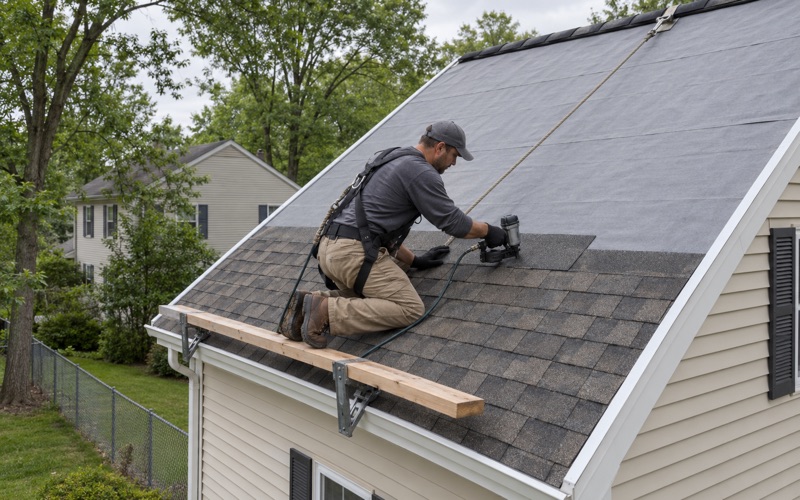
Our written scopes list tear-off, decking, underlayment, flashing, ventilation and gutters as separate lines. That lets an owner or a property manager compare two bids item by item instead of comparing two totals. On a large building, that difference can be the whole decision.
When the old roof comes off and we find damaged decking, we photograph it and show it to the owner before it is replaced, at a per-sheet price already set in the contract. Step, counter and chimney flashing are replaced with the roof rather than reused under new material. We also size and pitch the gutters and leaders with the roof, so water leaves the building and does not collect at the foundation.
Storms and Insurance on Rental Property
After a storm, we photograph the damage and write it up for the owner’s own insurance claim. When the owner asks, our crew will meet the adjuster on site to walk the roof together. The claim stays the owner’s, and our role is to document what the storm did and what it will take to put it right.
Our contracts follow the New Jersey home improvement rules, including the three-day cancellation notice. If you own or manage an apartment building in New Providence and a tenant has reported water, or you simply want to know how many years the roof has left, call us for an inspection and a straight answer.
- 20+ Years Roofing
- Itemized Written Estimates
- Attic-to-Ridge Leak Tracing