Piscataway Roofing performs roof inspections in Piscataway, NJ, serving surrounding cities including Middlesex, Highland Park, Bound Brook, Metuchen and Manville. After more than 20 years on roofs in this area, we know where they tend to fail: at chimneys, pipe boots and low-slope porch sections, and on older houses that already carry a second layer. An inspection from us looks at all of it and puts what we find in writing.
Every inspection starts in the attic, not on the ladder. The underside of the decking shows stains, daylight, frost and soft wood that the shingle surface hides, and it tells us where to look harder once we are outside. Only then do we walk the roof, photograph each finding and check the gutters and drainage below it.
The result is a straight answer rather than a sales pitch. If the roof has years left, the report says so, and if it needs a repair, we describe the repair before anyone mentions a replacement. When a roof truly is near the end of its life, the photos make the case on their own.
Residential Roof Inspection
The Attic Side of the Roof
In the attic we look for water stains on rafters and sheathing, rusted nail tips, mold on the north slope, and daylight around chimneys and vent pipes. Each of those points to a specific problem, from a slow flashing leak to warm, damp air condensing on cold decking all winter.
We also check that bathroom and kitchen fans vent outside rather than into the attic, and that insulation is not packed against the soffits. Those two mistakes cause many of the so-called roof leaks we find, and neither is fixed with shingles.
Shingles, Decking and Layers
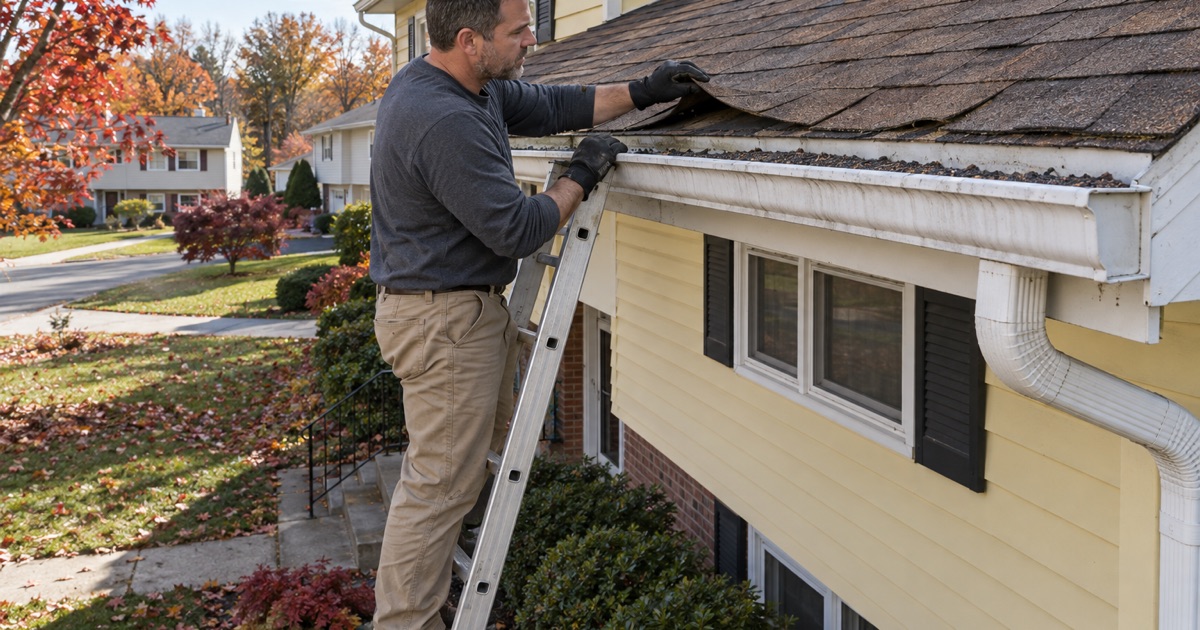
On the roof we test shingles for flexibility, look for cracking, curling and granule loss, and note any tabs lifted or missing after wind. Soft spots underfoot mark decking that has absorbed water, and the edge of the roof shows how many layers are on it.
Layer count matters more in New Jersey than many owners realize. A roof already carrying two layers cannot take a third under the state’s rehabilitation subcode, so the next replacement will be a full tear-off, and the report records that so it can be budgeted.
Flashing, Vents and Penetrations
We check step and counter flashing at chimneys and walls, kick-out flashing where a roof edge meets siding, pipe boots, exhaust caps and skylight flashing. These joints are where most leaks start, long before the shingles themselves wear out.
On chimneys we also look at the crown, the cap and the mortar joints, and whether a chimney wider than 30 inches has the cricket behind it that the International Residential Code requires. A missing cricket explains a lot of water stains on the ceiling under a chimney.
Ventilation, Gutters and Drainage
We confirm that soffit intake is open and that ridge or roof vents balance it, because a roof that cannot breathe wears from underneath. Gutters are checked for pitch, hanger spacing, overflow staining and leaders that dump water at the foundation.
Drip edge at the eaves and rakes gets a look too, since its absence lets water curl behind the gutter and rot the fascia. All of these go in the report with photos, ranked by how soon they need attention.
Inspections for a Specific Purpose
Before Selling a Home
Selling a house in Piscataway requires a municipal certificate of continued compliance, and although the township’s checklist looks at chimney flashing and gutters rather than the shingles themselves, the buyer’s inspector almost always reviews the whole roof. A written roof condition report from us gives the seller something concrete to hand over before that question comes up.
The report covers the roof’s age as best it can be read, the layer count, the flashing and any repairs made. Dealing with a small flashing repair before listing is usually far cheaper than negotiating a credit after the buyer’s inspection.
Before Buying a Home
A buyer often has a general home inspection that views the roof from a distance. A roofing inspection adds the close look: whether the roof has one layer or two, whether the flashing is original, and whether the attic shows old or active leaks.
That information turns a vague note about the roof into a number you can negotiate with. It also tells you whether a replacement belongs in your first-year budget or can wait.
After a Storm
When wind or hail hits, the question is what the storm did versus what was already there. We photograph fresh damage such as clean-edged missing tabs, creased shingles and dented vents, and note separately any wear that predates the storm.
That separation is what an insurance claim turns on, since homeowners policies generally cover sudden storm damage rather than age. You file the claim, and we can meet the adjuster on site to show what we documented.
Rental Properties and Landlords
Landlords renting to students and families need roof problems caught before they become tenant complaints. We schedule inspections around the tenants, get attic access arranged in advance, and send photos after each visit so the owner sees the roof without being there.
Buildings with three or more units are multiple dwellings under New Jersey’s maintenance code, which expects roofs and leaders to be kept watertight. A periodic inspection record shows that the owner has been doing exactly that.
Commercial Roof Inspection
Membrane Seams and Surfaces
On EPDM, TPO, PVC and modified bitumen roofs we check every seam, every patch and the edges where membranes shrink and pull away from walls. Punctures from foot traffic around rooftop equipment are common, as are blisters on older torch-down roofs.
The report maps each finding on a roof plan so a repair crew or a property manager can find it again. That map also becomes the baseline for the next inspection.
Drains, Scuppers and Ponding
Flat roofs fail when water cannot leave them. We clear debris from drains and scuppers during the inspection, note ponding areas that hold water long after rain, and check the flashing where drains pass through the membrane.
The township has large, newer distribution buildings as well as older commercial roofs, and their drainage designs differ. Each inspection is written to the roof in front of us rather than a generic checklist.
Rooftop Equipment and Penetrations
HVAC units, exhaust fans, conduit and pipe supports all puncture the roof, and each penetration is a potential leak. We check curbs, pitch pans and flashing around every piece of equipment and note where service technicians have damaged the membrane.
Flagging those spots early lets the owner hold the right contractor responsible. It also keeps a small puncture from becoming wet insulation across a whole bay.
Our Step-by-Step Roof Inspection Process
Step 1: The Attic or Top Floor
We begin inside, mapping stains, daylight, frost and ventilation. On commercial buildings this means the underside of the deck where it can be reached and the top-floor ceilings.
Step 2: The Roof Surface
We walk the roof where it is safe to do so, checking shingles or membrane, flashing, penetrations and edges. Everything worth noting is photographed so you can see it without climbing up yourself.
Step 3: Gutters, Drainage and Exterior
Gutters, leaders, drip edge, fascia and soffits are checked from the ground and ladder. We also follow the path water takes away from the foundation, since a leader that empties against the house undoes a good roof.
Step 4: The Written Report
You receive a written report with photos, each finding ranked by urgency. It ends with a plain statement of whether the roof needs nothing, a repair or a plan for replacement.
- 20+ Years Roofing
- Itemized Written Estimates
- Attic-to-Ridge Leak Tracing