Piscataway Roofing brings more than 20 years in the trade to roofing in Roselle Park, and lately the most useful thing we can tell an owner here has less to do with shingles than with paperwork. Sellers in particular are asking a new question this fall.
The borough now requires a resale certificate before any building changes hands, and that certificate will not issue while a construction permit is still open. That puts the order of roof work in the middle of a sale. A permitted repair rushed in the week before listing can hold up a closing if nobody finals it.
We plan roof work around that sequence. Before anything is priced, we tell you whether the roof can be repaired at all, and which parts of the job, if any, would put a permit on file with the borough’s Construction Code Department. Then the schedule is built backward from your closing date.
A Resale Certificate Now Comes Before Every Sale
Ordinance No. 2863 was finally adopted on August 20, 2026, and took effect when its notice of adoption was published on August 26. It added Section 40-3103A to the borough code, which says no property owner shall sell “any building or structure” in Roselle Park without first obtaining a resale certificate. That wording reaches single-family houses, two-family houses, apartment buildings and commercial property alike.
The certificate comes from the borough’s Code Enforcement Officer after an inspection against several chapters of the borough code, among them the Property Maintenance Code, rental housing, fire prevention and the smoke and carbon monoxide alarm certificate. The residential fee the ordinance sets is $60 for the first dwelling unit plus $20 for each additional unit.
What an Open Permit Does to the Certificate
The sentence that matters for roof work is short. “No resale certificate may be issued if the property is subject to an open permit from the Construction Code Official,” the ordinance reads, and the same bar applies to any construction violation notice that has not been fully and finally resolved. The borough’s application form says it in capital letters: all building permits must be closed before the certificate issues.
Selling without the certificate carries penalties of $100 to $2,000 per violation, and each day counts as a separate violation. The ordinance makes every party to the transaction jointly and severally liable, so the exposure does not sit with the seller alone.
Which Roof Jobs Leave a Permit Behind
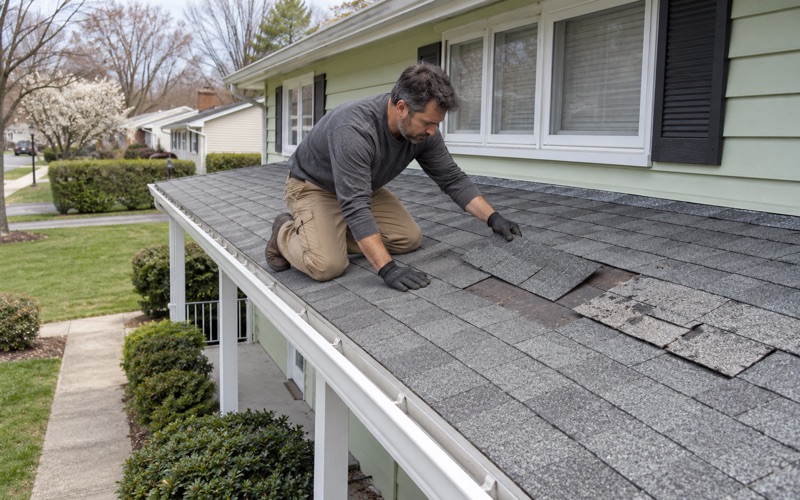
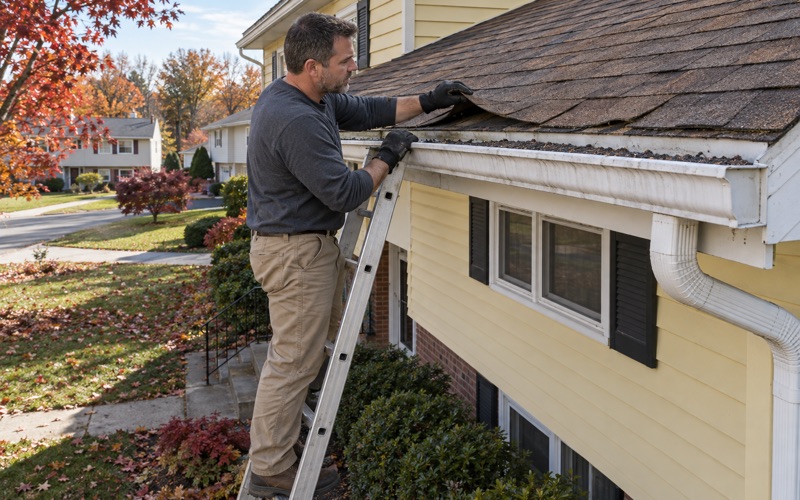
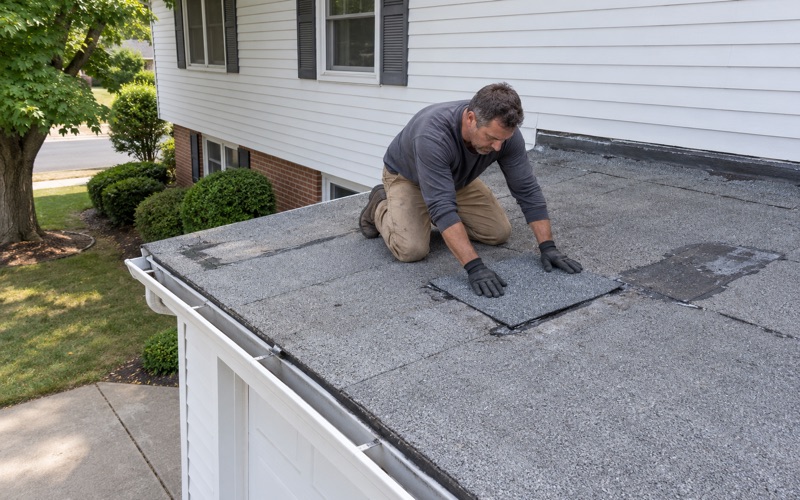
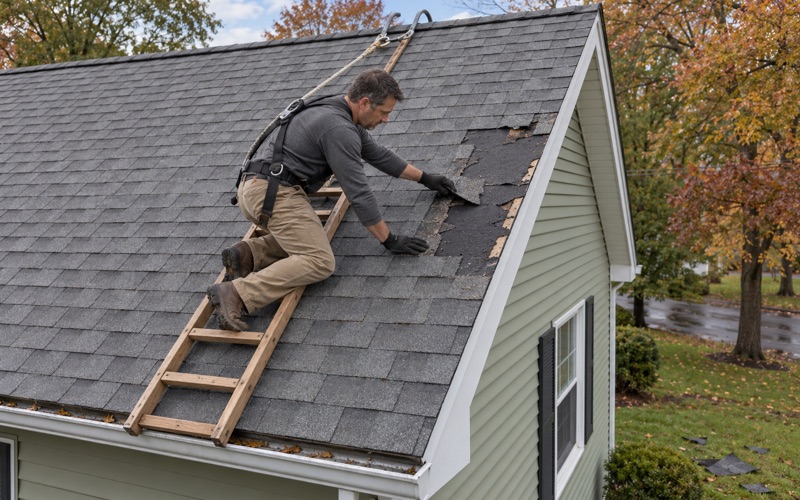
Most roof work on a detached house never creates one. The Construction Code Department’s own Ordinary Maintenance handout reproduces state rule 5:23-2.7, which lists the repair or replacement of existing roof covering on detached one- and two-family dwellings as work needing no permit, inspection or notice. Gutters and leaders are on the same list, so new shingles and gutters on a detached house leave nothing open at the borough.
The handout also marks the edges of that list. Ordinary maintenance excludes the removal or cutting of any structural beam or bearing support, and any work affecting structural or fire safety. A re-roof that turns into rafter or framing repair has stepped outside the list, and that part of the job goes to the department for a permit.
Looking for roofing closer to Branchburg? See Roofing in Branchburg.
Attached Houses and Three-Family Buildings: Finaling Roof Permits Before Closing
The ordinary-maintenance wording names detached one- and two-family dwellings, and a good share of Roselle Park, a Union County borough of 1.225 square miles, sits outside it. The 2024 American Community Survey counts 3,083 detached houses and 345 units in two-unit buildings among 5,522 housing units. Alongside them are 98 attached single-family units and 1,996 units in buildings of three or more, which is 36.1% of the borough’s housing.
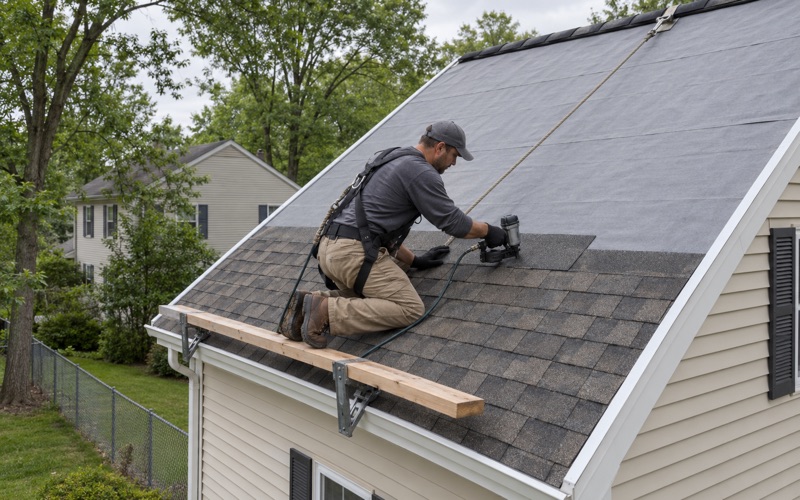
For those buildings a roof replacement is not on the ordinary-maintenance list, so it runs through the Construction Code Department with a permit and required inspections. Every one of those permits has to be closed before the owner can get a resale certificate. On an attached house or a three-family building, finaling the roof permit is part of selling the property.
A closed permit is what the resale certificate depends on, and it is not the same thing as a finished roof. The crew can be gone and the shingles down while the permit still reads open because nobody requested the final inspection. We treat the job as done only when the department has signed it off.
Working With the Construction Code Department
The department sits on the second floor of borough hall at 110 East Westfield Avenue, and its number is 908-245-2721. Construction hours run Monday through Friday from 8:30 to 4:30, with the last permit pickup at 4:00. Its Required Inspections notice states that approved plans must be on the job site.
The same notice warns that failing to request required inspections can bring a $500 penalty under 5:23-2.31(b)(4). Ahead of a sale, that fine is the smaller problem. We request each inspection as the work reaches it and keep the approved plans on site until the final is signed off.
Townhouses, Shared Roofs and Rented Units
On an attached house the first question is often who holds the roof. Where a home belongs to a townhouse or condominium community, we check the association’s documents to see whether the roof is the owner’s or the association’s before any estimate is written. That answer decides who pulls the permit and who has to see it finaled before the closing.
Owners of three-family buildings who are still renting units while they prepare to sell get repairs scheduled around their tenants. Photos go to the owner after each visit, so every stage of the permitted work is documented without a trip to the site.
The Visual Inspection and the 90-Day Temporary Certificate
The ordinance describes the resale inspection as “a general visual inspection.” It is not a Uniform Construction Code inspection and it is not a warranty of the building’s condition. We have not seen any roof checklist the inspector uses, so we never tell a seller what the visit will or will not flag up there.
What the ordinance does spell out is what happens when the inspector finds a deficiency. If the building is structurally safe, a temporary resale certificate of up to 90 days can issue, but only if the purchaser swears an affidavit to abate the deficiencies within 90 days of the transfer. That moves the fix onto the buyer’s calendar, and a buyer signing that affidavit will usually want to know what the work involves.
For a seller, the choice is between fixing a deficiency before closing and handing it to the buyer under an affidavit. Fixing it first keeps the certificate simple, but a permitted repair started late can trade one problem for another if its final is still pending. That is why we want the roof question answered before the application, not after it.
A Written Roof Report for the Buyer’s Side
For homes going on the market we write a roof condition report the seller can hand to the buyer’s home inspector. It records what we saw on the roof and in the attic, since any sign of a leak is traced from inside as well as outside before anything is priced. A buyer weighing an affidavit and a seller deciding whether to fix something first are reading the same plain description.
The report also answers the repair question directly. We say whether the roof can be repaired before replacement comes up at all, and when a repair is enough, the report says so in writing.
Continued Occupancy Does Not Replace the Resale Certificate
The same ordinance rewrote Section 40-3103B. A certificate of continued occupancy issued at the owner’s request does not relieve the owner from obtaining a resale certificate. Sellers used to the older paperwork should plan for both steps rather than assume one covers the other.
Timing a Roof Repair Around a Roselle Park Listing
The safest order is to settle roof work before listing and to finish any permitted work before applying for the resale certificate. Housing here is old, with a median year built of 1952 and 47.0% of units dating to before 1950, so older roofs, chimneys and flashing are worth a look before a house is readied for sale. Work on a detached house that stays within ordinary maintenance can go on the calendar whenever it suits the sale.
Anything that needs a permit belongs at the front of the plan. That covers a roof on an attached house, a building of three or more units, or a detached-house job that reaches into structural framing. Leaving room for each inspection keeps the final from landing in the same week as the closing.
The resale inspection itself needs lead time too. The ordinance says inspections are normally scheduled within 10 days of an application, and the borough’s application form lists inspection days as Monday through Thursday. A roof final that lands after the application is in leaves the certificate waiting, so we aim to have permitted work closed before the seller applies.
What Our Estimate Shows
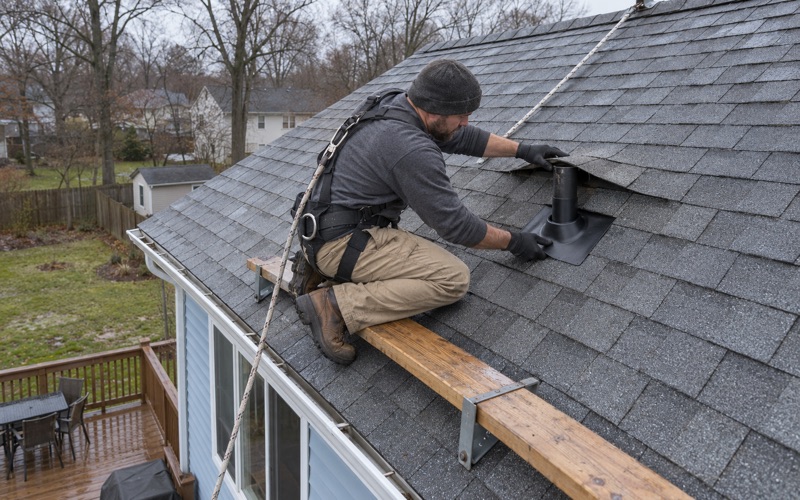
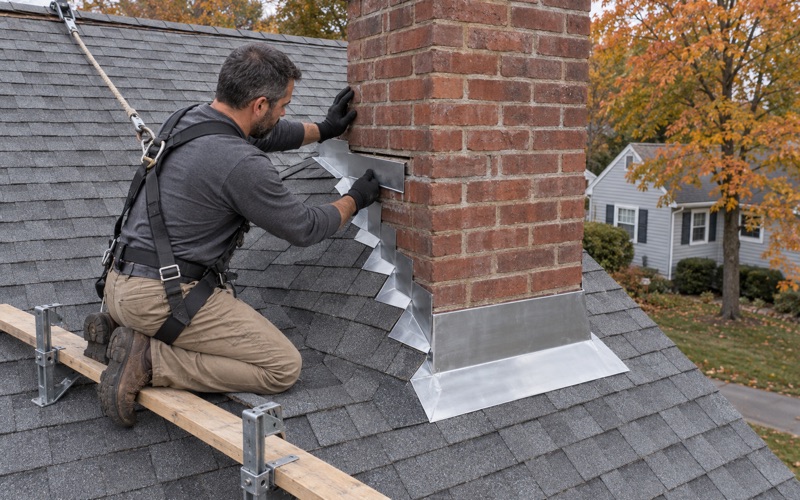
Our written scope lists tear-off, decking, underlayment, flashing, ventilation and gutters as separate lines, so a seller comparing two bids can match them item by item. If damaged decking turns up once the old roof is off, we photograph it and show the owner before replacing it, at the per-sheet price written into the contract. Step, counter and chimney flashing are replaced with the roof instead of being reused under new material.
Attic ventilation is checked on every replacement, because a roof that cannot breathe ages from underneath. Contracts follow New Jersey’s home improvement rules, including the three-day cancellation notice, and that window is worth building into the timeline when a closing date is already set.
Keeping the Property Ready for Showings
A house on the market gets visitors on short notice. The driveway, yard and gutters are cleaned at the end of every work day, including a magnet sweep for roofing nails, so a showing booked for the next morning does not walk past debris.
Where solar panels sit on the roof, their removal and reinstall go into the schedule from the start. On a sale timeline, discovering that on the day the crew arrives can cost the week the seller needed.
- 20+ Years Roofing
- Itemized Written Estimates
- Attic-to-Ridge Leak Tracing