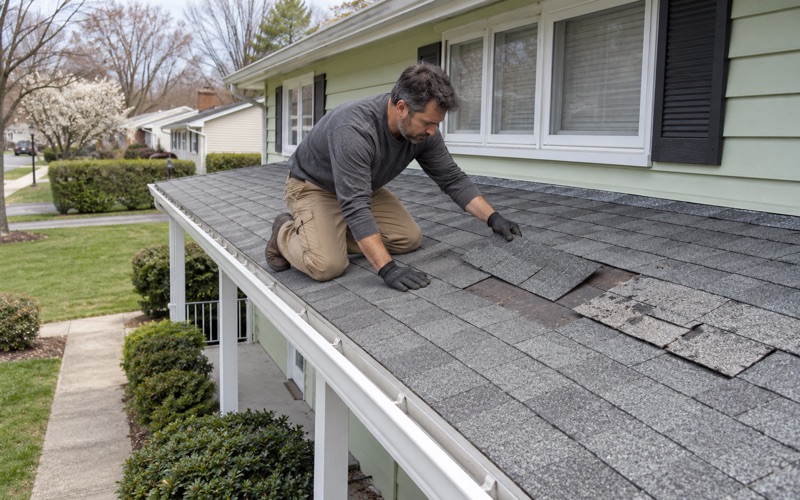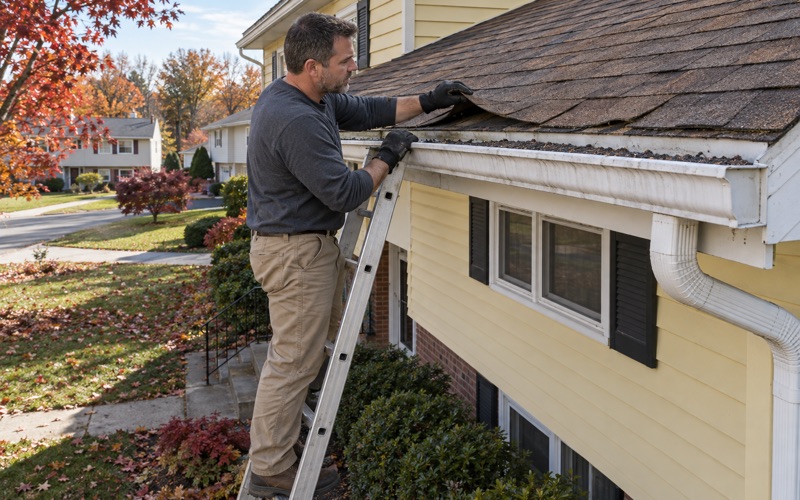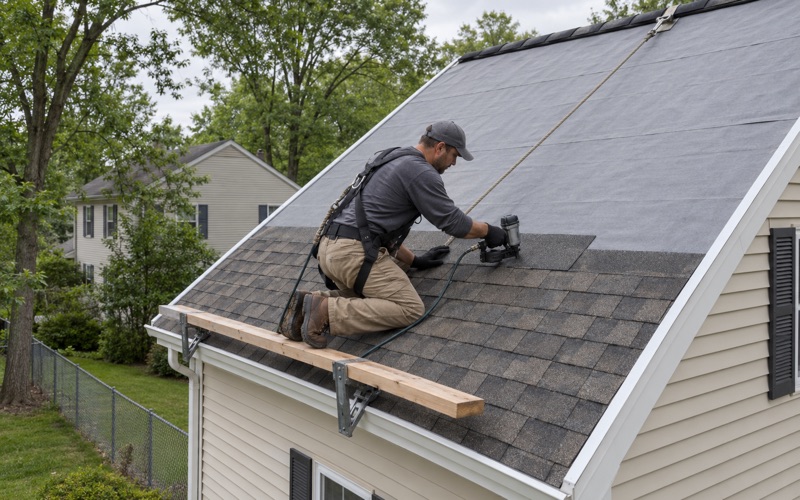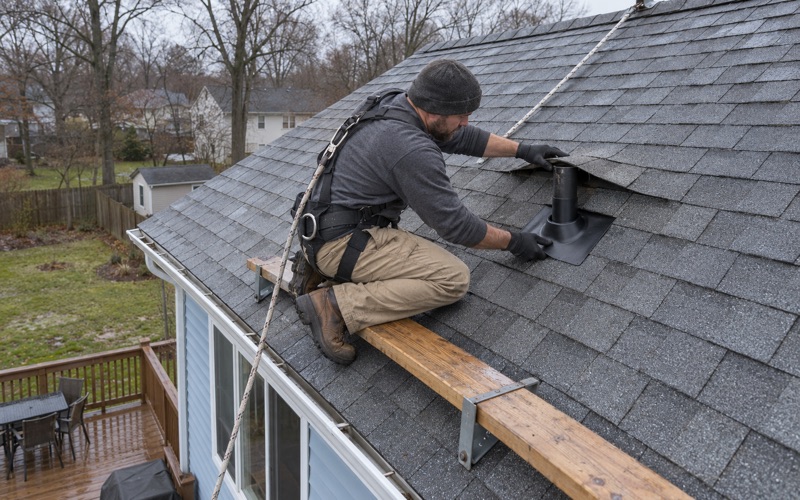
Piscataway Roofing has spent more than 20 years on roofing in South Amboy and across Middlesex County, and most of the calls we take begin with one question: where is the water actually coming from? We answer it from the attic as well as from the roof, following a leak to the point where it gets in before a dollar figure is attached to anything. Only then do we say whether the roof can be repaired, and we say it before replacement comes up at all.
That order matters more in this city than in most. South Amboy’s own housing plan lists roof leaks among the repairs it intends to help low- and moderate-income owners fix, through a county loan rather than out of pocket. An owner who may qualify should know about that route before signing a private contract, and a clear, itemized description of the problem is useful on either path.
This page explains how the city’s rehabilitation plan works, who it is aimed at, and how a roof estimate fits around it. We do not run the program, qualify anyone for it or get paid through it. What we can do is tell an owner plainly what the roof needs and put that in writing.
South Amboy’s 41-home rehabilitation obligation and the county loan behind it
What the Fourth Round plan counts
Every New Jersey municipality carries a share of the state’s affordable housing need, and part of that share is rehabilitation: bringing existing homes occupied by low- and moderate-income households up to standard. South Amboy’s Fourth Round Housing Element and Fair Share Plan, heard by the Planning Board on June 9, 2025, sets that rehabilitation share at 19 homes through July 2035. The plan also records that the city did not meet its Third Round rehabilitation obligation of 22, and it carries those forward for a combined obligation of 41 homes.
It is worth being precise about what that number measures. The rehabilitation count is built from indicators such as overcrowding and deficient plumbing or kitchens among lower-income households, not from a survey of roofs. The figure is a count of homes the plan commits to improve, and a leaking roof is one of several problems that can bring a home into it.
Middlesex County’s zero-interest deferred loans
South Amboy does not plan to run a repair program of its own. The plan proposes joining Middlesex County’s rehabilitation program, which provides deferred payment loans to low- and moderate-income homeowners occupying a one- to three-family home in the Middlesex County Consortium, and the consortium includes South Amboy. The loan is made by the County Division of Housing and Community Development, carries zero interest and runs for 10 years.
That makes it a loan, not a grant, and it comes with a condition covered further down this page. The plan we read does not state income limits, a maximum loan amount, or whether applications are being taken at the moment. Those answers belong to the county office, and an owner who thinks the program may fit should ask there before anything else.
Why the plan matters to a roof decision
Most owners never read a housing element, and there is no reason they should. The practical point is narrow: a city document adopted through a public hearing says that a qualifying South Amboy household with a leaking roof has a county route to the repair. Knowing that before pricing the work privately can change which call an owner makes first.
Looking for roofing closer to New Providence? See New Providence Roofing.
Roof leaks on the program’s own list
What the plan says the program fixes
The plan describes the county program as one that will primarily serve owner-occupied units and address homes with lack of heat, lack of hot water, roof leaks, dangerous electrical problems, broken pipes and problems with sanitary facilities. Roof leaks sit on that list beside the failures that make a house unsafe or unlivable. For a qualifying owner, that puts the county ahead of a private quote as the first call when water is coming through a ceiling.
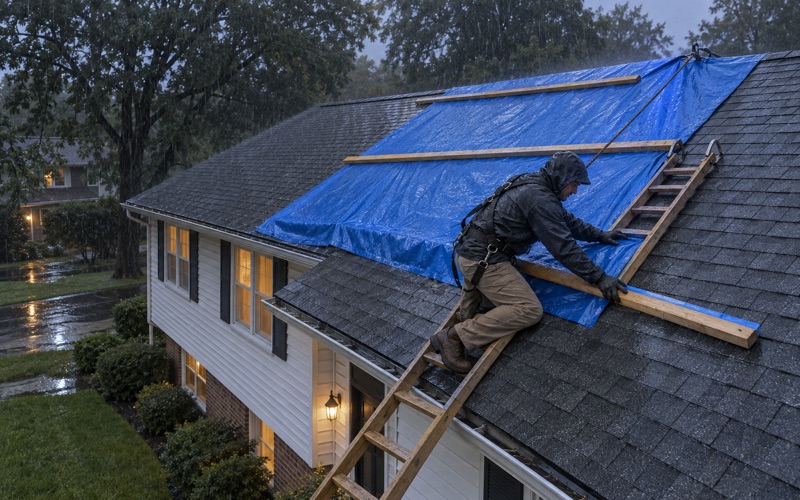
An active leak still does not wait for paperwork. If water is entering now, a temporary measure to protect the ceiling, insulation and wiring is sensible while the longer conversation with the county happens. We can describe what we find and what a short-term fix involves without committing anyone to a full job.
Finding where the water really gets in
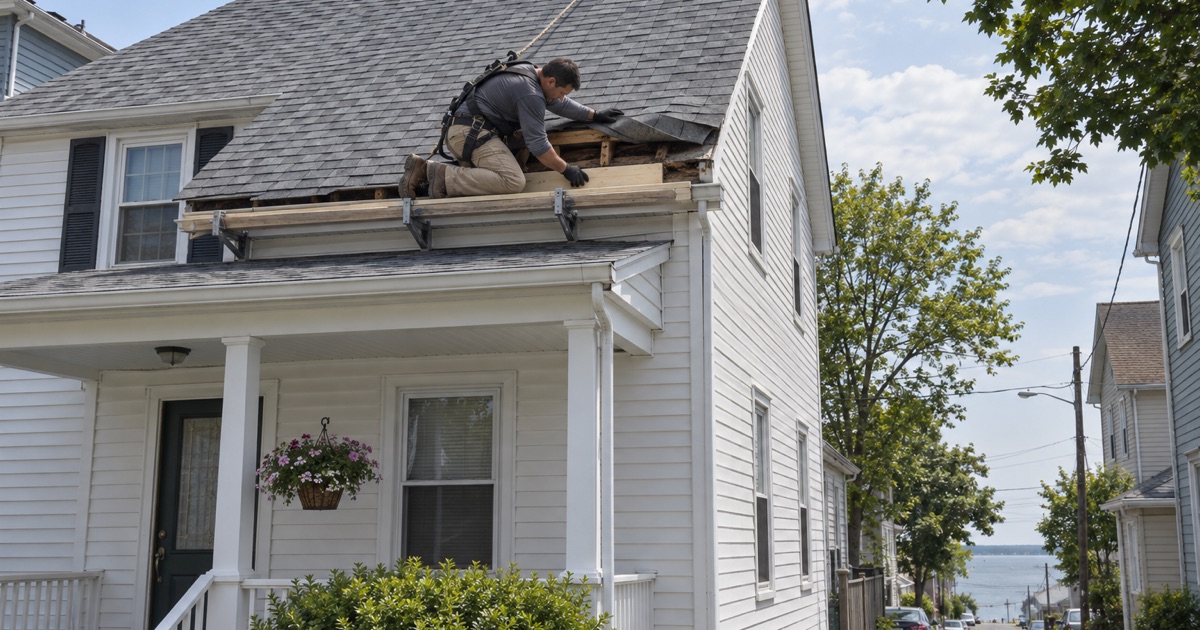
A stain on a bedroom ceiling rarely sits directly under the spot where water passes the shingles. Water runs along rafters, sheathing seams and the top of insulation before it drips, so a roof-only inspection often prices the wrong repair. Every leak call we take includes time in the attic, where staining on the underside of the deck, damp insulation and daylight around a pipe usually point to the true entry.
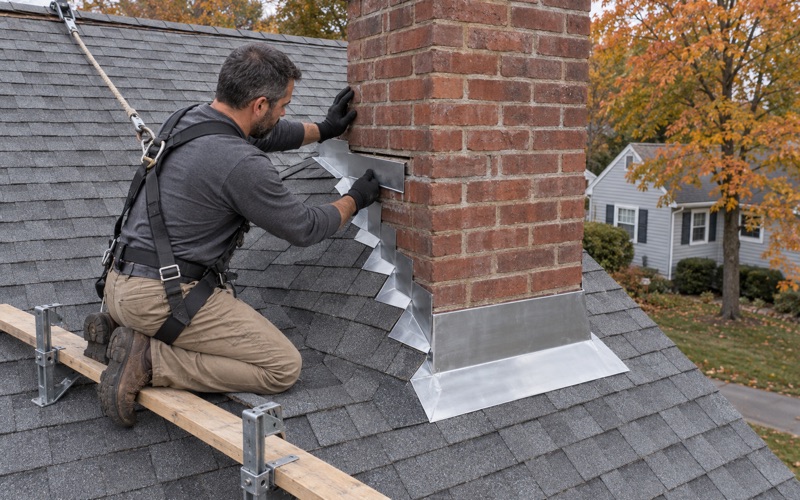
The usual culprits are the details rather than the open field of shingles. Cracked pipe boots, flashing that has pulled away at a chimney or sidewall, a missing kick-out flashing where a roof edge meets a wall, and eaves built without drip edge all let water in while the shingles themselves look fine. Naming the actual source is what allows a repair to stay small when it can.
Repair first, replacement only when it is the honest answer
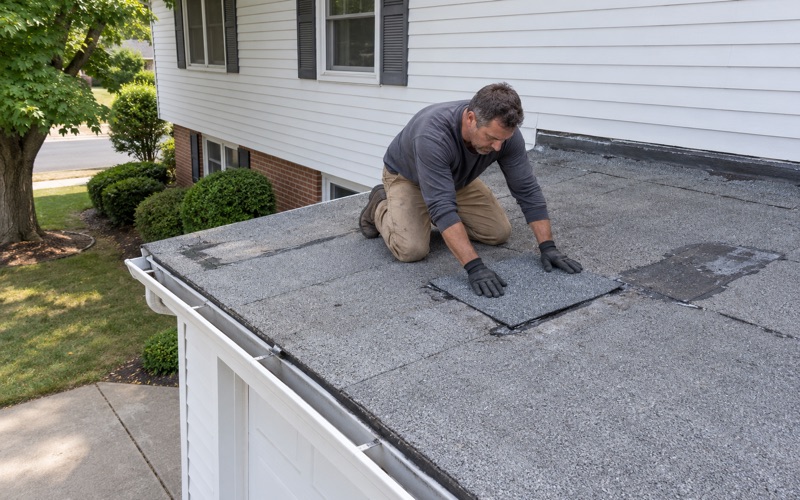
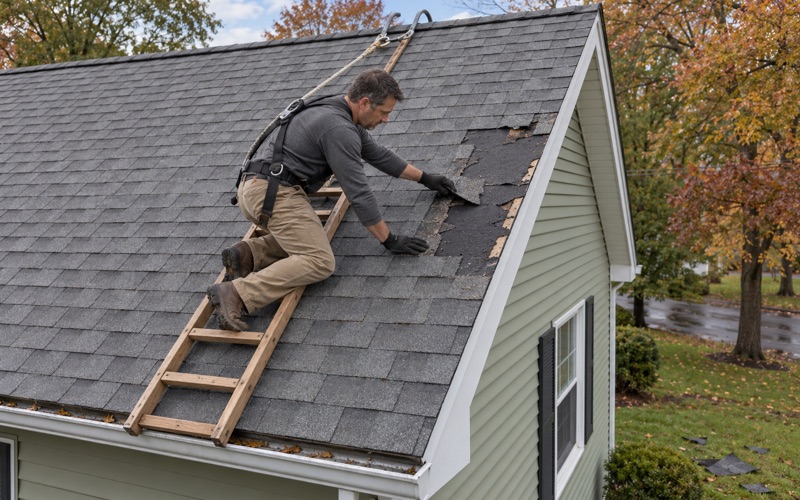
Once the source is found, we tell the owner whether the roof can be repaired before replacement is ever on the table. A sound roof with one failed boot or a short run of loose step flashing needs that repair and nothing more. When the deck is soft across a wide area or the shingles have shed their granules over most of the slope, we say that too, and explain why a patch would only buy a season.
That answer is the same whether the owner plans to pay privately or to approach the county. A clear finding, with photos of the problem area, gives the owner something concrete to bring to either conversation. It also keeps the scope of the job tied to what the roof actually shows rather than to what is easiest to sell.
Who the program is meant for: one- to three-family homes, owners first
South Amboy’s housing, by the numbers
The county program is written for a particular kind of house. Census Bureau estimates count 2,102 owner-occupied homes in one-unit buildings in South Amboy, 1,743 of them detached and 359 attached, along with 40 owner-occupied homes in two-unit buildings. Another 53 owner-occupied homes sit in buildings of three or four units, a category that only partly overlaps the program’s one- to three-family limit.
Of the city’s 4,209 occupied homes, 2,377 are owner-occupied and 1,832 are rented. That split matters because the program is aimed primarily at owner-occupied units, so a house rented in full is not where it starts. For a rental, the landlord pays for the roof in the ordinary way, and we schedule that work the same careful way.
Attached homes and association roofs
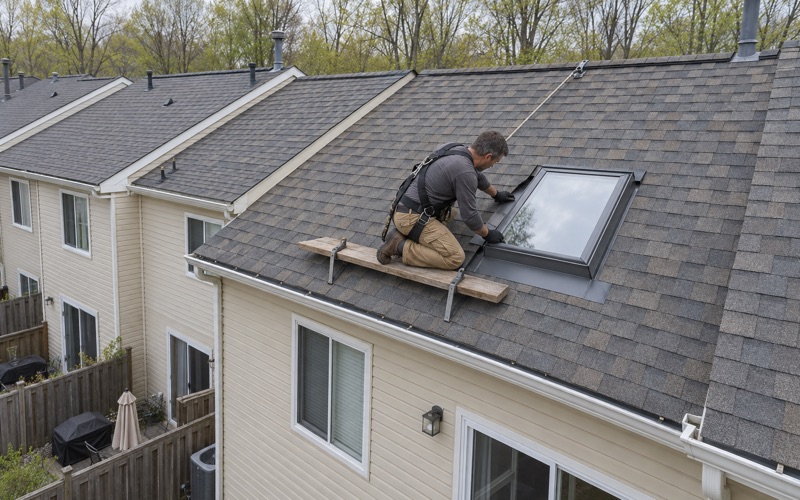
The owner-occupied attached homes raise a question before any estimate does: who holds the roof? In townhouse and condominium communities, the association’s documents may treat the roof as a common element, in which case the owner may not be the party who repairs it. We check those documents before we write anything, so an owner does not chase a loan or a private quote for a roof that belongs to the association.
Owners who live in one unit and rent another
An owner living in one unit of a two- or three-family house falls inside the program’s housing type, while the tenants upstairs or downstairs still need a dry ceiling and a predictable schedule. On a house like that, we time repairs around the tenants and send the owner photos after each visit. The photos give the owner a record of the work whether the job is paid for privately or through a loan.
A house of this kind also tends to have more roof to manage than its footprint suggests, with porch roofs, rear additions and separate entries. Each of those meets a wall somewhere, and each meeting is a flashing detail worth checking during a leak call. We look at all of them rather than only the slope above the stain.
The 10-year lien and what it means for a roof quote
What the affordability control does
The plan states that rehabilitated units stay affordable for at least 10 years, a span it calls the control period, and that on owner-occupied homes this is enforced with a recorded lien. A lien recorded against the property is a serious thing to agree to, and it is part of the trade for a zero-interest loan. Owners expecting to sell or refinance within the decade should ask the county how the lien is handled before accepting.
None of that is a reason to avoid the program, which exists for owners who cannot easily pay for a leaking roof. It is a reason to compare carefully. An owner weighing a county loan against paying privately deserves a clear picture of what the roof actually needs, and that is the part we can supply.
An itemized scope works on either path
Our written scopes list tear-off, decking, underlayment, flashing, ventilation and gutters as separate lines rather than one lump sum. That lets an owner set our number beside another contractor’s and see where the two differ item by item. If the county program ends up covering the work, the owner still knows what a complete description of the job looks like.
A replacement scope from us replaces step, counter and chimney flashing with the new roof instead of reusing old metal under new shingles. Attic ventilation is checked on every replacement, because a roof that cannot breathe ages from underneath. Gutters and leaders are sized and pitched along with the roof so water leaves the house rather than collecting at the foundation.
Surprises under the old roof, and the contract itself
Decking that turns out to be rotten once the old roof is off is photographed and shown to the owner before it is replaced, at a per-sheet price already written into the contract. That keeps the final bill tied to what the owner agreed to, which matters even more when the work is being paid for with borrowed money. Our contracts follow New Jersey’s home improvement rules, including the three-day cancellation notice.
At the end of each work day the driveway, yard and gutters are cleaned, with a magnet sweep for loose roofing nails. For a South Amboy owner who wants to talk through a leak before calling the county or deciding to pay privately, we start in the attic and on the roof, then give a plain answer. The loan questions themselves go to the county Division of Housing and Community Development.
- 20+ Years Roofing
- Itemized Written Estimates
- Attic-to-Ridge Leak Tracing