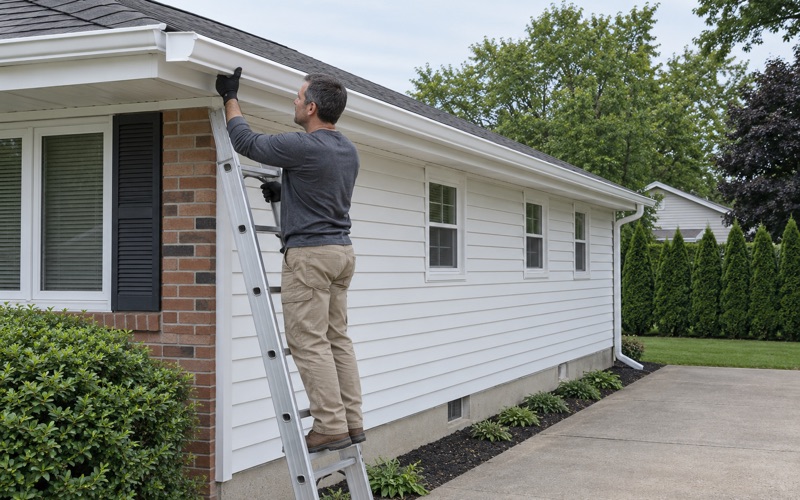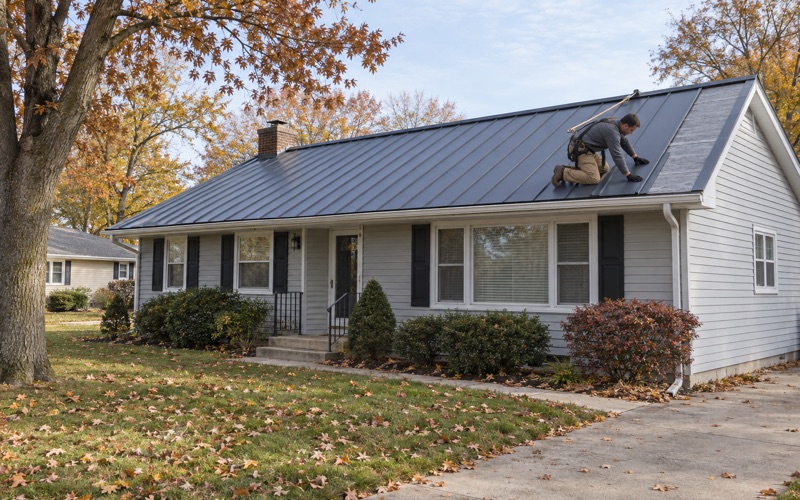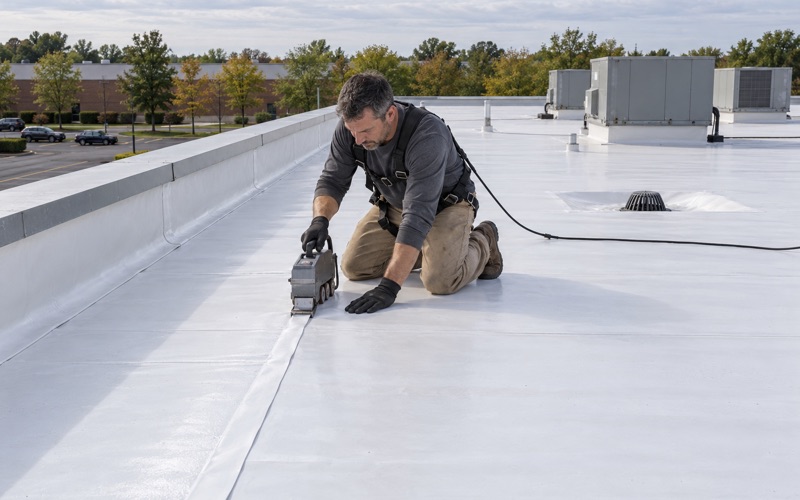
Piscataway Roofing has spent more than 20 years on roofing in Springfield Township and across central New Jersey, and jobs here often start with a question that has nothing to do with shingles. Before a crew sets a ladder, someone has to decide what happens to the oak or maple reaching over the ridge. We work that part out with the owner first, because it shapes the schedule, the cleanup and sometimes the budget.
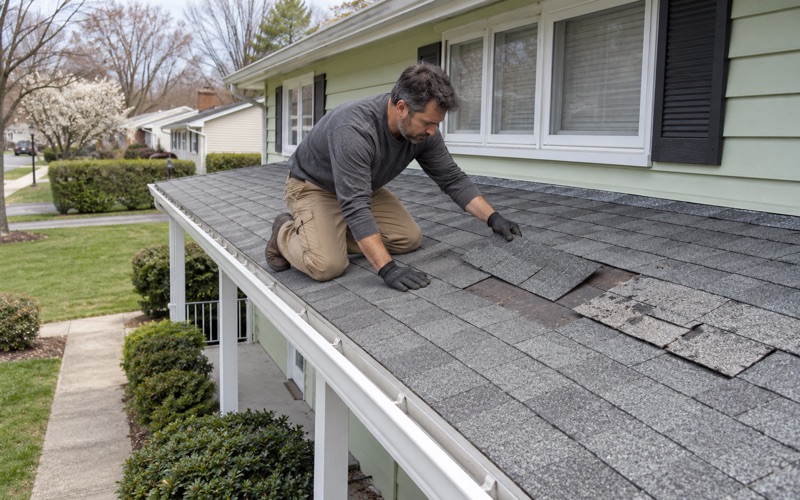
Our approach holds whether the call is a drip in a back bedroom or a full tear-off. We check the attic as well as the roof, so water is traced to the place it actually gets in, and we tell you plainly whether a repair will hold before replacement comes up at all. When replacement is the right call, the written scope breaks out tear-off, decking, underlayment, flashing, ventilation and gutters as separate lines you can compare against any other estimate.
That detail matters on a lot shaded by mature trees. Branches, packed leaves and old storm wear all leave marks a careful inspection should catch, and an estimate that skips them tends to grow once the work starts.
Springfield’s Tree Removal Permit: The 4-Inch Line
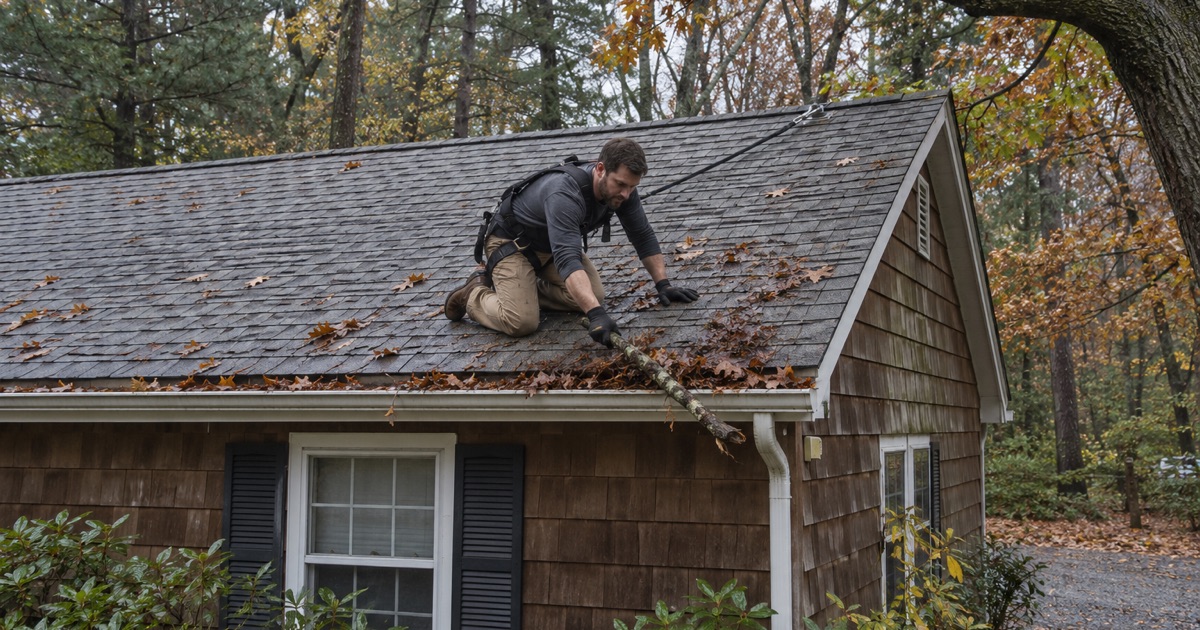
Springfield sits on a ridge at the foot of the Watchung Mountains in Union County, and many of its streets carry a tall, old canopy. That shade is a big part of the town’s appeal, and it is also the main reason a roof job here can involve the township before it involves a roofer. Since September 22, 2020, taking down a tree in Springfield has been permit work, and the rule covers the whole township, Baltusrol, Branch Mills and Milltown included.
Where the Line Falls
The township’s Shade Tree Ordinance information sheet says that removing any tree with a diameter greater than 4 inches, measured 4 1/2 feet above the ground, requires a Tree Removal Permit. That threshold catches far more than the giants, since a young maple that has grown into the gutter line over a decade is likely well past it. Applications go to the Zoning Office, and the complete ordinance is linked from the township’s Public Works page.
Fees and the 90-Day Window
The permit costs $75 and covers up to two trees. Anything beyond two trees in a 12-month span adds $100 per tree, and each permit is valid for 90 days. That window is worth lining up with the roof schedule, so the removal lands close to the tear-off and nobody has to reapply because a delay pushed the work past the deadline.
What the Sheet Leaves Out
The help sheet names no exception for pruning, for a dead or hazardous tree, or for a tree brought down in a storm. We have not read the full ordinance, so we do not tell owners what is or is not exempt. The right move is to call the Zoning Office about your specific tree before anyone cuts, then keep the answer with your roofing paperwork.
Why We Ask About the Tree First
Most of our first visits on a shaded street end with a conversation about a tree before one about the roof. If a tree has to come down so crews can work safely, or because it would drop onto new shingles, that removal brings its own paperwork and its own lead time. Raising it early keeps a permit question from stalling a roof that is otherwise ready to go.
Looking for roofing closer to Roselle Park? See Roselle Park Roofing.
What Quinn, the 2011 Snowstorm and Sandy Did to the Canopy
The township’s Community Forestry Management Plan for 2020 through 2024, approved by the State Forester in November 2019, is frank about the state of the canopy. Its goal is to preserve Springfield’s trees at a time when the canopy had been significantly reduced by natural disasters, naming Winter Storm Quinn, the Halloween snowstorm of 2011 and Hurricane Sandy in 2012. When the plan was written the township had no removal permit for trees on private property, and the 2020 permit came after it.
For a homeowner, that history is a reason to look up before planning a roof. Trees that came through three major storms in a short span may carry broken leaders, old wounds or a lean that was not there before, and the roof underneath carries the consequences if one of them gives way.
The Species Over Springfield Houses
A windshield survey in the plan lists London plane, pin oak, Norway maple, red oak and ash as the typical street trees. These grow large at maturity, and a pin oak or red oak planted near a house decades ago can spread well past the eaves. Norway maples cast dense shade that keeps a north-facing slope damp long after rain, and that is where moss and early granule loss usually show up first.
Ash and the Replacement Objective
The plan sets replacing ash trees with a suitable site-specific species as one of its objectives. If an ash stands near your house, that is a good reason to have a tree professional look at its condition before a new roof goes on beneath it. Putting fresh shingles under a tree that may be coming down in a few years is a plan worth revisiting.
What Storm Years Leave on a Roof
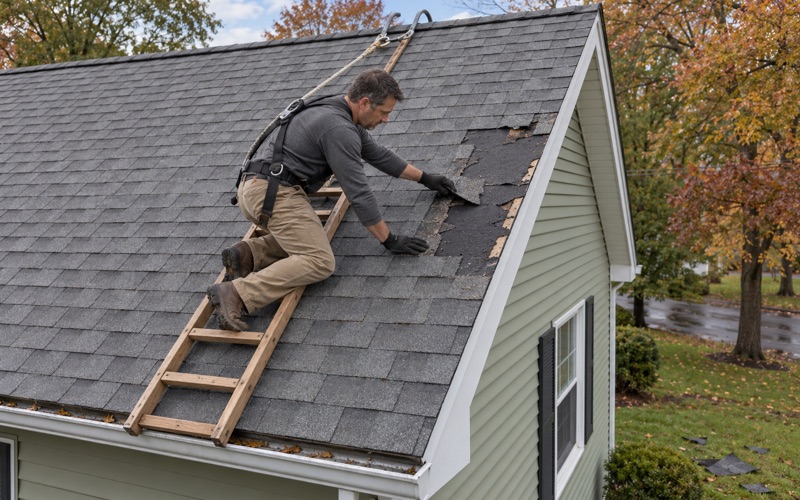
The plan ties those storms to canopy loss, not to any count of damaged homes, and we do not guess at one. What we look for on any heavily shaded roof is the slower wear: shingles scuffed by limbs in high wind, debris packed behind chimneys and in valleys, and gutters pulled loose by ice and heavy wet snow. Those are the details a thorough inspection should find, whatever year the damage started.
Limbs Over the Roof: Clearing the Way for a Replacement
On a heavily shaded lot, a replacement goes better when tree work and roof work happen in sequence rather than on top of each other. We are roofers, not a tree service, so any trimming or removal is the owner’s own hire, and we set our start date around that crew’s finish. Replacing the roof covering on a detached one- or two-family house is ordinary maintenance under New Jersey’s construction code and needs no construction permit, so on many jobs the tree is the only paperwork in play.
Deciding What Stays
We walk the roof with the owner and point out where limbs touch shingles, hang over the gutters or shade a valley that never fully dries. Some of that calls for trimming and some may call for removal, and that decision belongs to the tree professional you bring in, with the Zoning Office involved wherever a permit applies. Our part is explaining what each limb is doing to the roof, so the choice is made with the full picture.
Decking, Flashing and Ventilation Under Shade
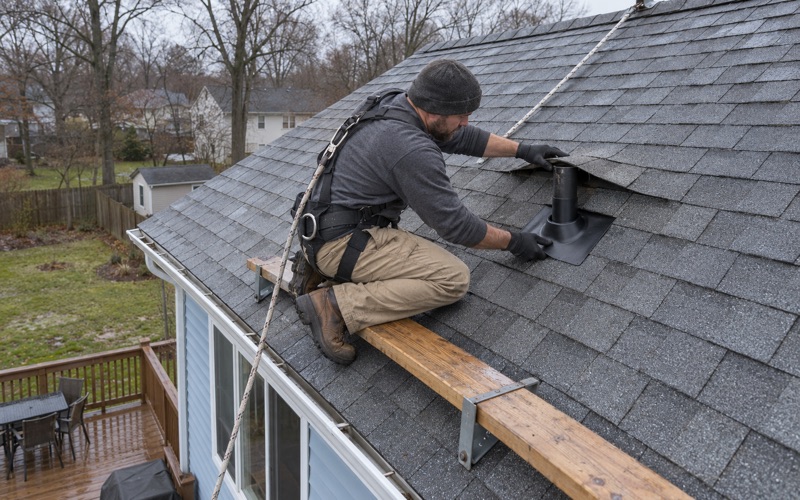
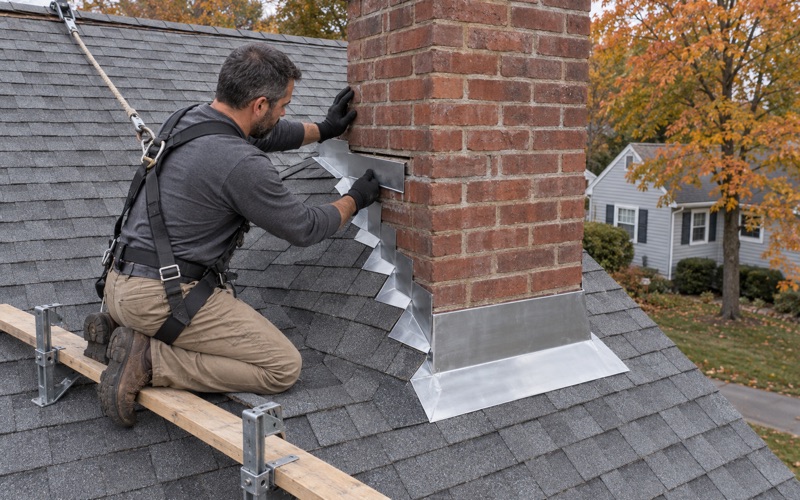
Years of wet leaves and slow drying can soften sheathing along eaves and valleys. When the old roof comes off, any damaged decking is photographed and shown to you before it is replaced, at a per-sheet price already set in the contract. Step, counter and chimney flashing are replaced with the new roof rather than reused, and we check attic ventilation on every replacement, because a shaded attic that cannot breathe holds moisture against the underside of the deck.
Materials and Safety on a Crowded Roof
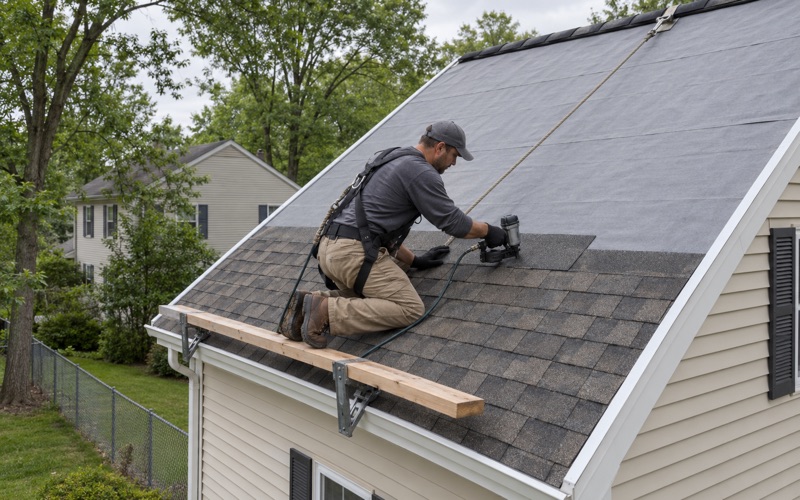
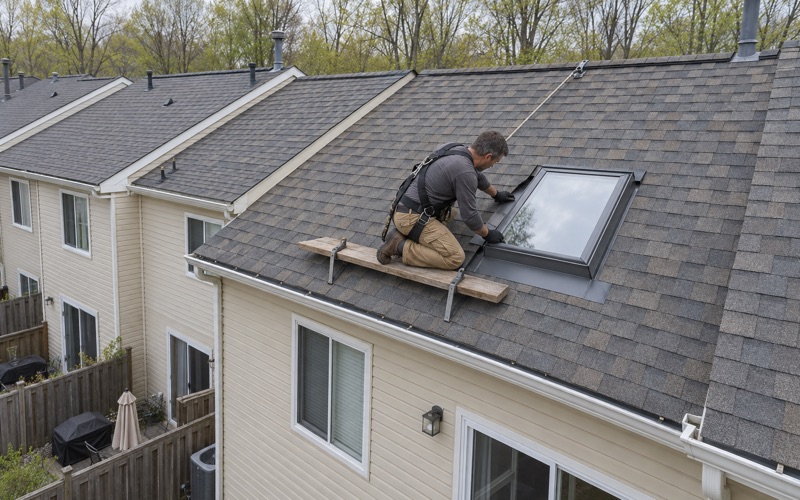
Shade does not call for an unusual roof, but it rewards good underlayment. We typically run an ASTM D1970 self-adhering ice and water barrier along eaves and valleys, where leaf dams hold water, with synthetic underlayment across the field. Architectural shingles such as GAF Timberline HDZ, Owens Corning Duration or CertainTeed Landmark are common choices, and we go over wind ratings with you because limbs and gusts tend to arrive together. Our crews work under OSHA fall protection rules from 6 feet up, and a roof crowded by branches makes anchor points and ladder placement part of the plan.
Gutters That Fill With Leaves
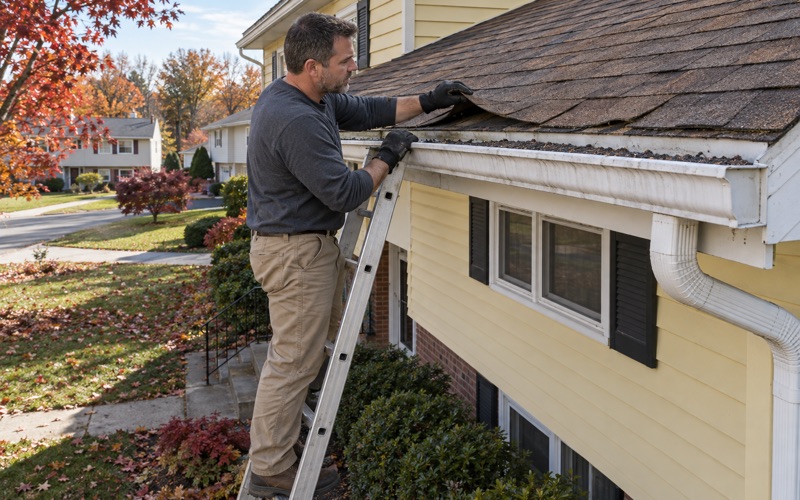
Oak and maple canopies fill gutters quickly every fall. We size and pitch gutters and leaders with the roof, so water reaches the downspouts and leaves the house instead of spilling toward the foundation. At the end of each work day the driveway, yard and gutters are cleaned, including a magnet sweep for roofing nails hidden in the leaf litter.
After a Tree Hits the House: Tarping, Then Repair
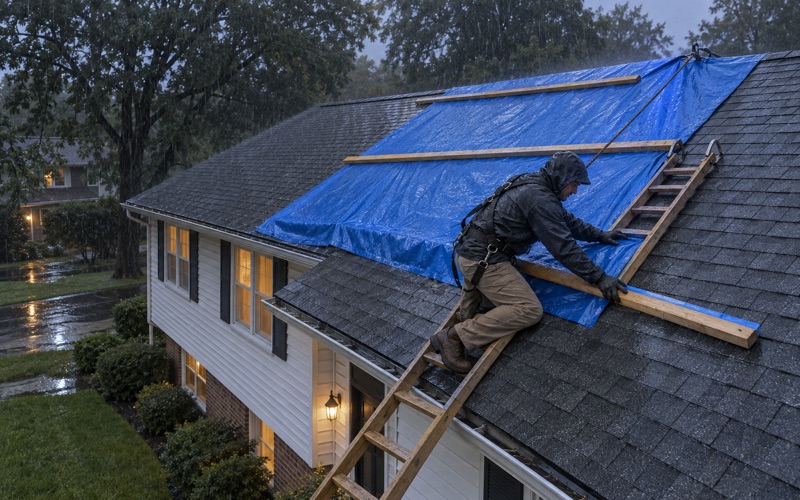
When a limb or a whole tree comes down on a roof, the first job is keeping water out. We tarp the opened area as an emergency measure and protect the interior as well as the situation allows. Repair planning waits until the debris is cleared and the damage can be seen properly, because a rushed scope after a strike usually misses something.
Removing the Tree Is a Separate Job
Getting the trunk and limbs off the house is work for a tree service, not a roofer, and the permit question covered above applies here too, so check with the Zoning Office before the saws come out. We coordinate timing with your tree crew so the tarp stays in place until we can begin.
Photos and Paperwork for Your Claim
Storm damage is photographed and written up for your own insurance claim, and when you ask, our crew will meet the adjuster on site. The write-up separates what the strike broke from older wear, which keeps both the claim and the repair scope honest. The New Jersey Department of Banking and Insurance publishes storm claims guidance that is worth reading before the adjuster arrives.
Repair or Replace After the Strike
Once the debris is gone, we inspect from the attic and from the roof to see how far the damage runs into rafters and sheathing. A localized strike on an otherwise sound roof is often a repair, and we say so plainly before replacement is mentioned. If framing was broken, that work goes beyond replacing roof covering, and we explain what it involves before anything is priced. Every contract follows New Jersey’s home improvement rules, including the three-day cancellation notice.
Why Speed Matters
Calling quickly after a strike makes a real difference. Water that gets past a broken deck can soak insulation and drywall within hours, and a tarp set promptly limits what the claim and the repair have to cover.
- 20+ Years Roofing
- Itemized Written Estimates
- Attic-to-Ridge Leak Tracing