
Piscataway Roofing handles storm damage roof repair in Piscataway, NJ, serving surrounding cities including Middlesex, Highland Park, Bound Brook, Metuchen and Manville. After wind, hail or a fallen limb, we repair the damage and photograph and write it up so your claim has solid evidence behind it. More than 20 years of storm work has taught us that the documentation matters almost as much as the repair.
Storm damage is not always obvious from the ground. A roof can lose a few tabs along the ridge, have its shingles creased and unsealed by wind, or be bruised by hail without dripping into the house that same day. Those hidden problems turn into leaks in the following storms, and by then it is much harder to connect them to the event that caused them.
The Piscataway area has a documented record of the kind of weather that does this. National storm reports logged several trees and wires down around Piscataway on March 16, 2026, golf-ball-sized hail fell in New Brunswick on September 9, 2023, and a July 22, 2003 storm brought golf-ball-sized hail to the township itself.
Types of Storm Damage We Repair
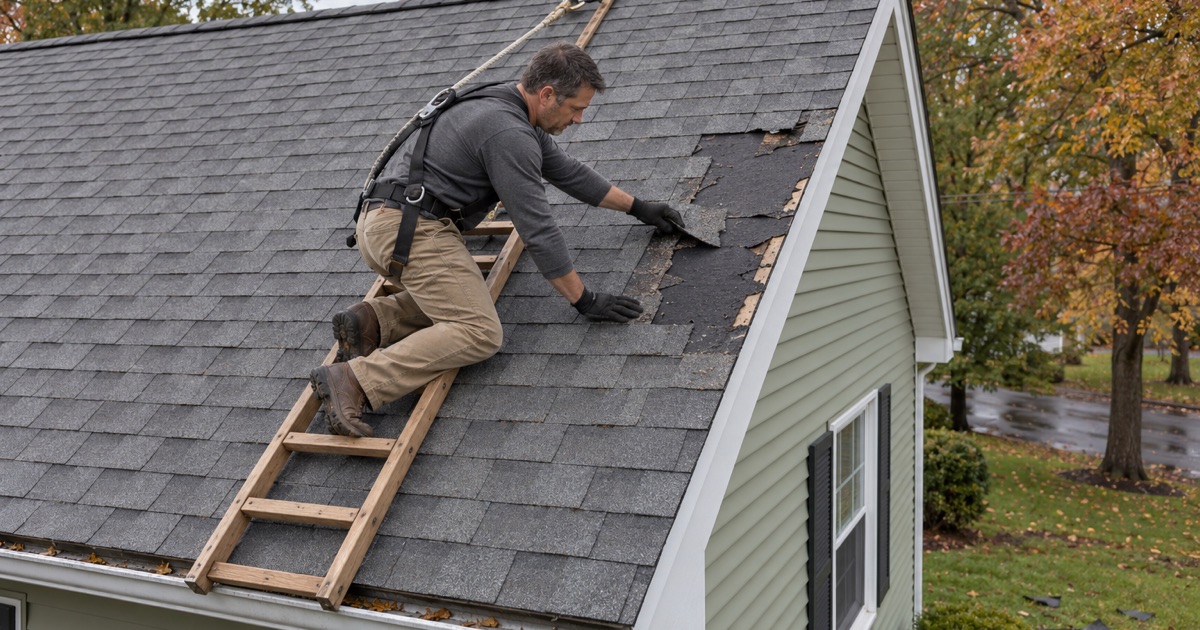
Wind Damage
Wind lifts shingles at their edges, breaks the adhesive strip that seals each one to the course below and, in strong gusts, tears whole tabs or sections off the roof. Even shingles that lie back down after a storm may have lost their seal and creased along the nail line, which leaves them loose for the next gust.
We check ridges, rakes and eaves first, since that is where wind takes hold, and lift-test shingles to find broken seals. Repairs replace missing and creased shingles with matching material and reseal the neighboring tabs so the area holds together again.
Hail Damage
Hail damage on asphalt shingles appears as dark spots where granules have been knocked away, soft bruises that give under pressure and, in heavier storms, cracks or punctures in the shingle mat. Dents in gutters, downspouts, vent caps and metal flashing help confirm the size and direction of the hail.
Because bruised shingles keep wearing faster for years afterward, hail damage spread across a whole slope often means replacing that slope or the entire roof. We map the hits by slope and photograph them so the extent of the damage is clear.
Fallen Trees and Limbs
A falling limb can break shingles and decking, crush gutters and crack rafters below. If a tree is resting on the roof, it needs to be removed by a tree service before we can safely work, and then the opening is tarped right away.
Once the roof is dry, we check the framing from the attic, replace damaged decking and rebuild the roof surface. Rafter damage is noted separately, since it may need a carpenter or engineer before the roof can be finished.
Documenting Storm Damage for Your Claim
Photos and a Written Damage Report
We photograph every slope, every damaged area and every related item such as dented gutters and vents, and we note which damage is fresh and which is older wear. That distinction is what claims turn on, because homeowners policies generally cover sudden storm damage and not the gradual aging of a roof.
The written report goes to you, for your own claim. It describes the damage, the materials involved and what a proper repair or replacement includes, so it can be compared with the insurance estimate item by item.
Meeting the Adjuster On Site
After you report the claim, your insurer assigns an adjuster to inspect the roof. When you ask, our crew meets the adjuster on site to point out the damage we documented, which New Jersey’s Department of Banking and Insurance recognizes can help when there is a disagreement.
We can describe the damage and answer the adjuster’s questions, but we do not negotiate your claim. Under New Jersey’s Public Adjusters’ Licensing Act, negotiating a claim for a homeowner is reserved for licensed public adjusters.
Hurricane Deductibles in New Jersey
Many New Jersey policies carry a separate, higher hurricane deductible, but it does not apply to every windy storm. State insurance rules limit it to a hurricane named by the National Weather Service that brings sustained hurricane-force winds to New Jersey.
That distinction has mattered before. When Sandy reached New Jersey in 2012 it had already been reclassified as a post-tropical cyclone, and a governor’s executive order barred insurers from applying hurricane deductibles to Sandy claims. If you are unsure which deductible applies to your storm, ask your insurer before accepting a settlement.
After the Claim: Repair or Replacement
Once the claim is settled, we schedule the repair or replacement and work from the same written scope that was shared with the adjuster. If replacement is approved, the full scope applies, including new flashing, underlayment, drip edge and ventilation, so the new roof is built properly rather than patched back to its pre-storm condition.
Storm periods also bring out storm chasers from out of state. Whoever you hire should be registered in New Jersey as a home improvement contractor, give you a written contract with the three-business-day cancellation notice and carry insurance for their crew. Taking a day to check those things protects both the claim and the roof.
- 20+ Years Roofing
- Itemized Written Estimates
- Attic-to-Ridge Leak Tracing