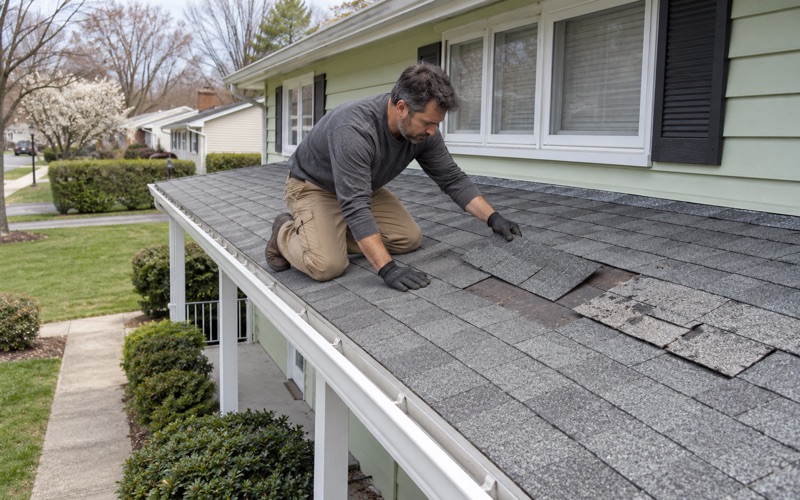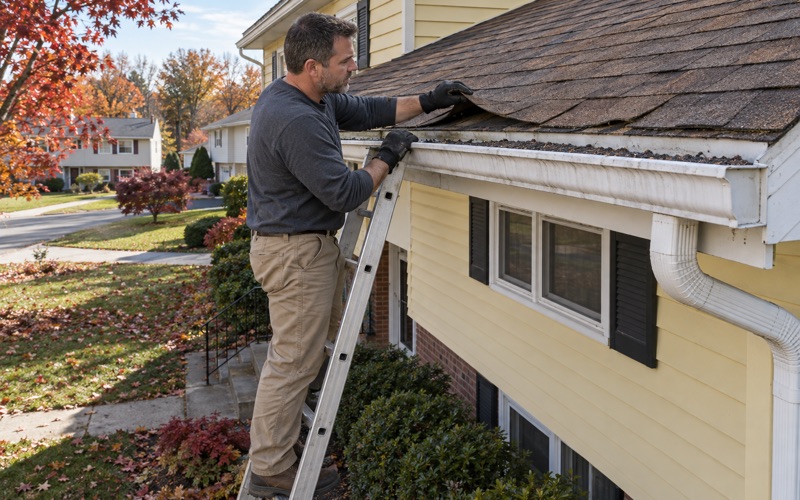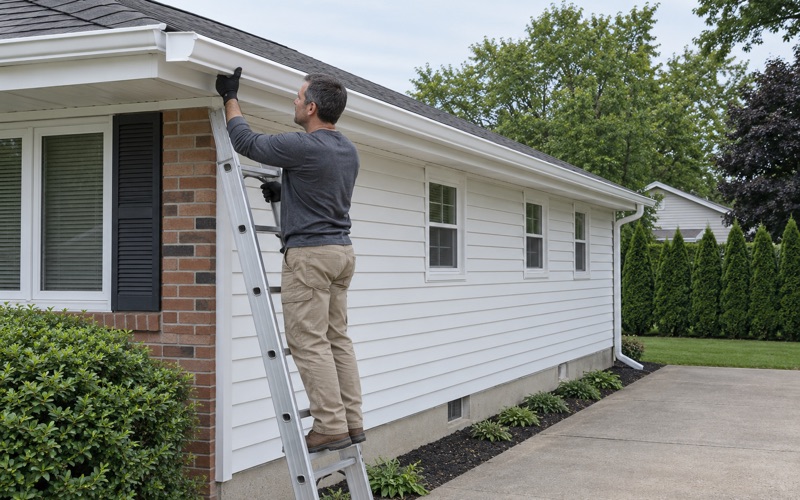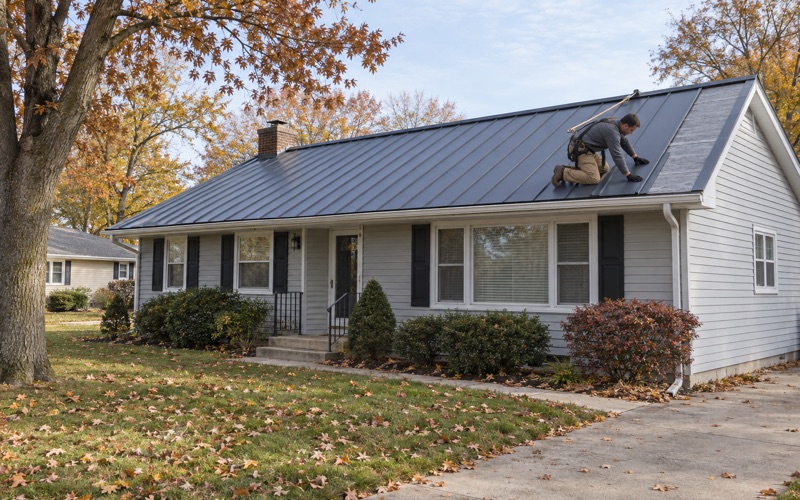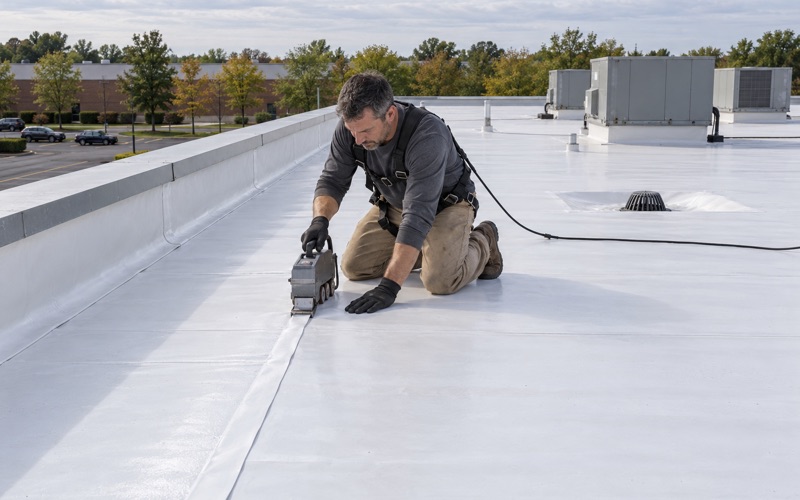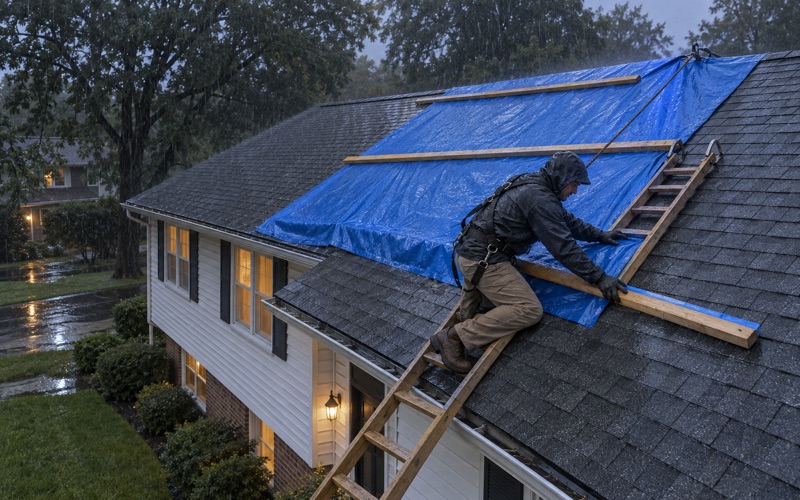
Piscataway Roofing brings more than 20 years in the trade to roofing in West Caldwell, and the first question we ask here is not about shingles. It is about the boards that frame the roof: the fascia behind the gutters, the rake trim along the gables and the soffits underneath. On a house of a certain age, whether those pieces are painted and whether the new roof will disturb them can change how the whole job has to be run.
That is why our visit starts at the roof edge and in the attic rather than with a price. We tell you plainly whether the existing roof can be repaired before replacement comes up at all. If it cannot, the written scope breaks tear-off, decking, underlayment, flashing, ventilation and gutters into separate lines, and it says just as clearly whether any painted trim is coming off with the old roof.
Re-Roofing West Caldwell’s Mid-Century Houses
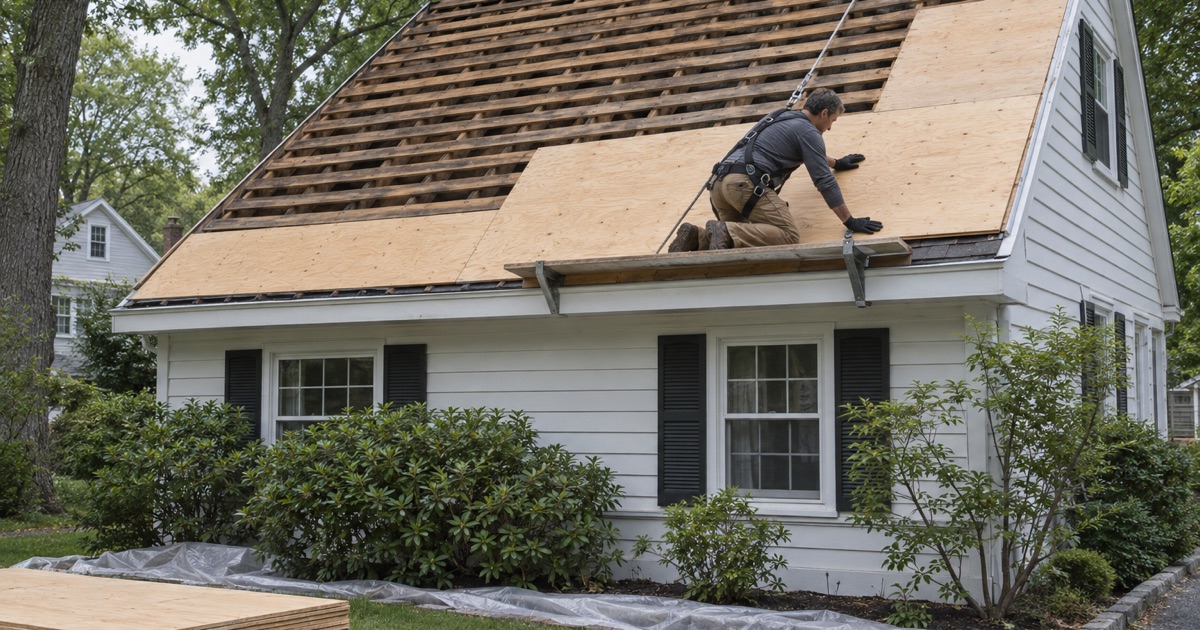
Most homeowners think of a roof replacement as shingles, underlayment and maybe some decking. On the houses that make up most of this township, the work also reaches the wood around the perimeter, because drip edge, new gutters and fresh flashing all meet the fascia and rake boards. When those boards are original, rotted or wrapped in decades of paint, the roofing plan has to account for them.
The age of these roofs also shows up in the attic. Many were framed with plank sheathing and modest soffit intake, and a few generations of shingles have often been laid over that original structure, so we check the decking and the airflow on every replacement before we settle on materials.
A Town Built Largely in Two Decades
West Caldwell is a township in Essex County, and its housing tells a clear story. Census figures for 2024 count 4,121 homes, and 2,118 of them were built in the 1950s and 1960s, with 1,313 from the 1960s alone and 805 from the 1950s. Altogether, 3,482 homes, or 84.5%, were built before 1980.
The town is also overwhelmingly detached houses. Of those 4,121 units, 3,335 are single-family detached homes, and owners live in 3,259 of them. In practice that means most re-roofs here are on a ranch, split-level or colonial whose owner makes the call directly, without an association in between.
What That Age Means at the Edge
A house from those decades usually still carries wood fascia, rake boards and soffits, and many of them have been painted more than once. Some have been covered with aluminum or vinyl, which can hide painted wood underneath. Before we write a scope, we look under the gutters and at the gable ends to see which of those situations we are dealing with.
The point is not the build year for its own sake. It is that the build year decides whether a federal lead-safe rule could apply once that painted wood is touched, and in a town built this way, that question comes up on house after house.
Looking for roofing closer to Hopewell Township? See Roofing Services in Hopewell Township.
Why 1978 Matters at the Fascia, Soffits and Trim
The federal Renovation, Repair and Painting Rule, usually called the RRP Rule, ties its reach to a single year. Housing built before 1978 is what the regulation calls target housing, with narrow exceptions for housing for the elderly or persons with disabilities and for zero-bedroom units where no young child lives. For a West Caldwell homeowner, the year the house was built is therefore the first fact to pin down.
Sizing the Pre-1978 Share
The census bins do not line up exactly with 1978, so the count comes with a range. There are 208 homes in town from the 1970s, which means the pre-1978 stock sits somewhere between 3,274 homes built before 1970 and 3,482 built before 1980. Either way, most of the township’s houses fall on the older side of the line.
That does not mean any particular house has lead paint, and no record we have says one does. It means the rule’s definitions reach most of these homes, and the next question is what the roofing work actually does to painted surfaces.
The 20-Square-Foot Exterior Limit
The rule separates a renovation from minor repair and maintenance. A renovation includes the removal, modification or repair of painted surfaces or painted components. Exterior work that disturbs 20 square feet or less of painted surface counts as minor repair, as long as none of the restricted work practices are used and the job does not involve window replacement or demolition of painted surface areas.
Twenty square feet goes quickly on a roof edge. A single run of fascia across the front of a ranch house, plus a pair of rake boards, can pass that figure before the soffits are even counted, so we measure the painted wood the scope will touch rather than guessing.
Removed Components Count in Full
The detail that catches people is how removal is measured. When painted components, or portions of them, are taken off, the regulation counts the entire surface area removed as painted surface disturbed. Pulling a rotted fascia board counts as the whole board, not just the patch where the paint flaked.
That is why replacing trim during a re-roof is the step most likely to cross the line. If we find soft fascia, we photograph it and show it to you, and we talk through whether it is replaced, repaired in place or left alone before anything is removed.
What an Unpainted Roof Tear-Off Does and Does Not Trigger
None of this means every roof replacement on an older house falls under the rule. The rule covers work that disturbs painted surfaces, and EPA’s own guidance says that where there is no paint to disturb, it does not apply. A tear-off of asphalt shingles over bare decking, with the painted trim left in place, is a different job from one that strips the fascia too.
Bare Shingles and Unpainted Decking
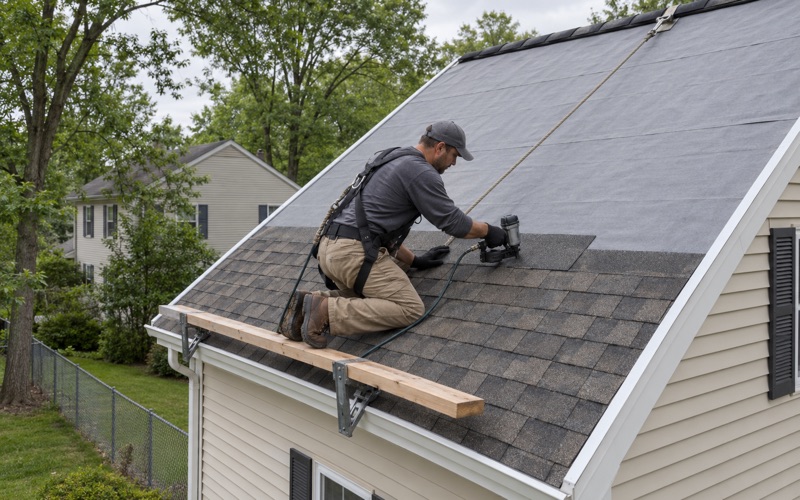
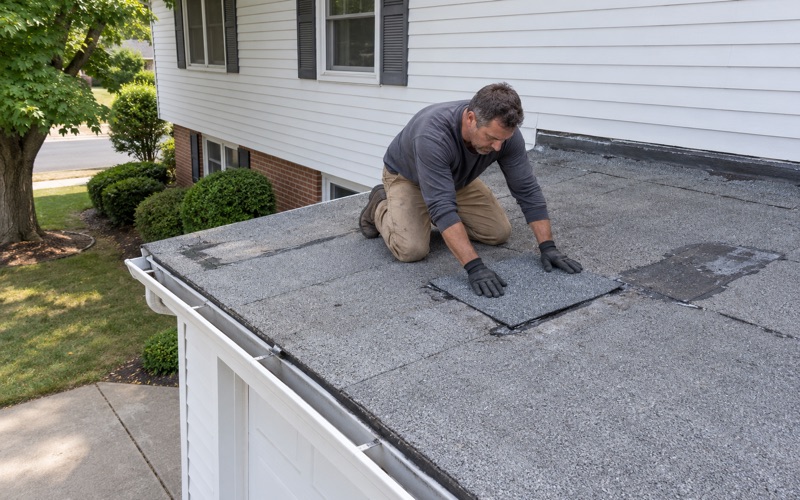
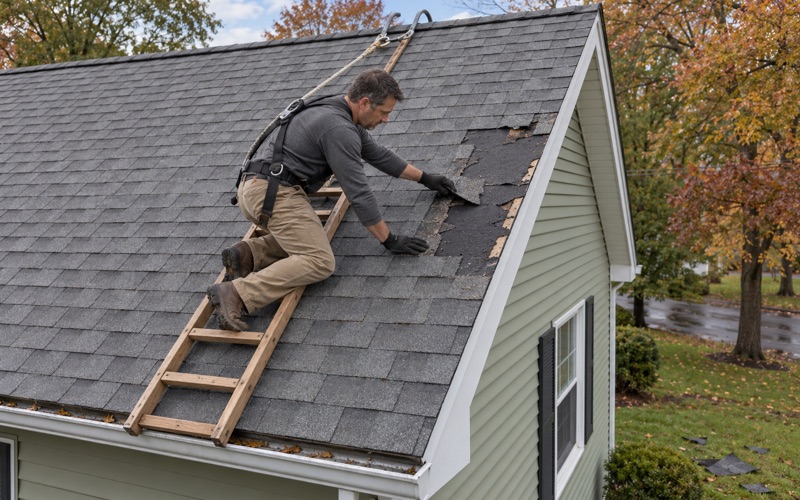
Shingles, felt, synthetic underlayment and plywood or plank decking are normally unpainted, and removing them is not what the rule is aimed at. When the scope stays on the roof surface, we plan the tear-off as an ordinary replacement, with tarps, daily cleanup of the driveway and yard, and a magnet sweep for nails at the end of each day.
We still note any painted wood near the work in the scope so you can see it was considered. A clear line saying the fascia stays in place is as useful on paper as a line saying it is coming off.
Hammering Over Painted Lumber
The gray area is painted wood that the roof sits on or against. EPA has addressed this directly: if hammering painted components, even from the unpainted side, disturbs the paint and creates dust or chips, the rule applies. A related EPA answer says containment is needed only around the area where painted components are disturbed, not across an entire unpainted roof.
On these houses that usually means the eaves, where painted soffit and fascia sit right under the nailing line for drip edge and starter courses. We look at that area before the job starts, because it decides how the crew sets up at the edge rather than across the whole roof.
Who Administers the Rule in New Jersey
New Jersey has not been delegated the RRP Rule, so it is administered here by EPA Region 2. The state holds authority over lead abatement work, which is a separate program from renovation work like roofing. The township’s Code Enforcement office at 30 Clinton Road also links a lead-based paint inspections resource on its construction page.
The rule names a specific pamphlet, Renovate Right, which explains lead-safe practices to homeowners. If your house is pre-1978 and painted trim is part of the scope, it is worth reading before the job begins, and worth asking any contractor how they plan to handle that part of the work.
Questions to Ask Before a Pre-1978 Re-Roof
A good estimate on an older West Caldwell house answers the lead-safe question in writing rather than leaving it to the day of the tear-off. Whether the home sits in Ferncliff, Westville or anywhere else in the township, the same handful of questions sorts out most of it. These are the ones we would ask in your position.
Before the Estimate
Start with the year the house was built, from the deed, the tax record or the original paperwork. Then ask whether the fascia, rake boards and soffits are painted wood, covered wood or replacement material, and whether the contractor has looked under the gutters to check.
Ask, too, whether the roof can be repaired instead of replaced. On a roof that still has life, a targeted repair often leaves the painted trim untouched, and we say so when it is the honest answer.
If the house is going on the market, ask for a written roof condition report as well. We provide one that a seller can hand to the buyer’s inspector, and on an older house it can note what the trim is made of and whether it is painted, which saves a second round of questions later.
In the Written Scope
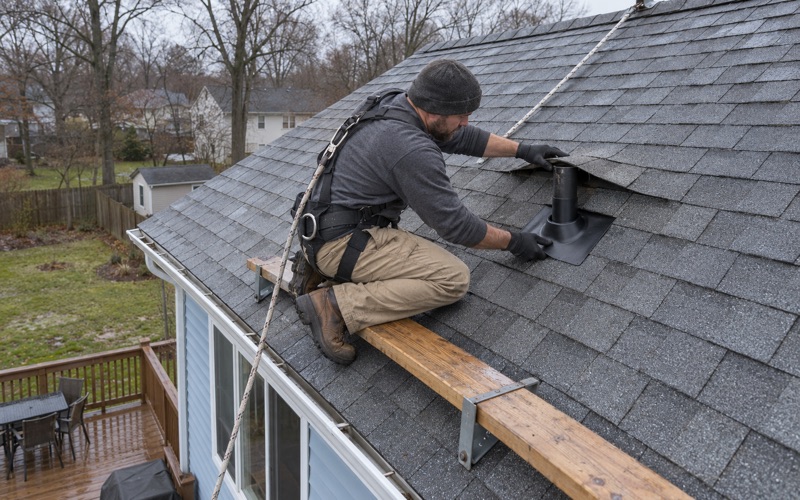
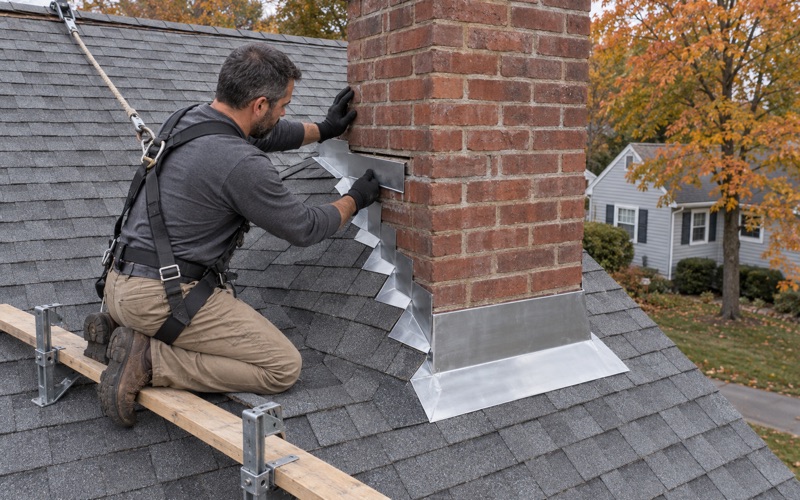
The scope should state whether any painted component will be removed or disturbed and roughly how much. Look for drip edge, gutters, flashing and ventilation as separate lines, since each one touches the edge differently. Step, counter and chimney flashing should be replaced with the roof rather than reused, and the attic ventilation should be checked, because a mid-century attic often has little intake at the soffits.
Decking replacement should carry a per-sheet price set in the contract, with photos shown to you before any sheet is replaced. Our contracts are written to New Jersey’s home improvement rules, including the three-day cancellation notice, so you have time to read the scope before it binds you.
On Work Days
Ask how the crew will set up where painted wood is being disturbed, and how the ground below will be protected and cleaned. Ask whether new gutters and leaders will be sized and pitched to carry water away from the foundation. A clear answer to each of these before the first shingle comes off is the best sign the job has been planned for the house you actually own.
- 20+ Years Roofing
- Itemized Written Estimates
- Attic-to-Ridge Leak Tracing